


Most advice about aging starts with the wrong promise: take one supplement, activate one pathway, and you can outsmart biology. Aging isn't one switch to turn off. It's a connected network of changes involving DNA, energy production, protein quality, immune signaling, tissue repair, and the gut environment. The useful question isn't whether one product “reverses aging,” but which biological processes can be supported, how strong the human evidence is, and where uncertainty remains.
The hallmarks of aging provide a map for asking those questions. The framework began as a way to organize shared biological mechanisms across organisms, especially mammals, and to help researchers identify potential targets for improving health during aging (the original review). It has since expanded, making older nine-item summaries incomplete. Understanding that evolution helps you separate established mechanisms from emerging ideas, and practical health habits from claims that still belong mainly in the laboratory.
Table of Contents
- Understanding the Biological Hallmarks of Aging
- The Original Nine Mechanisms of Cellular Decline
- The 2023 Expansion and Emerging Biomarkers
- Mitochondrial Dysfunction and Energy Production
- Modifiable Hallmarks and Proven Interventions
- Evaluating Longevity Supplements and Actives
- Building a Practical Longevity Routine
Understanding the Biological Hallmarks of Aging
Aging is often described as a countdown, as though every cell follows one unavoidable timer. That image is simple, but it misses the biology. Cells age through interacting changes: DNA damage can affect gene regulation, damaged mitochondria can increase inflammatory signaling, and inflammation can impair tissue maintenance. Each process can place additional stress on the others.
The framework is useful because it gives researchers a shared vocabulary. Instead of treating fatigue, slower recovery, skin changes, immune decline, and metabolic problems as unrelated events, scientists can ask which cellular systems contribute to each outcome. The hallmarks are therefore not a diagnosis, a checklist for personal self-testing, or proof that every intervention works. They're an organizing model.
Practical rule: A biological pathway can be relevant to aging without being a proven target for extending human healthspan.
This distinction matters in longevity marketing. A supplement may influence a laboratory biomarker, but that doesn't automatically mean it prevents disease, restores youthful tissue function, or improves lifespan. Human outcomes require appropriate studies, meaningful endpoints, and enough evidence to distinguish a real effect from a mechanistic possibility.
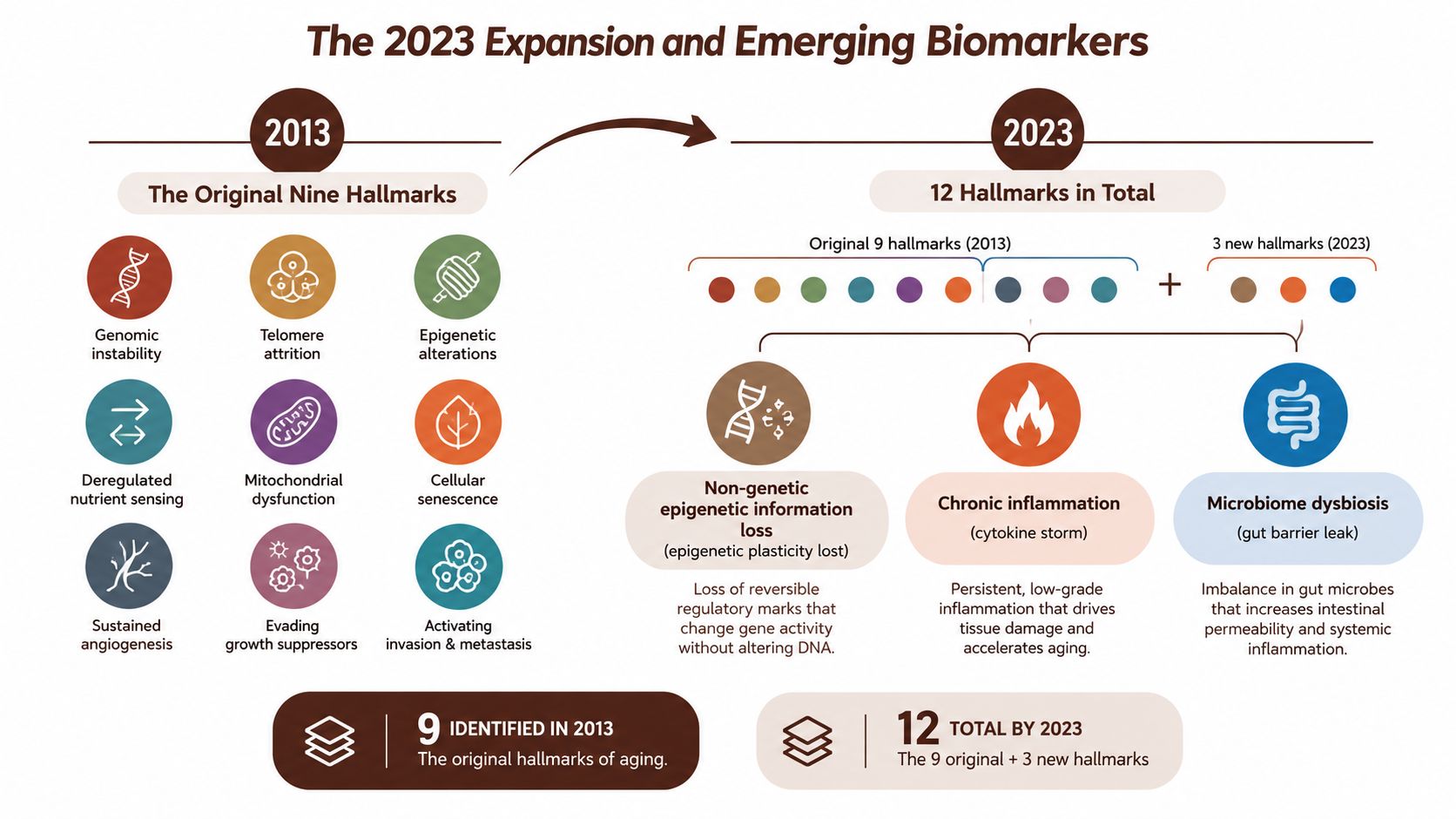
The framework also isn't static. The original review identified nine core hallmarks, while the later update described 12 total, adding disabled macroautophagy, chronic inflammation, and dysbiosis (framework update). That change reflects a broader view of aging as a networked systems problem, not a single pathway with one master control.
For readers, the practical takeaway is straightforward. Use the hallmarks to understand why foundational behaviors can affect several systems at once, but judge supplements and emerging therapies by the quality of their human evidence. Biology can guide a sensible routine, but it can't turn a plausible mechanism into a guaranteed result.
The Original Nine Mechanisms of Cellular Decline
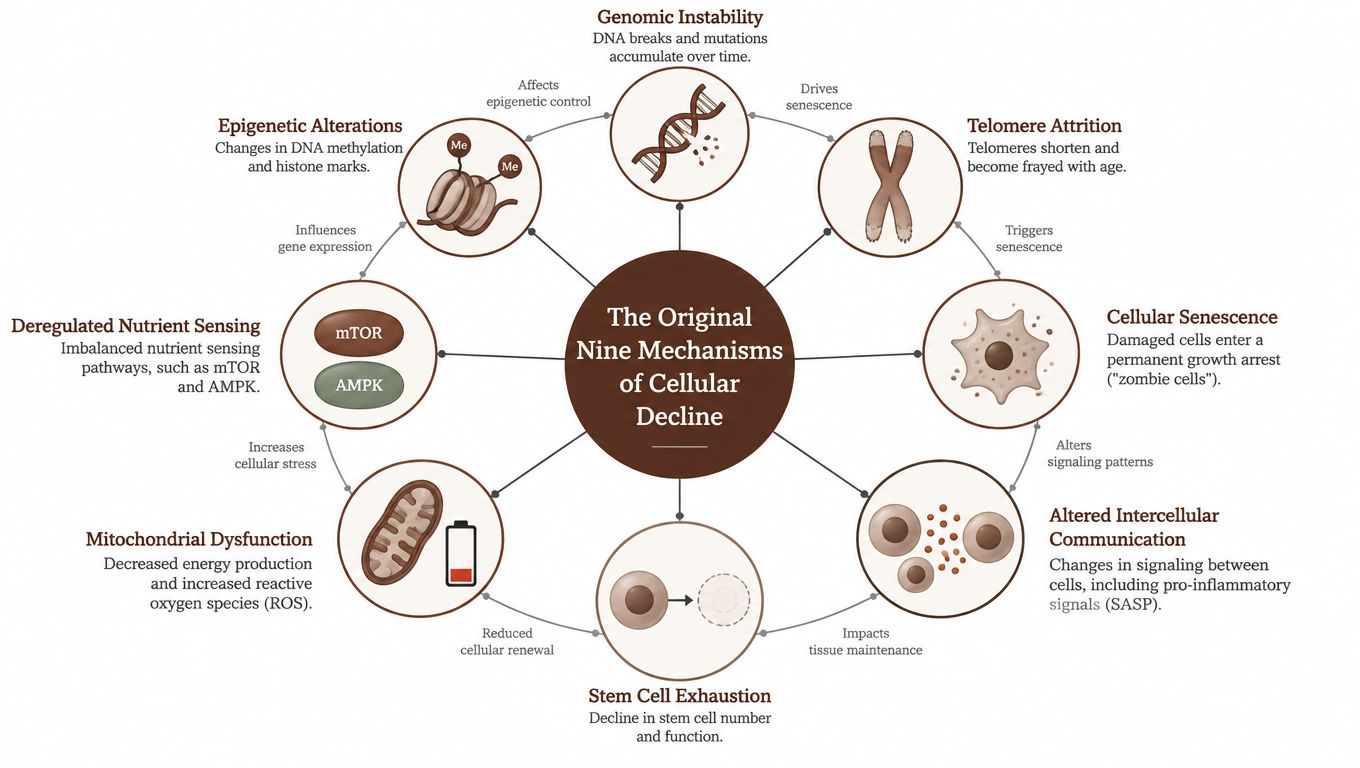
The original nine hallmarks are easier to understand when grouped by the jobs cells must perform. Cells need to protect their information, maintain working machinery, produce energy, renew tissues, and communicate with neighboring cells. Aging can disrupt each job, and the disruptions can reinforce one another.
Protecting the cellular blueprint
Genomic instability refers to accumulating damage and errors in DNA. Think of DNA as an instruction manual. If pages tear, letters change, or repair notes become unreliable, the cell may produce the wrong proteins or stop functioning normally.
Telomere attrition concerns the protective ends of chromosomes. Telomeres help safeguard chromosome ends during cell division, but shortening can limit a cell's ability to keep dividing. This is especially relevant to tissues that depend on continual renewal. For a reader who wants a focused explanation of the relationship between chromosome ends and regenerative capacity, this resource on telomere length and stem cells offers useful background.
Epigenetic alterations are changes in how cells regulate genes without changing the DNA sequence itself. You can think of the genome as a library and epigenetic signals as the labels that determine which books are available to read. If those labels become disorganized, a cell may lose some of its specialized identity or activate programs that are poorly suited to its environment.
Maintaining cellular machinery
Loss of proteostasis means declining control over protein production, folding, transport, and removal. Proteins are useful only when they have the right shape and location. As quality control weakens, damaged or misfolded proteins can accumulate.
Deregulated nutrient sensing affects pathways that help cells respond to available nutrients and energy. These systems coordinate growth, maintenance, and metabolism. When signaling becomes poorly calibrated, cells may prioritize growth or storage when repair and resilience would be more useful.
Mitochondrial dysfunction affects the organelles that produce cellular energy. Mitochondria also contain their own DNA, so damage can affect both energy output and the systems that maintain mitochondria. The result is not just “less energy” in an abstract sense. It can alter how cells respond to stress.
Preserving renewal and communication
Cellular senescence occurs when a cell stops dividing and enters a persistent altered state. Senescent cells aren't necessarily useless immediately, but their accumulation can affect surrounding tissue through signaling molecules.
Stem cell exhaustion describes declining regenerative capacity in stem and progenitor cell populations. When these cells can't replenish tissue effectively, repair becomes slower or less complete.
Altered intercellular communication affects the signals exchanged among cells, tissues, and organs. Hormonal, immune, and metabolic messages can become less coordinated, disrupting whole-body balance.
These categories show why the hallmarks shouldn't be read as nine isolated boxes. A mitochondrial problem can increase stress signals, those signals can encourage senescence, and senescent cells can influence tissue communication. Products such as an NMN Supplement are marketed around NAD+ biology, but mechanistic relevance shouldn't be confused with proven whole-organism rejuvenation.
The 2023 Expansion and Emerging Biomarkers
The updated framework added disabled macroautophagy, chronic inflammation, and dysbiosis. These weren't cosmetic additions. They made the model better reflect how cells process waste, how immune signals affect tissues, and how microbial communities participate in whole-body physiology.
Three additions that changed the map
Disabled macroautophagy refers to reduced efficiency in a major cellular recycling process. Macroautophagy helps cells package and remove damaged components, including larger structures such as organelles. When this process is impaired, cellular waste can remain in place and interfere with normal function.
Chronic inflammation captures persistent immune activation rather than the short-term inflammation that helps the body respond to injury or infection. Long-lasting inflammatory signaling can affect tissue function and interact with senescence, mitochondrial impairment, and altered communication.
Dysbiosis describes disruption in the composition or function of the gut microbial community. This addition broadens the framework beyond human cells alone. The gut environment can influence digestion, immune interactions, and metabolic signaling, so microbial imbalance belongs in a systems-level discussion of aging.
The updated model also creates an important classification problem. Not every proposed hallmark has the same level of support, and not every hallmark has been shown to drive organismal aging equally. Some may act as causes in particular settings, while others may be markers or consequences of broader decline.
Established, emerging, and contested
The original nine remain foundational, and the three additions are now part of the widely used 12-hallmark framework. Yet recent literature continues to debate possible additions, including extracellular matrix changes, psychosocial isolation, and immunoglobulin-associated senescence (discussion of emerging candidates). These ideas may be biologically important, but they shouldn't be presented as settled members of the core taxonomy.
A useful way to read future updates is to ask three questions:
- Is the mechanism reproducible? Researchers need consistent evidence across relevant models and tissues.
- Does it interact with other hallmarks? A strong candidate should explain more than one isolated observation.
- Can changing it improve human outcomes? Biomarker movement is informative, but it isn't the same as better function or reduced disease risk.
A commercially available product such as Himalayan Shilajit Gold Gummies may be positioned around energy, stress balance, and mineral support. Those descriptions don't establish that the product modifies dysbiosis, inflammation, or any other hallmark in a clinically meaningful way. The framework helps keep that distinction visible.
Mitochondrial Dysfunction and Energy Production
Mitochondria do more than supply cellular fuel. They convert nutrients into usable energy, help coordinate stress responses, and contribute to signals that influence cell survival. Their decline can therefore affect several forms of cellular maintenance, not just how much energy a cell produces.
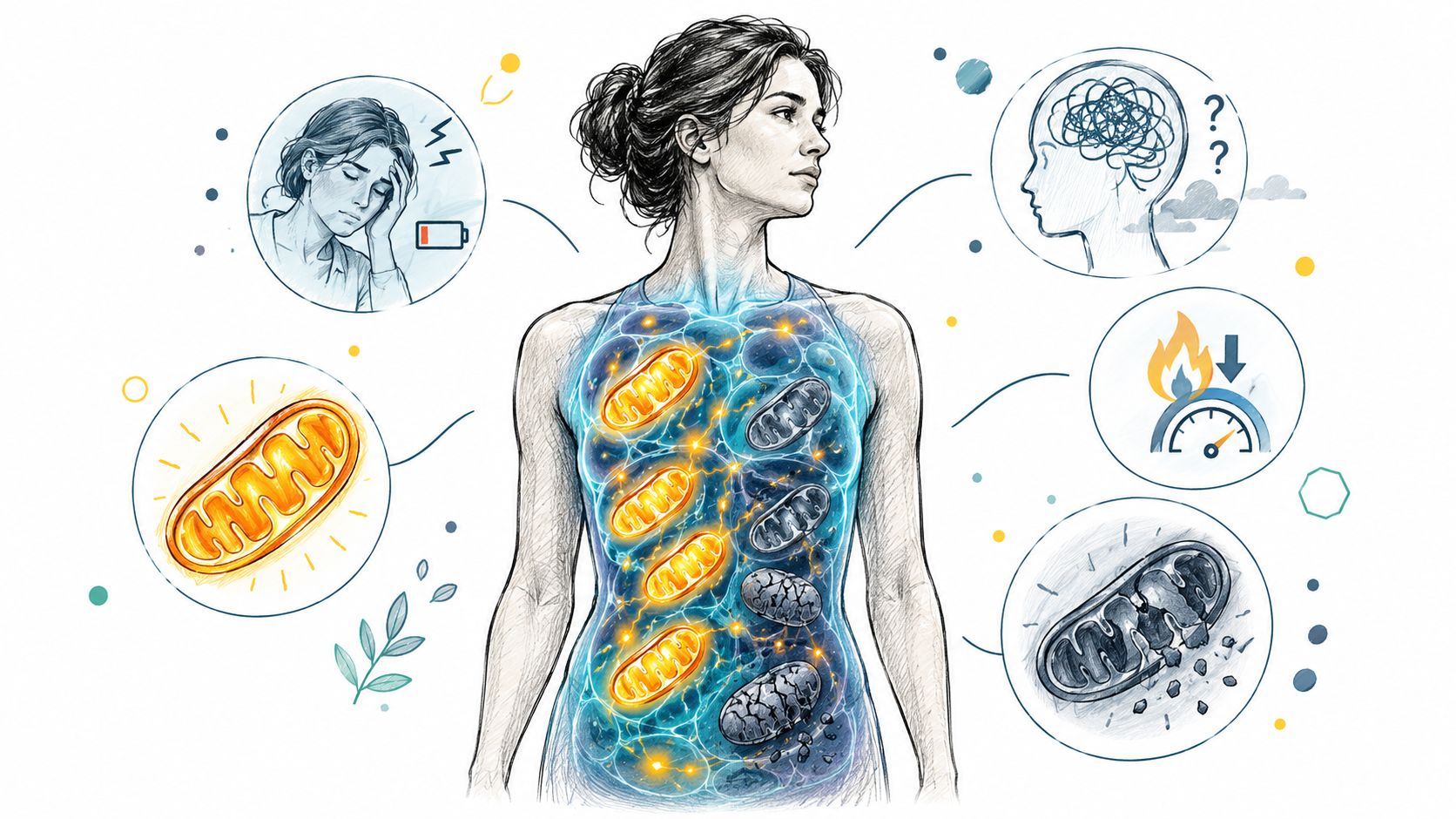
As cells age, damaged mitochondria may accumulate. They can produce energy less efficiently while generating more reactive oxygen species, or ROS. These chemically reactive molecules are part of normal biology, but poorly controlled levels can disrupt DNA, proteins, membranes, and redox balance (review of mitochondrial dysfunction).
Why the feedback loop matters
Mitochondrial dysfunction can become part of a reinforcing cycle. Impaired mitochondria increase cellular stress, encourage senescence, and amplify inflammatory signaling. Inflammation then creates less favorable conditions for already-strained cells, which can further impair mitochondrial performance.
This connection helps explain why mitochondrial biology appears in research on muscle function, cognitive fatigue, metabolic resilience, and organ health. It does not make mitochondria the explanation for every experience of tiredness. Energy production is one part of a larger system of cellular upkeep.
NAD+ is relevant because it participates in metabolic reactions and supports proteins involved in cellular maintenance. Research links reduced NAD+ with genomic instability, defective macroautophagy, and mitochondrial dysfunction. These connections remain stronger at the mechanistic and correlational levels than as proof that raising NAD+ rejuvenates the whole body.
Readers seeking a plain-language explanation can review what NAD+ is. The Novagenesis Biopharma NAD+ research offers another perspective for separating biochemical rationale from clinical evidence that is still developing.
A topical cosmetic balm is intended for visible skin concerns. Its topical positioning should not be interpreted as evidence that applying a balm changes mitochondrial function throughout the body.
Modifiable Hallmarks and Proven Interventions
The practical longevity question is not which hallmark can be “hacked.” It is which biological systems can be supported consistently, and which outcomes are realistic. Some hallmarks respond to ordinary health behaviors, while others remain difficult to change safely and precisely in humans.
Exercise shows why one intervention can affect several hallmarks at once. Regular movement challenges energy production, helps maintain muscle, influences metabolic signaling, and gives tissues a reason to preserve function. Nutrition, sleep, stress regulation, and preventive medical care also act across multiple pathways. Their value does not depend on targeting one molecule.
A useful evidence hierarchy separates what is established from what is still speculative:
- Established health behavior: The intervention improves a meaningful aspect of health or function, even when its molecular effects span several hallmarks.
- Biomarker evidence: The intervention changes a measurable molecule, pathway, or cellular feature.
- Mechanistic evidence: Laboratory or animal research suggests a plausible biological action.
- Preclinical promise: The idea is scientifically interesting but lacks adequate human outcome data.
NAD+ precursors illustrate the difference between these levels. A precursor may affect NAD+ biology, and NAD+ may be connected with several aging-related processes. That places the rationale in the biomarker or mechanistic range unless human research shows a functional outcome, such as better physical performance or improved clinical health. A favorable molecular reading alone does not establish whole-organism rejuvenation. Evidence on NAD+ biology remains developing, as described in this NAD+ evidence overview.
| Hallmark | Primary intervention | Evidence level |
|---|---|---|
| Mitochondrial dysfunction | Exercise, sleep, metabolic health, selected research compounds | Stronger for broad health support, uneven for targeted reversal |
| Deregulated nutrient sensing | Balanced nutrition, physical activity, medical management of metabolic risk | Stronger for health outcomes than for “resetting” the hallmark |
| Cellular senescence | Healthy behaviors and experimental senolytic research | Mostly emerging for targeted human intervention |
| Disabled macroautophagy | Exercise, nutritional patterns, and research compounds | Mechanistically promising, human outcomes remain limited |
| Chronic inflammation | Treating underlying conditions, movement, sleep, and dietary quality | Modifiable as a health risk process, but not a single switch |
| Dysbiosis | Dietary diversity, appropriate medical care, and selected microbiome interventions | Active research, highly individual and context-dependent |
| Telomere attrition | Avoiding harmful exposures and supporting general health | Relevant biology, limited control over telomere dynamics |
Supplement choices require the same separation between target and outcome. Check the ingredient, dose, delivery method, testing, medication interactions, and the result the product claims to support. A label that moves from “supports NAD+ metabolism” to “reverses aging” has gone beyond what the evidence establishes.
Evaluating Longevity Supplements and Actives
Supplements can be discussed responsibly only when the proposed target and the actual claim stay separate. NMN is a precursor to NAD+, so its rationale concerns NAD+ biosynthesis and the cellular reactions that depend on NAD+. That doesn't prove it will restore every process associated with aging or produce a measurable healthspan benefit for every user.
Delivery also matters. Oral capsules are convenient and systemic, but absorption and metabolism affect exposure. Gummies may improve adherence for some people while adding a different formulation profile. Topical creams and balms are aimed at the skin, and transdermal products are designed around a different delivery route. A topical product shouldn't be assumed to create the same biological exposure as an oral supplement.
A practical evaluation sequence looks like this:
- Start with the endpoint: Is the product addressing energy, skin appearance, stress, or a clinically measured condition?
- Separate mechanism from outcome: A pathway explanation is not a clinical result.
- Inspect formulation details: Look for clear ingredient identity, appropriate labeling, and quality controls.
- Consider personal risk: Pregnancy, nursing, chronic disease, and prescription medication use warrant professional advice.
- Avoid stacking blindly: Combining several products that target similar pathways can complicate side effects and make results impossible to interpret.
The science-based guide to healthy-aging supplements can help organize questions about ingredients and proposed roles. REVETIX offers oral NMN, shilajit and ashwagandha gummies, Rhodiola rosea, and topical or transdermal NAD+-oriented products. Those formats represent different delivery approaches, not interchangeable proof of hallmark modification.
Rhodiola rosea and shilajit are often discussed in relation to stress resilience, energy, minerals, and metabolic support. These are reasonable areas to evaluate, but they shouldn't be described as established treatments for genomic instability, senescence, or mitochondrial aging without direct human evidence for those outcomes.
Building a Practical Longevity Routine
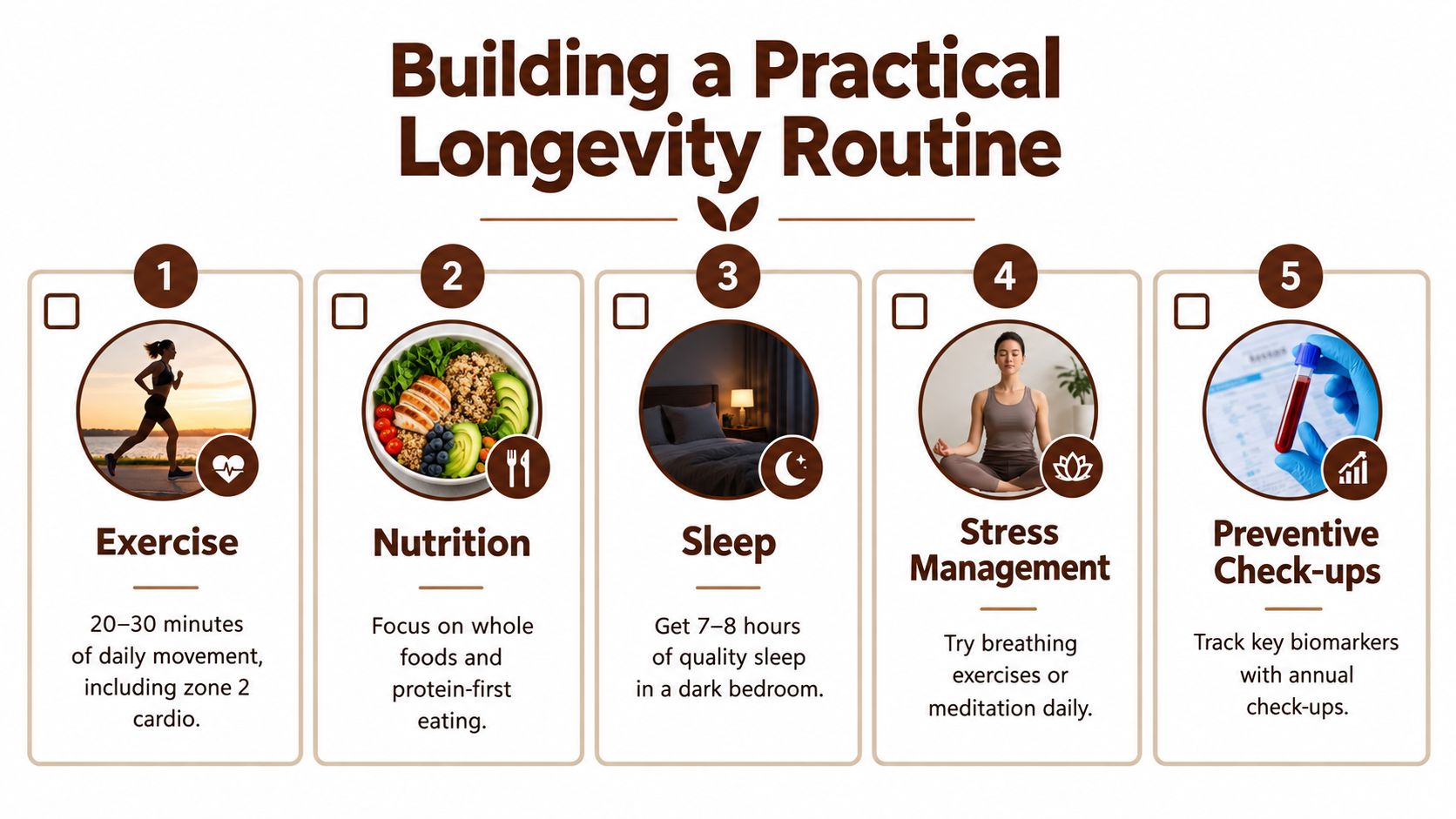
A sensible routine starts with behaviors that support several systems at once. Move regularly, eat a varied diet built around minimally processed foods and adequate protein, protect sleep, and use a stress-management practice you can repeat. Schedule preventive care and discuss persistent fatigue, sleep problems, or medication concerns with a clinician instead of treating every symptom as a supplement deficiency.
A supplement can fit only after those basics are stable. Choose one clearly defined purpose, review the label and safety considerations, and track how you feel rather than assuming a molecular claim guarantees a result. Guidance on a cell energy supplement can provide another starting point for evaluating energy-focused products.
The hallmarks of aging are most useful when they make your decisions more precise, not more anxious. You don't need to “fix” 12 pathways at once. Build a durable routine, measure meaningful health outcomes, and treat emerging longevity claims as hypotheses until human evidence catches up.
REVETIX offers longevity-focused products including NMN capsules, mineral and adaptogen gummies, and topical or transdermal NAD+-oriented formats for people exploring cellular energy and healthy-aging support. Visit REVETIX to review the available options, compare delivery formats, and choose a product that fits your routine and health goals.