


NMN reliably raises NAD+-related biomarkers in humans, but the evidence doesn't yet prove broad anti-aging or performance benefits. In one 12-week trial, 250 mg per day changed NAD-related biology, while longer-term health effects remained unestablished.
So, do NMN supplements work, or do they only make an appealing laboratory value move? The most accurate answer depends on what “work” means. NMN appears biologically active in humans, yet that finding is not equivalent to slower aging, better glucose control, more muscle, or a longer life.
Table of Contents
- The Direct Answer to Do NMN Supplements Work
- What NAD+ Is and Why It Matters for Aging
- What Human Trials Show About NMN and NAD+ Levels
- The Gap Between Biomarkers and Real Health Outcomes
- Safety Profile and What We Still Do Not Know
- Making an Informed Decision About NMN Supplementation
The Direct Answer to Do NMN Supplements Work
The strongest human conclusion is narrow: oral NMN can increase NAD-related markers over several weeks. That matters because a supplement that produces no measurable biological change would have a weak case even for further research. But a measurable biochemical response is only the first step in an evidence hierarchy.
A biomarker tells researchers that something changed inside the body. A clinical outcome tells us whether that change improved a result people care about, such as physical function, disease risk, glucose regulation, or day-to-day wellbeing. NMN has more consistent evidence for the first category than for the second.
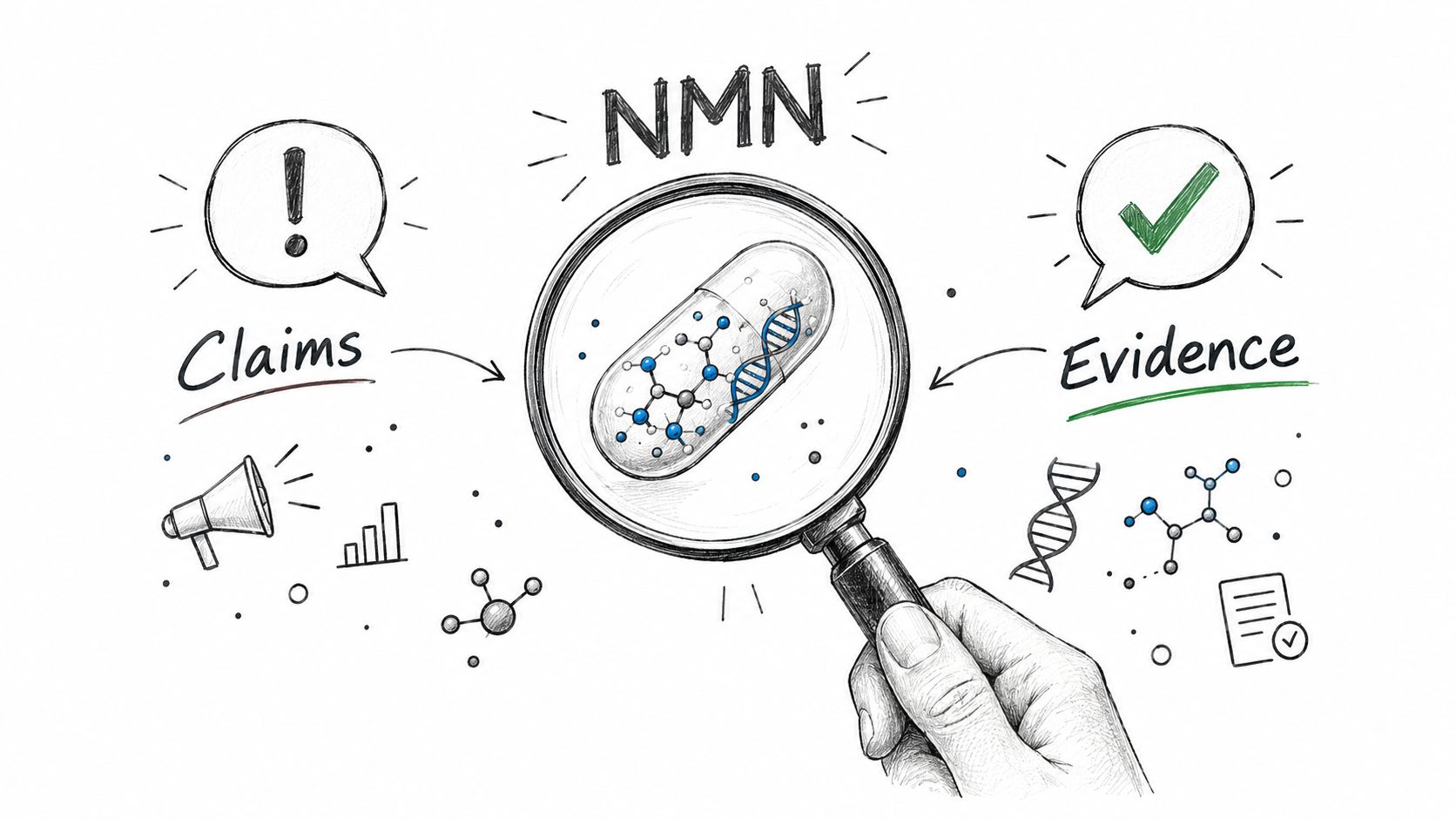
A randomized, double-blind, placebo-controlled trial published in 2023 gave 36 healthy middle-aged adults either 125 mg of NMN twice daily or placebo for 12 weeks, for a total of 250 mg per day. NMN significantly increased serum nicotinamide, a metabolite reflecting changed NAD+ metabolism. Pulse-wave velocity also tended to decrease, but that result was a trend, not definitive evidence of cardiovascular benefit. The trial reported that the dose was well tolerated, with no treatment-related adverse events. The published trial record supports a biochemical conclusion, not a longevity claim.
For readers comparing products, find NMN at NZ Supps can be a useful starting point for understanding how NMN products are presented. The important question isn't whether a label mentions NAD+. It's whether the product's claims match the endpoints tested in humans.
The evidence boundary: NMN is a plausible NAD+ precursor with measurable human effects, not a proven anti-aging treatment.
That distinction also explains why enthusiastic marketing can feel more certain than the science. The mechanism is credible, and the biomarker changes are real, but the chain from higher circulating NAD-related markers to noticeable, durable health improvement remains incomplete.
What NAD+ Is and Why It Matters for Aging
NAD+, or nicotinamide adenine dinucleotide, is a coenzyme involved in essential cellular reactions. NMN, or nicotinamide mononucleotide, is a precursor that the body can use to produce NAD+. This is the biological premise behind supplementation: provide a molecule upstream of NAD+ and potentially support the body's available pools.
A useful analogy is a rechargeable battery. NAD+ doesn't represent “energy” in the casual sense of feeling alert after a good night's sleep. Instead, it participates in the chemical processes cells use to manage energy and other forms of cellular maintenance. A fuller battery may improve the system's capacity, but measuring the battery charge doesn't prove that a person will run faster, think more clearly, or age more slowly.
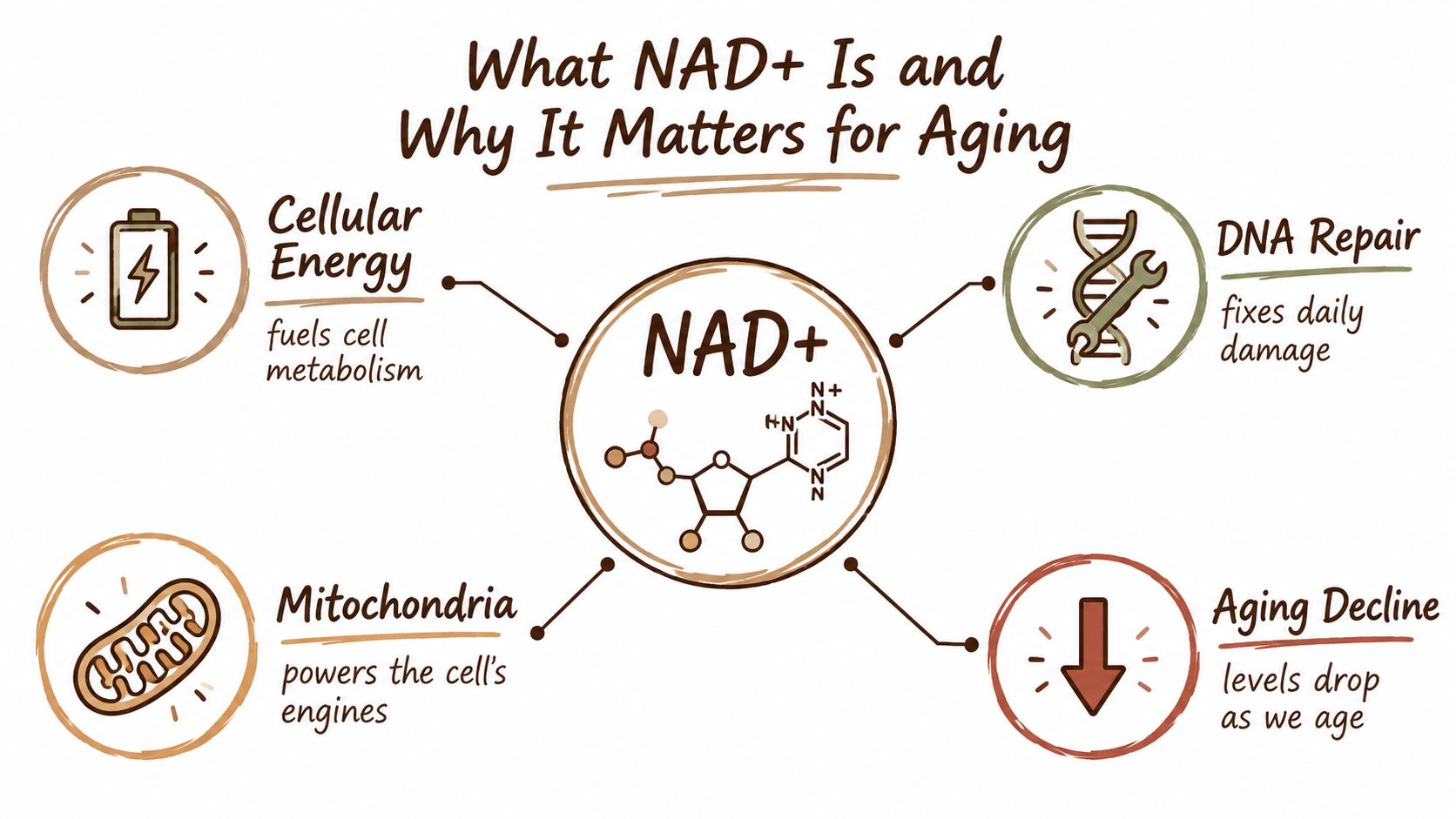
NAD+ is relevant to research on aging because it sits within pathways associated with cellular metabolism, mitochondrial activity, and DNA maintenance. NMN's proximity to NAD+ makes it biologically plausible as a supplement. Plausibility, however, describes why researchers test an intervention. It doesn't establish that the intervention delivers a meaningful outcome for consumers.
The REVETIX explanation of NAD+ provides additional background on the relationship between the coenzyme and its precursor. A product such as the NMN Supplement is therefore best described, from the evidence perspective, as an oral NMN product intended to support NAD+ biosynthesis. Product positioning isn't the same as clinical proof.
This distinction becomes especially important when a biological pathway is connected to broad concepts such as vitality or longevity. A supplement may influence one part of a pathway while producing little or no detectable change in a person's overall health. Researchers must therefore ask not only whether NAD+ rises, but also where it rises, for whom, for how long, and whether the change improves a meaningful endpoint.
The mechanism is worth studying. It isn't a substitute for outcome data.
What Human Trials Show About NMN and NAD+ Levels
The clearest human evidence comes from controlled trials that compare NMN with placebo and measure biological endpoints directly. These studies reduce the risk that a reported change is the result of expectation, lifestyle changes, or ordinary variation.
The 2023 trial described above used a rigorous design, with randomization, blinding, placebo control, and a defined treatment period. Its main useful finding was not that participants became visibly younger or substantially healthier. It was that NMN changed a metabolite associated with NAD+ metabolism. That finding supports absorption and biological activity, but it doesn't establish a downstream clinical benefit.
A separate study in healthy older men used 250 mg of oral NMN per day for 12 weeks and found significant increases in whole-blood NAD+ and related metabolites. The study was well tolerated, but its biochemical result still needs to be interpreted separately from outcomes such as strength, endurance, independence, or disease prevention. The study and its broader evidence context make that separation explicit.
The difference can be expressed:
| Evidence level | What current NMN research supports |
|---|---|
| Biochemical activity | NMN can increase NAD+-related markers in human blood |
| Short-term tolerability | Several controlled trials report reassuring findings in generally healthy adults |
| Physical performance | Possible signals exist, but pooled improvements are small or statistically uncertain |
| Metabolic health | Broad improvements in glucose and lipid measures haven't been demonstrated |
| Longevity | Human evidence hasn't established slower aging or extended lifespan |
The table shows why “NMN works” is incomplete language. If the question means does NMN enter a biological pathway and alter measurable NAD-related markers, the answer is yes. If it means does NMN reliably improve health in everyday life, the answer remains uncertain and depends on the outcome being tested.
The NMN Complex is another product listed in this category, but its presence in a catalogue doesn't add evidence for a particular clinical endpoint. That endpoint must come from a trial of the formulation, dose, population, and duration in question.
The Gap Between Biomarkers and Real Health Outcomes
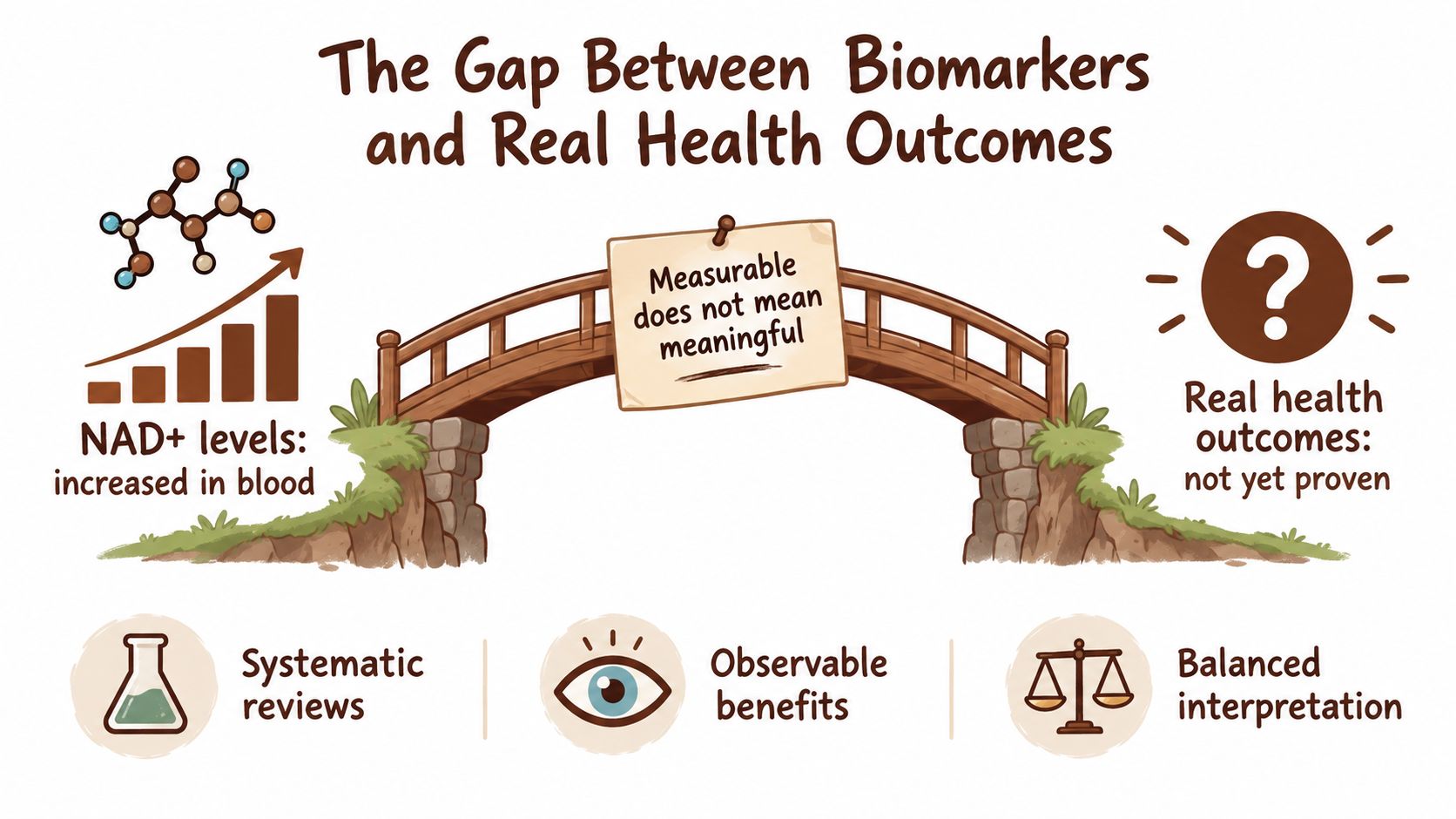
The most important analytical mistake in NMN coverage is treating a higher NAD+ measurement as proof that the supplement has delivered its promised benefit. The two findings are related, but they aren't interchangeable.
A 2024 systematic review of 10 randomized controlled trials involving 437 participants found mixed evidence for practical benefits. The studies lasted 4 to 12 weeks, with an average follow-up of 9.6 weeks, and included adults with a mean age of 58.0 years. The review found that NMN was generally well tolerated and that some physical-performance measures might improve, but overall effects were limited or statistically non-significant. The systematic review found no significant benefit for fasting glucose, insulin resistance, or lipid profiles across doses of 250 to 2,000 mg daily over those treatment periods.
A separate analysis of eight randomized trials with 342 middle-aged or older adults reached a similarly restrained conclusion. Across doses ranging from 250 to 2,000 mg per day and treatment periods from 14 days to 12 weeks, meta-analyses found no significant effects on fasting glucose, fasting insulin, glycated hemoglobin, HOMA-IR insulin resistance, or lipid profiles. Those are precisely the outcomes many consumers associate with “metabolic health.”
Why the result can look better than it feels
A laboratory marker can respond before a clinical outcome does. It can also respond without producing a clinically meaningful outcome at all. For instance, increasing NAD+ may show that the pathway is accessible, while the person's limiting factor lies elsewhere, such as sleep, training status, nutrition, medication, or an unrelated disease process.
A review of 12 placebo-controlled trials found that NMN increased blood NAD+ and produced a moderate reduction in triglycerides among participants with overweight or obesity, but most clinically relevant outcomes, including body composition, didn't improve significantly. That mixed result is more informative than either a blanket endorsement or a blanket dismissal. The review of human NMN trials shows that an intervention can be pharmacologically active and still fail to deliver the broader result a consumer wants.
Measurable does not mean meaningful. The closer a claim is to longevity, disease prevention, or everyday performance, the stronger the outcome evidence needs to be.
The practical conclusion is conditional. NMN may be useful as a NAD+-biomarker intervention, but current evidence doesn't justify presenting it as a reliable energy supplement, weight-loss aid, glucose-control strategy, muscle-building product, or life-extension treatment. The cellular energy supplement discussion can provide product context, but readers should still judge claims against controlled human outcomes.
For comparison, Himalayan Shilajit Gold Gummies are positioned around shilajit, ashwagandha, and mineral support. That is a different formulation and shouldn't be treated as evidence for NMN's effects.
Safety Profile and What We Still Do Not Know
Safety and efficacy answer different questions. A supplement can appear tolerable without improving a meaningful health outcome, and an effective treatment can still carry risks. NMN's short-term safety evidence is more reassuring than its evidence for broad benefits, but the duration and populations studied limit what consumers can infer.
A randomized, double-blind, dose-ranging trial gave 80 healthy middle-aged adults 300, 600, or 900 mg of NMN once daily for 60 days. Investigators reported no NMN-related adverse events or treatment dropouts, no significant abnormal changes in laboratory parameters or physical examinations, and concluded that doses up to 900 mg per day were well tolerated over that period. The full safety trial supports short-term tolerability in a relatively healthy study population.
A separate pharmacokinetic and safety trial found that a single oral dose of up to 500 mg was tolerated in healthy men without significant harmful changes in vital signs or temperature. That result adds useful short-term information, but a single dose can't answer questions about repeated exposure over years.
The limits of reassurance
Most available trials are small and brief. They don't establish long-term safety, and they don't automatically apply to people with chronic disease, complex medication regimens, pregnancy, or other conditions that weren't represented in the study populations. They also don't establish that oral capsules have the same effects or safety profile as topical or transdermal formats.
Adverse events appeared more frequently in studies using at least 1,000 mg per day, regardless of whether investigators judged those events related to NMN. That observation doesn't prove that higher doses are unsafe, but it does argue against assuming that more is automatically better.
A product such as PDRN Volufiline NAD+ BALM is a topical cosmetic format with PDRN, Volufiline, collagen, NAD+, peptides, and retinol. Its topical use shouldn't be used to infer that oral NMN trials establish the product's efficacy or systemic safety.
Short-term tolerability is evidence about a limited time window. It isn't a certificate of multi-year safety.
Anyone who is pregnant, nursing, taking prescription medication, or managing a medical condition should discuss NMN with a healthcare professional before use. The most responsible interpretation is neither alarmist nor dismissive: the short-term findings are encouraging, while important long-term and population-specific questions remain open.
Making an Informed Decision About NMN Supplementation
The decision becomes clearer when the goal is stated precisely. If your goal is to raise a circulating NAD-related marker, human trials provide a reasonable biological basis for interest. If your goal is to slow aging, prevent disease, improve glucose control, lose fat, or guarantee more energy, current evidence doesn't provide the same level of support.
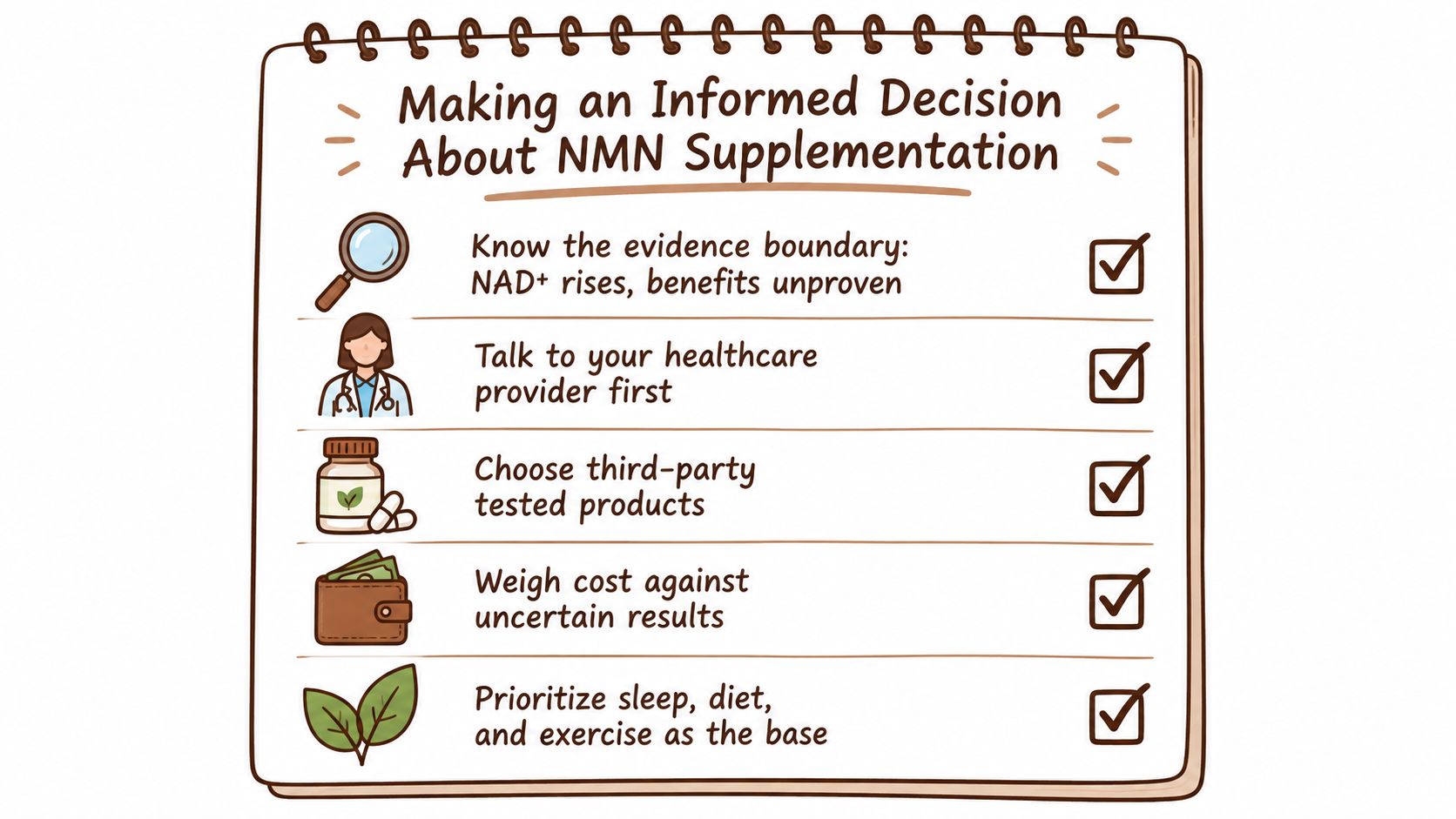
Use the evidence boundary as a buying filter:
- Define the endpoint: Decide whether you're evaluating a laboratory marker, sleep, exercise performance, or a symptom. Don't replace a measurable goal with a vague promise of “cellular energy.”
- Match the dose to the evidence: Human studies have tested different doses and short treatment periods, so there isn't one universally validated dose for every person or purpose. The NMN supplement dosage guide can be read as product context, not as a substitute for clinical advice.
- Review your health context: Speak with a healthcare provider before starting if you have a chronic condition, take prescription medication, are pregnant or nursing, or are considering NMN alongside treatment.
- Assess product quality: Look for transparent ingredient information and independent testing where available. A clean label doesn't prove clinical effectiveness, but uncertain contents make evidence-based self-assessment harder.
- Protect the foundation: Sleep, a suitable diet, and regular physical activity remain central to healthy aging. NMN shouldn't be used to justify neglecting those basics or to replace medical care.
A sensible trial, if a clinician agrees it's appropriate, should be conservative and observational. Track one or two outcomes that matter to you, avoid changing several supplements at once, and stop if you experience concerning symptoms. Don't assume that feeling different proves a long-term benefit, and don't assume that feeling nothing means NAD+ biology didn't change.
The fairest final answer to do NMN supplements work is therefore: yes for a measurable NAD+-related biological effect, not yet established for broad real-world health outcomes. That framing respects the randomized trials without turning preliminary evidence into a promise.
REVETIX offers oral NMN products and other topical and supplement formats focused on longevity, cellular energy, and everyday wellness support. Visit REVETIX to review the available formulations and compare their product information with your own goals and healthcare guidance.