


Mitochondria supply roughly 90% of the energy needed for cellular functions, and NAD+ is the key redox cofactor that drives this process. Modern estimates place mitochondrial respiration at about 30 to 32 ATP per glucose molecule, compared with only 2 ATP from glycolysis alone.
That afternoon slump can feel personal. You slept, ate lunch, answered messages, and still find yourself staring at the screen with heavy eyelids and a short attention span. It's tempting to blame motivation, caffeine tolerance, or a busy schedule, but your cells are constantly managing a more fundamental problem: how to convert nutrients into usable energy.
Cellular energy production is the process that supplies the ATP needed for movement, electrical signaling, repair, temperature regulation, and the ordinary work of staying alive. The quality of that process matters most in tissues with high energy demands, including the muscle, brain, and heart.
Table of Contents
- Why Your Cells Need Energy to Keep You Alive
- The Three Stages of Cellular Respiration Explained
- How NAD+ and NADH Power the Electron Transport Chain
- The Evidence Gap Around NAD+ Supplements
- NMN vs NAD+ Supplementation Choosing the Right Approach
- Practical Steps to Support Mitochondrial Health
- Where Cellular Energy Research Is Heading
Why Your Cells Need Energy to Keep You Alive
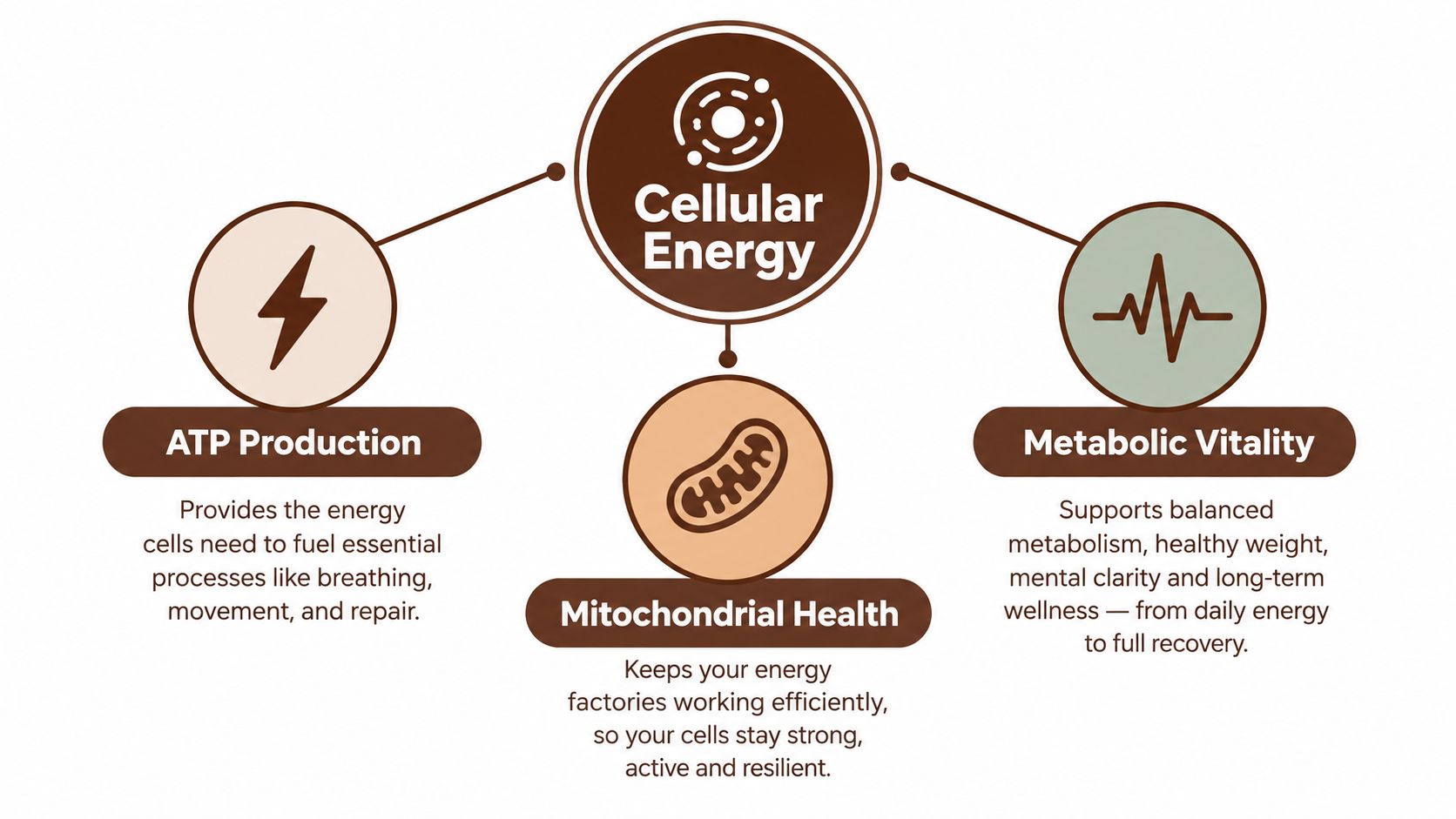
Every heartbeat, breath, muscle contraction, and nerve signal requires ATP, or adenosine triphosphate. ATP acts like a short-term energy currency. Your cells make it, spend it to perform a task, and then continually regenerate it from nutrients.
Mitochondria are the main site of cellular energy production in eukaryotic cells. Through the citric acid cycle and electron transport chain, they supply roughly 90% of the energy needed for cellular functions, according to a review of mitochondrial energy metabolism in the American Journal of Physiology. That's why the familiar phrase “powerhouse of the cell” is useful, even though mitochondria also participate in broader metabolic and signaling activities.
Why energy demand differs by tissue
Muscle cells need ATP to shorten their contractile fibers. Brain cells need it to maintain electrical gradients and communicate across neural networks. Heart muscle needs a dependable supply because it contracts continuously. These tissues can tolerate little disruption in energy delivery, so they depend heavily on coordinated mitochondrial function.
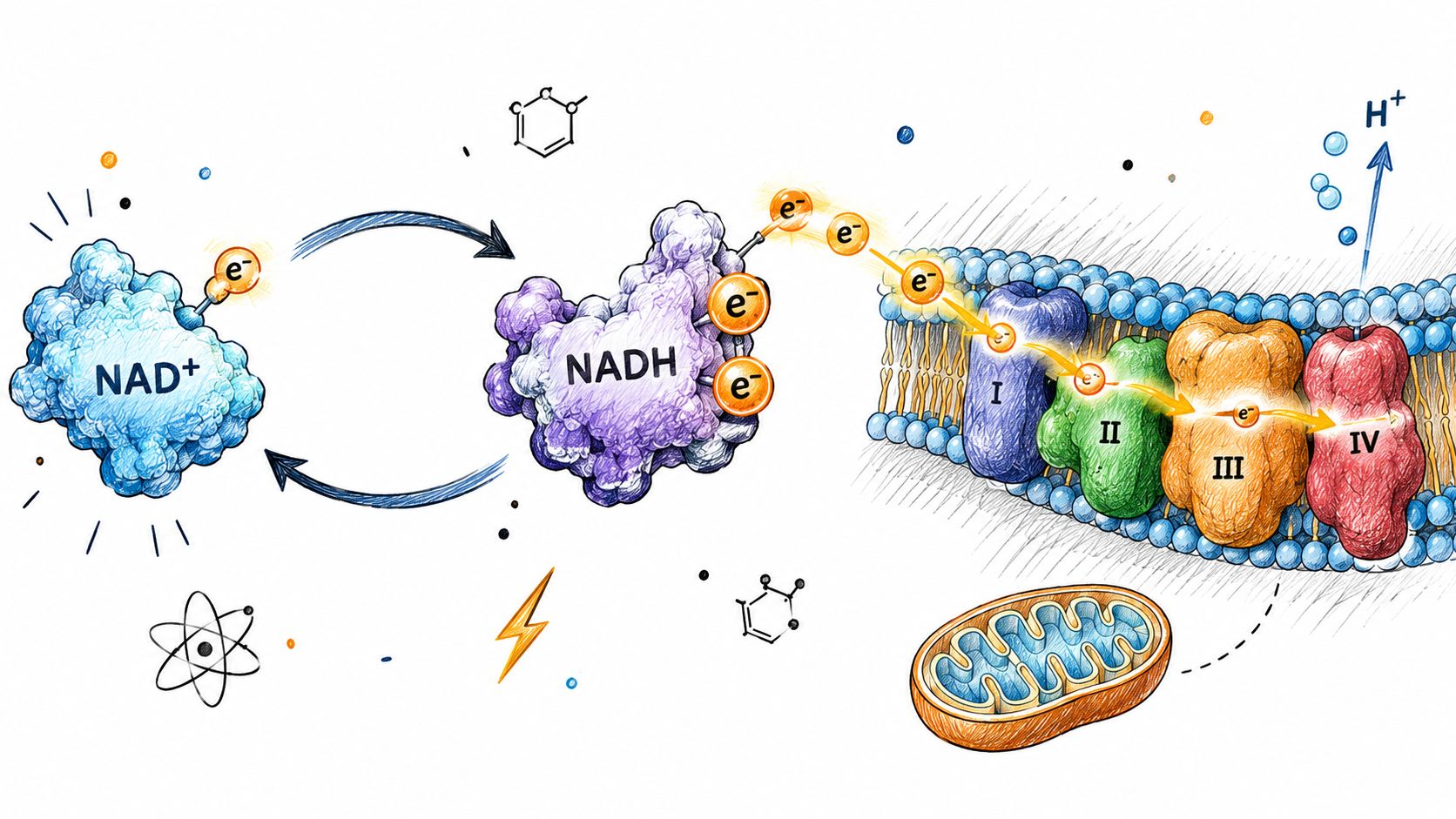
NAD+ helps coordinate that supply. In its oxidized form, NAD+ accepts electrons during metabolism and becomes NADH. NADH then carries those electrons toward oxidative phosphorylation, where the respiratory chain uses their energy to support ATP synthesis. When the NAD+/NADH cycle becomes constrained, electron flow and energy output can also become constrained.
Clinical perspective: Feeling tired doesn't prove that your mitochondria or NAD+ metabolism are impaired. Fatigue has many possible causes, including insufficient sleep, illness, medication effects, mood disorders, nutrient deficiencies, and excessive training. Cellular energy biology explains one important mechanism, not every symptom.
The practical lesson is straightforward. Daily vitality depends on a continuous chain, from nutrient processing to electron transfer to ATP formation. A supplement that changes one biochemical marker may affect that chain, but it doesn't automatically guarantee better stamina, concentration, recovery, or healthy aging.
The Three Stages of Cellular Respiration Explained
Your body doesn't turn food into ATP in one step. It uses a sequence of pathways that progressively extract energy from glucose. A useful analogy is a power plant with three linked departments. The first breaks down the raw material, the second loads energy onto transport molecules, and the third converts that stored energy into ATP.
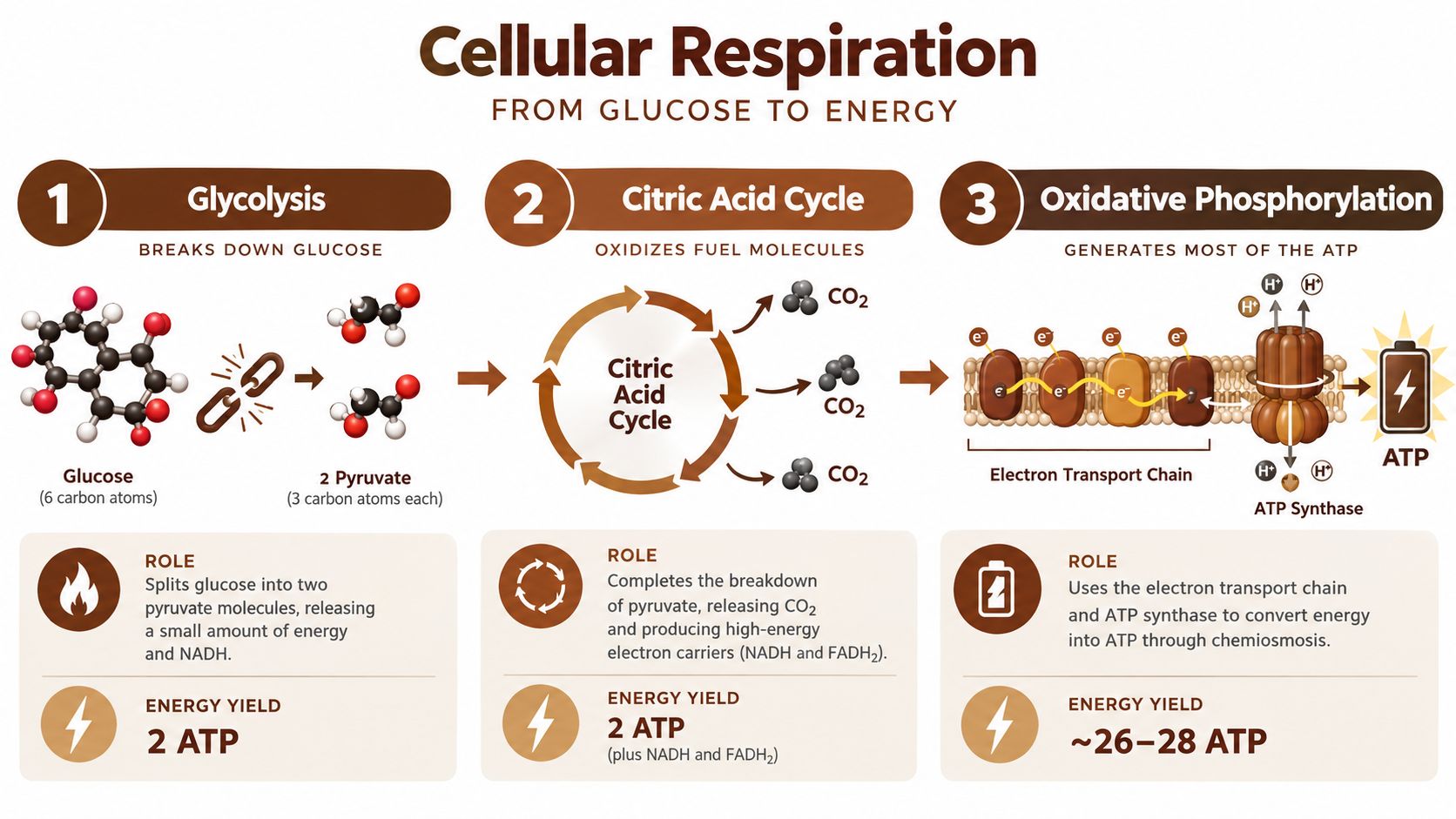
Glycolysis begins in the cell fluid outside the mitochondria. It splits one glucose molecule into smaller molecules and produces 2 ATP per glucose molecule. Glycolysis can provide energy quickly, but it captures only a small portion of glucose's available energy.
From carbon fragments to electron carriers
The products of glycolysis are processed into molecules that enter the citric acid cycle, also called the TCA or Krebs cycle. This pathway operates inside mitochondria and removes high-energy electrons from fuel fragments. Those electrons are transferred mainly to NAD+ and FAD, creating NADH and FADH2.
The citric acid cycle is therefore less like an ATP factory and more like a loading station. It prepares electron carriers for the final stage. Without that handoff, the respiratory chain would lack much of the reducing power it needs.
Why oxidative phosphorylation produces more ATP
In oxidative phosphorylation, NADH and FADH2 deliver electrons to the electron transport chain in the inner mitochondrial membrane. As electrons move through the chain, their energy helps establish a proton gradient. Protons then flow through ATP synthase, an enzyme that uses this gradient to produce ATP.
Modern biochemistry sources estimate that oxidative phosphorylation contributes to a total yield of about 30 to 32 ATP per glucose molecule, compared with 2 ATP from glycolysis alone. The Khan Academy explanation of oxidative phosphorylation also explains why older figures near 38 ATP are no longer the preferred estimate. Transport costs and improved accounting of proton coupling efficiency lowered the modern calculation.
That efficiency gap explains why oxygen-supported mitochondrial respiration matters for sustained activity. Glycolysis can help meet an immediate demand, but oxidative phosphorylation extracts far more usable energy from the same glucose molecule.
A product such as an NMN Supplement is designed around the idea of supplying a precursor to NAD+ biosynthesis. That addresses one part of the pathway, but it doesn't replace the rest of cellular respiration or establish that a person will experience a functional benefit.
How NAD+ and NADH Power the Electron Transport Chain
NAD+ and NADH are two forms of the same redox cofactor. NAD+ is ready to accept electrons. After accepting them, it becomes NADH, which carries those electrons to reactions that can use their energy. NADH is then converted back into NAD+, allowing the cycle to continue.
Think of NAD+ as an empty rechargeable battery and NADH as a charged battery moving toward the respiratory chain. The goal isn't to accumulate one form indefinitely. The cell needs both forms in the right relationship, with enough NAD+ available to accept electrons and enough NADH moving through downstream energy-producing reactions.
The canonical mitochondrial model associates each NADH oxidized through the respiratory chain with about 3 ATP. This older convention is higher than the modern whole-glucose estimate because it doesn't fully reflect transport costs and updated coupling assumptions. The distinction matters: a per-carrier estimate and a complete cellular yield aren't interchangeable.
Why the ratio matters
The NAD+/NADH ratio influences the flow of metabolism through glycolysis, the TCA cycle, and oxidative phosphorylation. A cell with too much reduced NADH and too little available NAD+ may have difficulty accepting more electrons from incoming fuel. That can slow the overall sequence even when nutrients are present.
A review in Frontiers in Aging Neuroscience describes NAD+ availability and the NAD+/NADH ratio as regulators of metabolic flux. This is why “raise NAD+” is an incomplete goal. The more meaningful question is whether a change improves the cell's ability to cycle NAD+ and NADH under real physiological demands.
The history of NAD+ research helps explain its modern popularity. Work in the 1960s established NAD+ as more than a vitamin-derived cofactor. It became recognized as a central participant in respiration, energy production, and ADP-ribosylation reactions. A later review calls it a “golden nucleotide” because its metabolism connects redox balance, oxidative stress, and age-related biology, as described in this historical review of NAD+ metabolism.
Coenzyme Q10 also participates in electron transfer, which is why readers often encounter it alongside NAD+ discussions. A separate explanation of its role appears in this overview of liposomal coenzyme Q10. A topical product such as NAD+ Cream belongs to a different delivery category and shouldn't be assumed to produce the same systemic effects as an oral precursor.
The Evidence Gap Around NAD+ Supplements
The most important distinction in this field is the difference between biochemical target engagement and a meaningful improvement in daily function. Oral nicotinamide riboside, or NR, and nicotinamide mononucleotide, or NMN, can increase circulating or cellular NAD-related biomarkers in human studies. That finding shows that the intervention interacts with the intended pathway. It doesn't, by itself, show that someone will have more energy, better recovery, improved insulin sensitivity, or healthier aging.
A 2026 systematic review of 113 human and rodent intervention studies found that oral NR and NMN reliably increased NAD-related biomarkers in humans, while functional, metabolic, and performance outcomes were heterogeneous or null. The review called for larger trials with prespecified clinically meaningful endpoints in its analysis of NAD+ precursors and health outcomes.
What the evidence can and can't tell you
A higher NAD-related biomarker may be a useful laboratory signal. But consumers usually care about outcomes such as less fatigue, greater exercise capacity, better sleep, improved vascular function, or sharper cognition. Those outcomes depend on many systems beyond NAD+ availability, including training status, sleep, nutrition, disease burden, medication use, and the underlying reason for fatigue.
| Outcome Type | Evidence Quality | Key Finding |
|---|---|---|
| NAD-related biomarkers | More consistent | Oral NR and NMN increased circulating or cellular NAD-related biomarkers in human studies. |
| Functional outcomes | Inconsistent | Results for energy, recovery, strength, and performance varied or showed no clear benefit. |
| Metabolic outcomes | Heterogeneous | Findings for measures such as insulin sensitivity weren't uniform. |
| Healthy aging claims | Not established | Biochemical changes don't yet demonstrate broad anti-aging efficacy. |
People who want to explore the research should distinguish human clinical evidence from laboratory or animal work. A resource on NAD studies for preclinical use can help clarify that preclinical findings are useful for generating hypotheses, but they aren't equivalent to proven benefits in people.
Decision rule: Treat a biomarker increase as evidence that a pathway changed, not as proof that your healthspan or performance improved.
That doesn't make NAD+ research irrelevant. It makes the question more precise. A responsible supplement decision should ask what compound was studied, in which population, for which outcome, and whether the outcome matters to the person taking it.
NMN vs NAD+ Supplementation Choosing the Right Approach
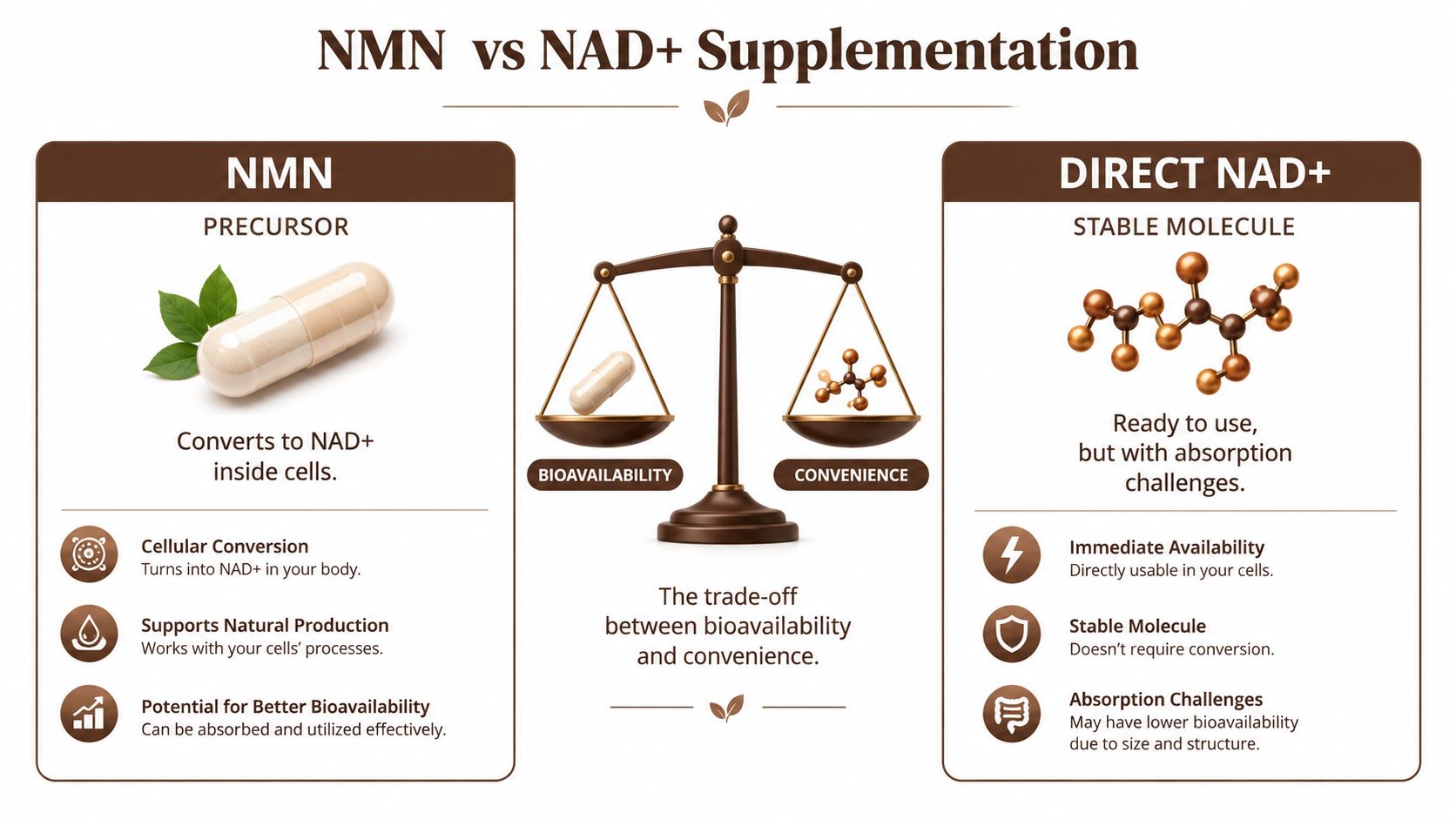
NMN and direct NAD+ products target the same biological neighborhood, but they aren't identical strategies. NMN is a precursor, meaning cells can use it in the pathway that produces NAD+. Direct NAD+ products attempt to provide the finished coenzyme, although absorption, stability, tissue distribution, and delivery method still matter.
For a consumer, the choice should begin with the intended goal rather than the most impressive label. Systemic energy support and localized skin care are different use cases, and a topical product shouldn't be evaluated as though it were an oral metabolic intervention.
A practical comparison
| Approach | What it provides | Main question to ask |
|---|---|---|
| Oral NMN | A precursor that can enter NAD+ biosynthesis | Does the product have credible testing and does the evidence fit your goal? |
| Oral NAD+ | The named coenzyme in a finished form | How does the formulation address digestion, absorption, and delivery? |
| Transdermal formats | Delivery through the skin | Is the intended effect systemic, local, or primarily cosmetic? |
| Topical creams | Application to a defined skin area | Are claims limited to the product's topical purpose? |
Oral NMN currently has the clearest biomarker rationale among these approaches because human intervention studies have repeatedly examined its relationship with NAD-related measures. That statement still doesn't establish broad functional benefits. Direct NAD+ and transdermal approaches require careful attention to formulation-specific evidence rather than assumptions based on the molecule's name.
A fuller explanation of NMN's proposed uses, safety considerations, and relationship with NAD+ appears in this guide to NMN and NAD+ support. When comparing products, look for transparent ingredient amounts, independent testing, manufacturing information, and clear limits on health claims.
A useful hierarchy is simple. Choose the delivery method that matches the target, judge the formulation rather than the buzzword, and monitor an outcome you care about. If the goal is energy, track energy and function. If the goal is skin appearance, assess the skin rather than assuming a systemic metabolic effect.
Practical Steps to Support Mitochondrial Health
Supplement decisions make more sense when they sit inside a broader routine. Mitochondrial function depends on sleep, movement, fuel availability, recovery, and overall health. No single capsule can compensate for a persistent sleep problem, untreated illness, or an inappropriate training load.
Start with the high-return basics
Regular physical activity gives muscle cells a reason to improve how they handle energy. Endurance-oriented work, resistance training, and ordinary daily movement can serve different purposes, so the most sustainable choice is usually the one you can repeat without aggravating pain or exhaustion.
Sleep deserves equal attention. Keep a consistent sleep and wake pattern, reduce avoidable evening stimulation, and investigate persistent snoring, insomnia, or daytime sleepiness with a clinician. A person who is chronically sleep deprived may interpret normal fatigue as a need for more supplements.
Food supplies the carbon skeletons and cofactors used throughout metabolism. Favor a varied eating pattern with adequate protein, fiber-rich plant foods, and minimally processed sources of carbohydrate and fat. Extreme restriction can be counterproductive when it reduces total intake, limits nutrients, or makes exercise recovery difficult.
Practical rule: Improve the routine that affects energy every day before adding a product that may affect one biochemical pathway.
Use supplements selectively
If you're considering a product, define the reason first. Record a simple baseline such as perceived afternoon energy, exercise tolerance, or recovery quality, then avoid changing several products at the same time. Discuss supplementation with a healthcare professional if you're pregnant, nursing, managing a medical condition, or taking prescription medication.
The cell energy supplement guide can provide additional product context, but marketing language shouldn't substitute for clinical evaluation. Himalayan Shilajit Gold Gummies are one example of a mineral and botanical supplement format. Their presence in a routine doesn't establish that they improve mitochondrial function or resolve unexplained fatigue.
A systems approach also means checking common medical causes when tiredness persists. A clinician may consider sleep disorders, anemia, thyroid disease, mood symptoms, medication effects, infection, and metabolic conditions rather than assuming the answer is low NAD+.
Where Cellular Energy Research Is Heading
The next phase of cellular energy research will need to connect laboratory signals with outcomes that patients recognize. Researchers are increasingly interested in measuring mitochondrial function, redox balance, and NAD-related changes in living people, then comparing those measurements with exercise capacity, metabolic health, vascular function, cognition, and recovery.
That shift could make supplement decisions more individualized. A future study may show that a precursor helps a defined group with a specific biological limitation while offering little value to people without that limitation. It may also show that a product changes a biomarker without changing how someone feels or performs. Both results would be useful.
Consumers should watch for trials with clear participant descriptions, prespecified clinical endpoints, appropriate comparison groups, and enough follow-up to assess meaningful change. Reviews of metabolic interventions for aging can help readers follow the broader field, but emerging research shouldn't be confused with established treatment.
The central principle remains stable. Mitochondria, ATP, NAD+, and the electron transport chain form a connected system, but changing one component isn't the same as improving the whole person. Strong decisions combine sound physiology, realistic expectations, professional guidance when needed, and attention to outcomes that matter in ordinary life.
REVETIX offers products built around cellular energy and longevity themes, including an NMN precursor supplement and topical NAD+ formats. Visit REVETIX to review the available formulations and consider which, if any, fits your goals alongside sleep, movement, nutrition, and qualified medical advice.