


A 2025 human study found that liposomal CoQ10 produced a peak plasma concentration of 11,294 ± 998 ng/mL after a single dose, with total 24-hour exposure reaching 104,051 ± 2,762 ng/mL × 24 h. The study reported substantially stronger absorption than non-liposomal CoQ10 in the same research context, offering a useful answer to the question behind the marketing: can the delivery system change how much CoQ10 reaches the bloodstream? The published human study suggests that it can.
That result doesn't prove that every product labeled “liposomal” will improve energy, exercise performance, or cardiovascular health. It does show why formulation matters alongside the milligram amount on the front of the bottle. To understand the difference, start with what CoQ10 does, why it's difficult to absorb, and how a liposomal carrier changes the journey from capsule to circulation.
Table of Contents
- What Is CoQ10 and Why Delivery Format Matters
- How Liposomal Delivery Actually Works
- The Bioavailability Evidence for Liposomal CoQ10
- Health Benefits and Who Notices Them
- Practical Dosing and Daily Use
- Liposomal vs Ubiquinol vs Standard CoQ10
- Choosing a Quality Liposomal CoQ10 Product
- Putting It All Together and Smart Next Steps
What Is CoQ10 and Why Delivery Format Matters
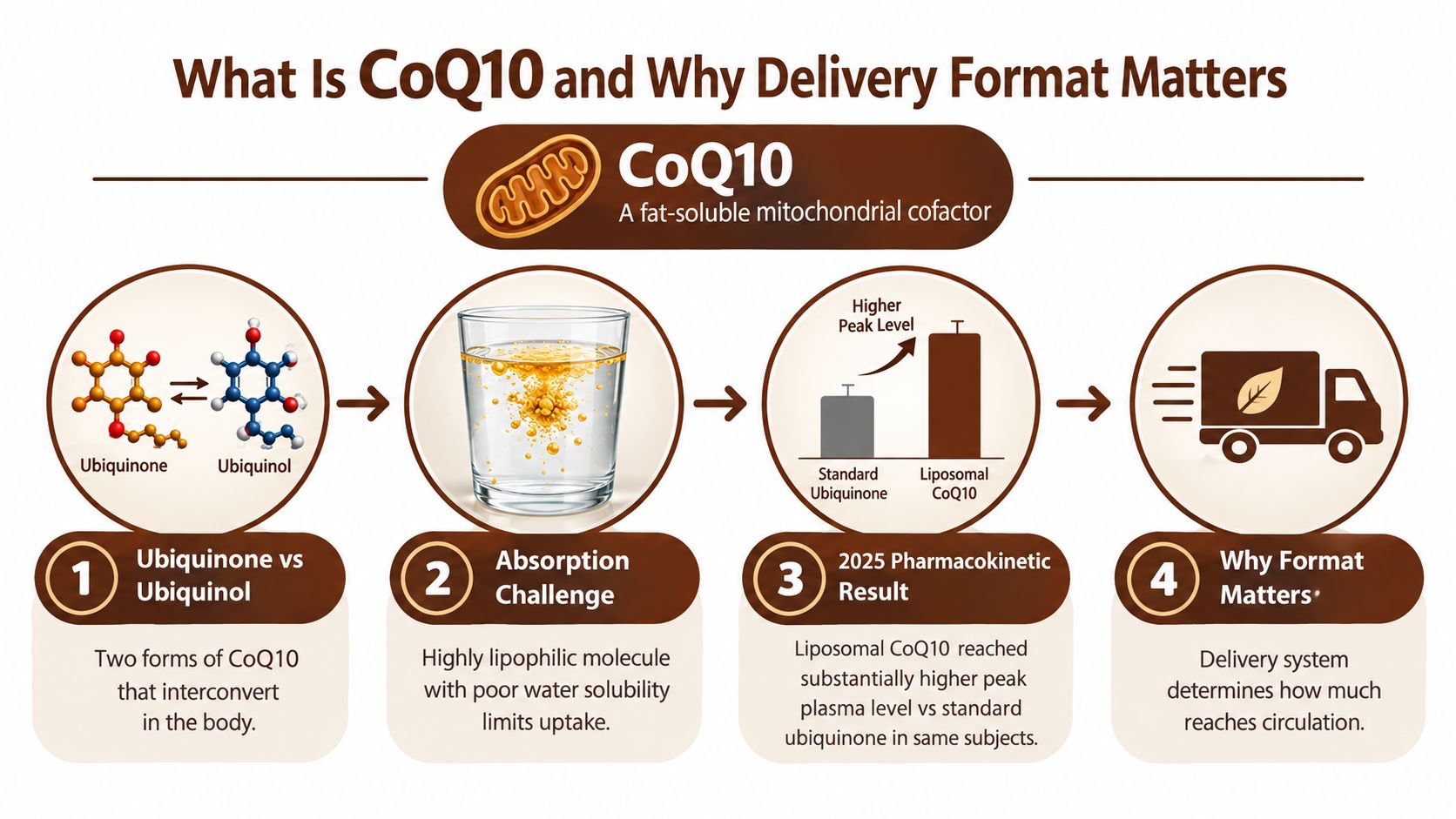
Coenzyme Q10, or CoQ10, is a fat-soluble compound used inside mitochondria, the structures that help cells make energy. It shuttles electrons through the mitochondrial energy-production system and also participates in antioxidant defense. A simple analogy is a spark plug combined with rust protection. CoQ10 helps keep the cellular energy machinery moving while helping protect vulnerable fats and membranes from oxidative damage.
The molecule comes in two main forms, ubiquinone and ubiquinol. They can interconvert in the body, so the distinction matters, but it doesn't replace the larger question of whether the supplement survives digestion and enters circulation effectively.
The absorption problem
CoQ10 is poorly soluble in water, and its relatively large molecular structure creates an additional obstacle for oral absorption, as described in the 2025 human pharmacokinetic publication. Your digestive tract is largely watery. A fat-soluble nutrient therefore needs to disperse, interact with bile and dietary lipids, cross the intestinal lining, and then reach the bloodstream.
That's why two supplements containing the same stated dose may not behave identically. A dry powder can remain poorly dispersed, while an oil-based or liposomal formulation may present the molecule in a more absorption-ready environment.
The practical lesson: a larger dose isn't automatically a better-absorbed dose.
Age, medication use, and overall physiology can also influence a person's CoQ10 status and response. The body makes CoQ10 naturally, but production and tissue needs can vary across life stages and health conditions. The central question isn't “How much CoQ10 is in the capsule?” It's “How effectively does this formulation deliver CoQ10 to circulation?”
How Liposomal Delivery Actually Works
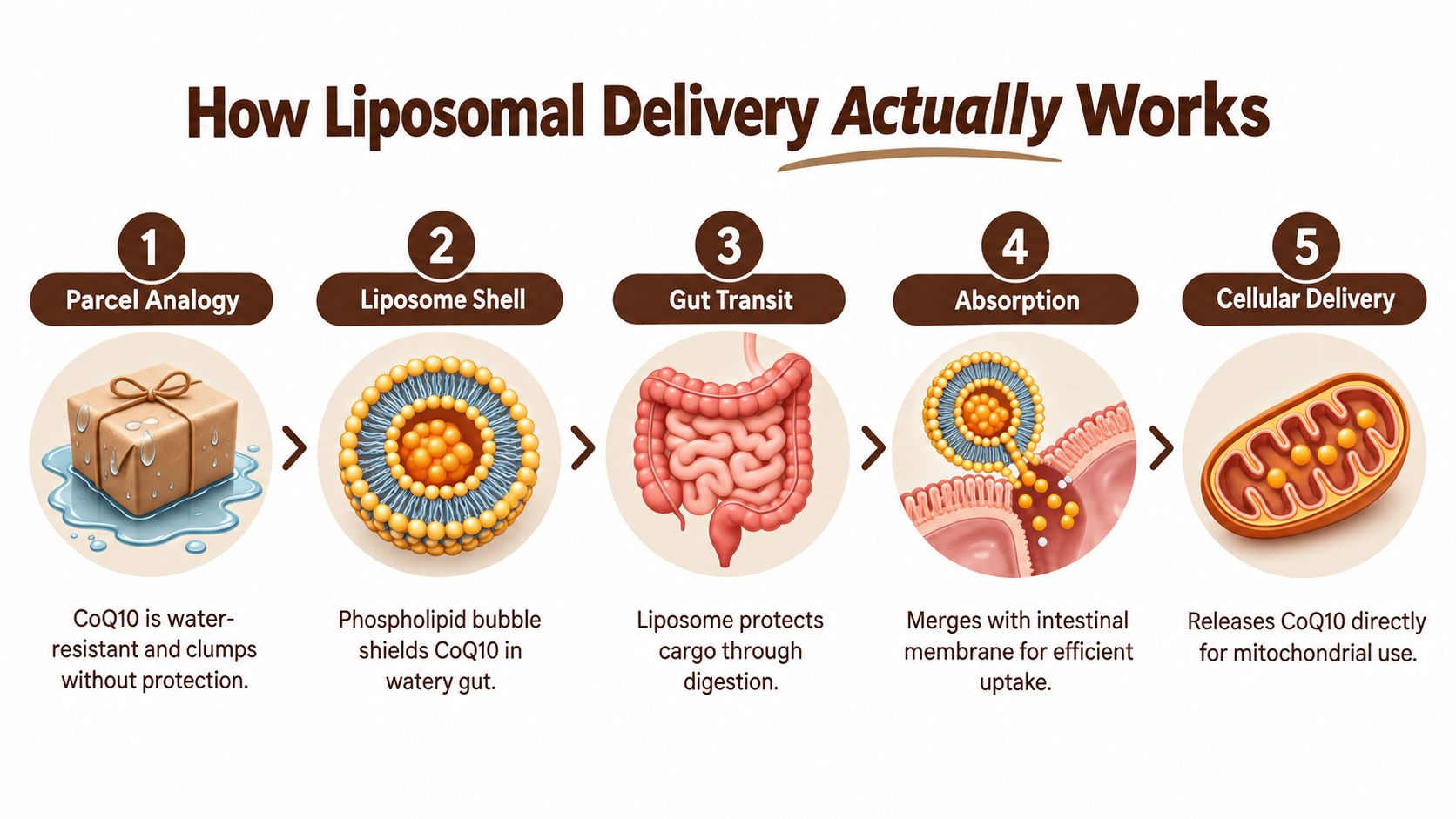
Think of CoQ10 as a water-resistant parcel placed in a puddle. Without protection, it may clump together, disperse poorly, or remain difficult for the surrounding water to carry. That resembles the challenge faced by a fat-soluble molecule in the watery digestive environment.
A liposome is a microscopic sphere made from phospholipids, the same broad class of fats that helps form cell membranes. Its bilayer creates a protective interface around the payload. Rather than leaving CoQ10 exposed as a poorly dispersible solid, the formulation holds it within a membrane-like carrier that can travel through a watery environment more effectively.
From the gut to the cell
The proposed process has several stages:
- Dispersion: The phospholipid carrier helps keep CoQ10 distributed instead of allowing it to gather into larger clumps.
- Digestive transit: The carrier presents the active ingredient within a lipid structure as it moves through the gastrointestinal tract.
- Membrane interaction: Because intestinal cells also have lipid membranes, liposomes can interact with those surfaces in ways that support uptake.
- Release: After absorption, the carrier can release CoQ10 into the surrounding biological environment.
- Systemic delivery: More CoQ10 in circulation means more opportunity for distribution to tissues.
The chemistry is not magic, and product quality controls the outcome. A liposome with weak stability, inconsistent composition, or poor payload retention may not perform like a well-engineered system.
Early formulation research documented CoQ10 inside nanoliposomes made with egg yolk phospholipid, cholesterol, and Tween 80. Later work compared liposomes with solid lipid nanoparticles, showing that researchers have focused on both carrier design and how efficiently each system holds CoQ10. Research on liposomal glutathione illustrates the broader supplement category, although a product containing another active ingredient shouldn't be treated as evidence for CoQ10.
The following video offers a visual explanation of liposomal delivery concepts:
The Bioavailability Evidence for Liposomal CoQ10
The evidence has developed in stages. Early formulation work established that researchers could incorporate CoQ10 into phospholipid carriers. A 2007 paper documented CoQ10 in nanoliposomes, while comparative work published by 2012 reported 73.1% entrapment efficiency for liposomes and 89.2% for solid lipid nanoparticles. These findings show that researchers were already measuring how much active ingredient a carrier could retain, not merely whether a liposome could be made. The early formulation paper provides the historical starting point for this development.
The more consumer-relevant shift came with human pharmacokinetic research. The 2025 study reported the plasma concentration and 24-hour exposure values described above, with liposomal CoQ10 showing substantially stronger absorption than non-liposomal CoQ10 after a single dose. A separate 2026 report described a next-generation formulation that retained more than 90% of CoQ10 after 180 days at room temperature and achieved a 4.3-fold increase in AUC and a 3.6-fold increase in Cmax compared with conventional CoQ10 in a crossover study. Those figures come from the 2026 formulation and pharmacokinetic report.
How to read the pharmacokinetic terms
- Cmax means the highest measured concentration in plasma. A higher Cmax indicates a higher observed peak in the bloodstream.
- AUC means the area under the concentration-time curve. It estimates total exposure over the measurement period.
- Tmax means the time required to reach the peak concentration.
- Relative bioavailability compares exposure between formulations.
| Study / Year | Format Compared | AUC Gain | Cmax Gain | Tmax | Relative Bioavailability |
|---|---|---|---|---|---|
| 2012 | Liposomes vs solid lipid nanoparticles | Not provided in the verified data | Not provided in the verified data | Not provided | Entrapment efficiency, not relative bioavailability |
| 2025 | Liposomal vs non-liposomal CoQ10 | AUC0-24 reported at 104,051 ± 2,762 ng/mL × 24 h for the liposomal formulation | Peak plasma concentration reported at 11,294 ± 998 ng/mL for the liposomal formulation | Not provided in the verified data | Substantially stronger absorption was reported |
| 2026 | Next-generation liposomal vs conventional CoQ10 | 4.3-fold increase in AUC | 3.6-fold increase in Cmax | Not provided in the verified data | Higher exposure in a crossover study |
The table also shows what remains unknown. The verified data don't provide comparable Tmax values for these studies, and stronger plasma exposure isn't the same as proof of better fatigue relief, exercise recovery, or disease outcomes. A pharmacokinetic result answers how much appears in blood and when. It doesn't automatically answer what a person will feel or whether a treatment changes a clinical endpoint.
For readers comparing energy supplements, Himalayan Shilajit Gold Gummies are a separate product category containing shilajit, ashwagandha, and minerals. They shouldn't be used as a substitute for CoQ10 evidence or as a direct comparison of absorption.
Health Benefits and Who Notices Them
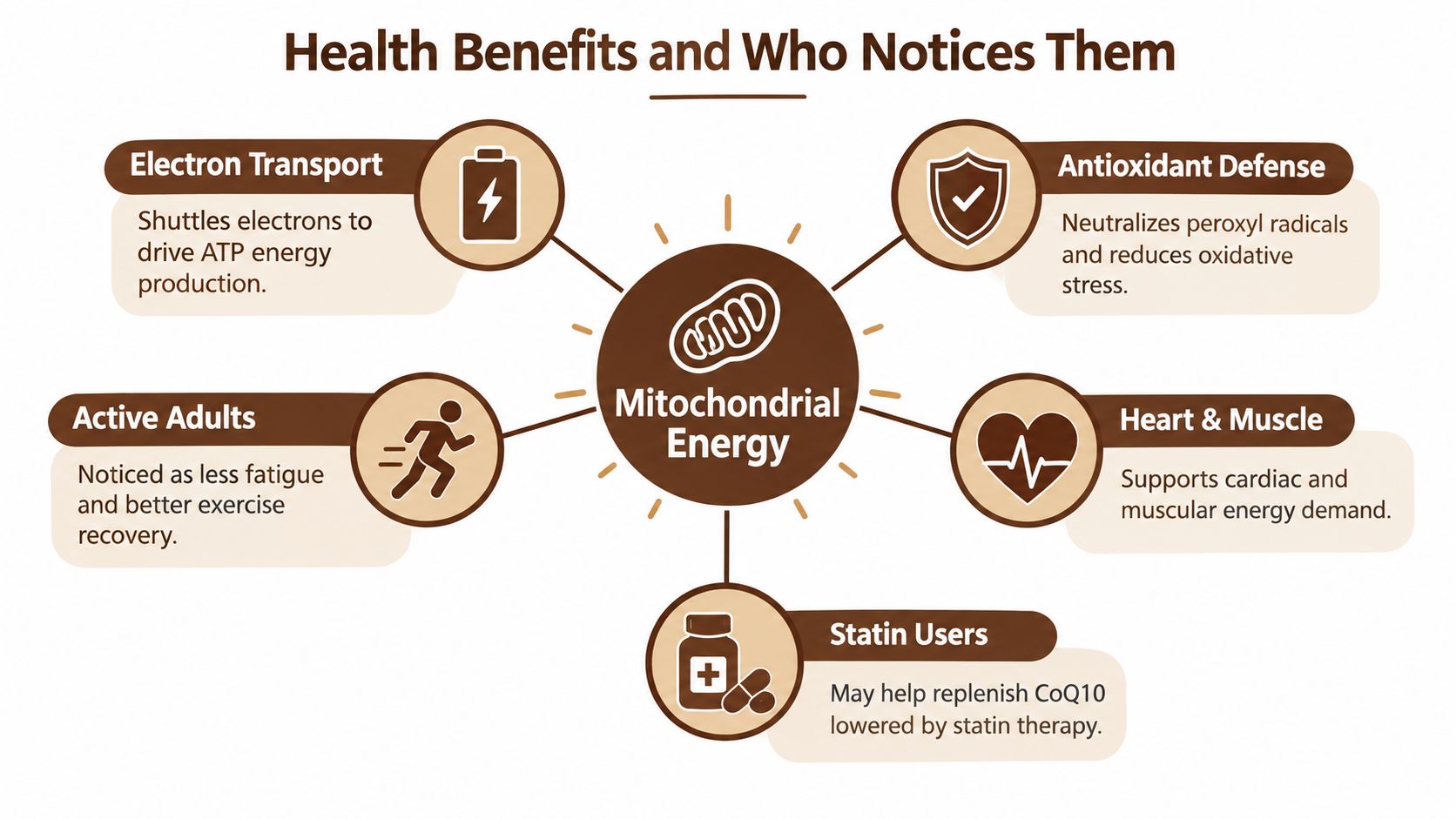
CoQ10's biology gives it a plausible connection to energy, muscles, and antioxidant protection. It helps shuttle electrons in mitochondria, supports cellular energy production, and participates in protection against oxidative processes. Those roles are relevant to tissues with high energy demands, but the presence of a plausible mechanism doesn't guarantee that supplementation will produce a noticeable result.
Three situations readers often ask about
Persistent afternoon fatigue: A person with low CoQ10 status or an underlying issue affecting energy metabolism may notice more reason to discuss supplementation with a clinician. Someone who already eats well, sleeps adequately, and has no deficiency may experience little subjective change.
Statin therapy: Statins can affect the pathway involved in the body's own CoQ10 production. People taking statins sometimes ask whether CoQ10 could support muscle comfort or energy, but the right choice depends on the medication, symptoms, and broader medical history. Supplementation shouldn't replace evaluation of unexplained muscle pain.
Healthy aging: An older adult may be interested in mitochondrial resilience, cardiovascular support, or maintaining everyday function. CoQ10 may fit that conversation, but the available pharmacokinetic evidence doesn't establish that a liposomal product prevents disease or guarantees better aging outcomes.
The strongest case for a liposomal format is often practical. If standard CoQ10 produces no noticeable result, causes digestive discomfort, or seems difficult to absorb, a better-dispersed formulation may be worth discussing. It still makes sense to judge the product by its formulation evidence rather than by the word “liposomal” alone.
More CoQ10 in plasma is a delivery finding, not a promise of more energy.
Medication review matters. People using blood thinners, antihypertensives, or chemotherapy should ask a prescribing clinician or pharmacist before starting CoQ10. A clinician can consider interactions, treatment goals, and whether symptoms such as fatigue or muscle discomfort need a different explanation. This overview of cell-energy supplements can provide additional consumer context, but it isn't a substitute for individualized medical advice.
Some consumers also consider Rhodiola Rosea for stress, focus, and daily energy. That botanical approach is distinct from CoQ10's mitochondrial role, so the ingredients shouldn't be treated as interchangeable.
Practical Dosing and Daily Use
A useful dosing plan starts with restraint. The specific studies in the verified evidence establish improved exposure for certain formulations, but they don't create a universal personal dose. Your choice should reflect the product label, your health status, the reason you're taking CoQ10, and advice from a qualified clinician.
A flexible routine
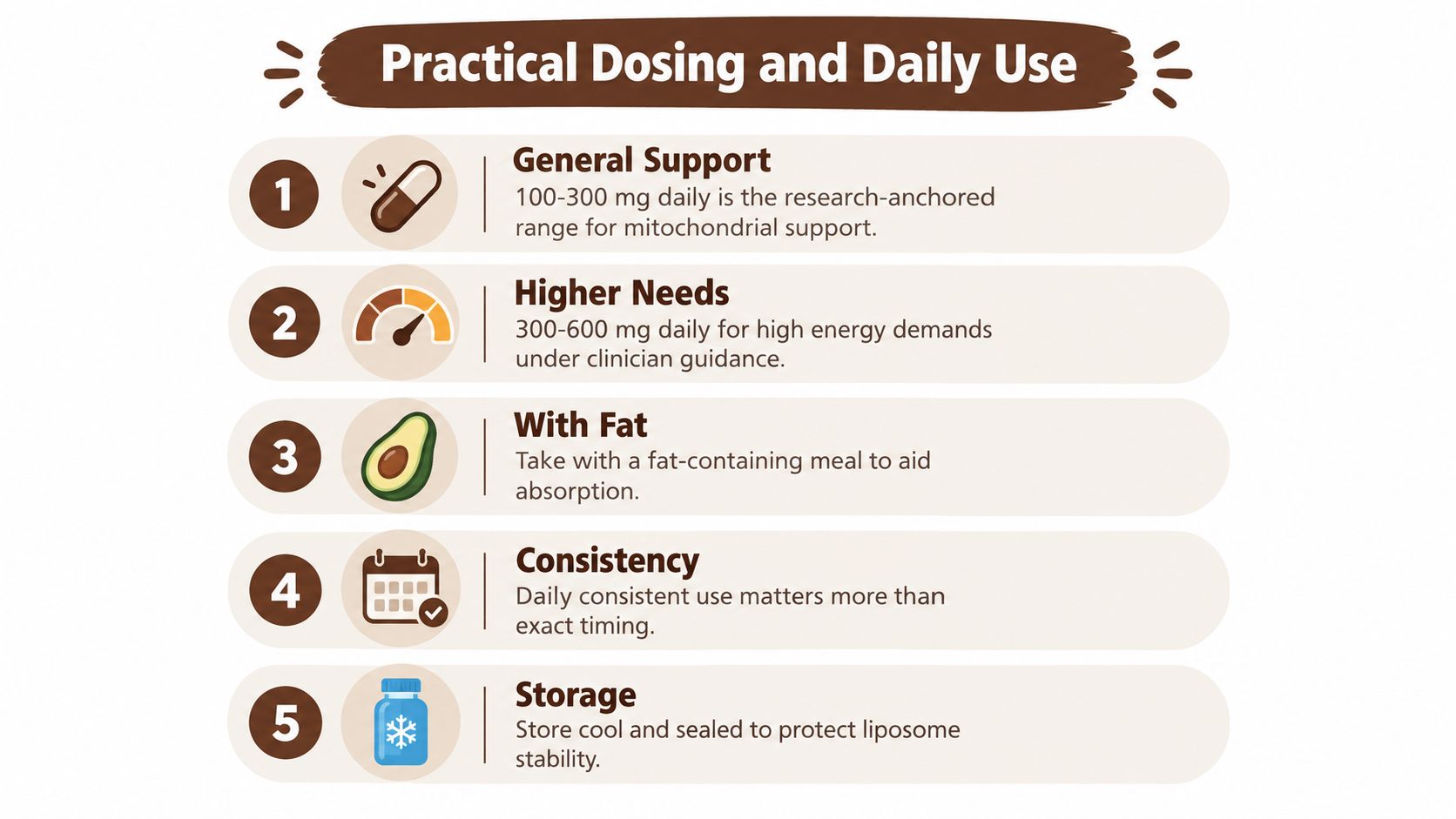
For general mitochondrial support, the research-anchored range described in the brief is 100 to 300 mg daily. Higher amounts, 300 to 600 mg daily, belong in specific clinical contexts and should be supervised rather than adopted casually. These ranges are practical guidance from the supplied brief, not a promise that any particular dose will improve symptoms.
Ubiquinone can work in a well-absorbed carrier, while ubiquinol may be a consideration for older adults or people concerned about conversion. The form and the delivery system answer different questions. Ubiquinol refers to the chemical state of CoQ10, whereas liposomal describes how the ingredient is packaged.
Take CoQ10 with a meal or snack containing dietary fat unless your clinician or product instructions say otherwise. Fat can support the normal handling of fat-soluble compounds, although a well-designed liposomal system may reduce dependence on meal conditions. If a larger daily amount causes stomach discomfort, dividing it between morning and evening may make the routine easier to tolerate.
Small habits that support consistency
- Keep the schedule simple: Daily consistency usually matters more than choosing a perfect clock time.
- Protect the formulation: Follow the label's storage instructions and keep the container sealed.
- Review the full stack: Tell your clinician about other supplements, particularly very high-dose vitamin E and products that may affect clotting or blood pressure.
- Track what changes: Record energy, sleep, muscle comfort, and exercise tolerance without assuming that every change came from CoQ10.
People taking prescription medicines, receiving chemotherapy, using blood thinners, or managing blood pressure should seek professional guidance first. Stop and seek medical advice for an unexpected reaction.
Liposomal vs Ubiquinol vs Standard CoQ10
These formats aren't three versions of the same feature. Ubiquinone and ubiquinol describe the CoQ10 molecule, while liposomal describes its delivery vehicle. A product can therefore be liposomal ubiquinone or liposomal ubiquinol, depending on its formulation.
Liposomal CoQ10 currently has compelling human pharmacokinetic evidence for improved plasma exposure in specific formulations. Its main drawbacks are practical: products can vary widely in carrier quality, stability, and documentation, and a higher price may not be worthwhile for every user.
Ubiquinol softgels offer a familiar oil-based format and have a substantial history of use. Standard ubiquinone capsules remain a straightforward, lower-cost starting point for people who tolerate them and don't have a particular reason to prioritize enhanced delivery.
| Format | Absorption Evidence | Typical Cost per Dose | Best For | Storage Notes |
|---|---|---|---|---|
| Liposomal CoQ10 | Human studies have reported substantially higher plasma exposure for particular formulations | Often higher than basic formats, but compare labels rather than assuming value | People prioritizing formulation evidence, those who didn't respond to a conventional product, or people discussing absorption concerns with a clinician | Follow the product's instructions closely, especially for liquid formulations |
| Ubiquinol softgel | Established oral format with absorption supported by its oil-based presentation | Often mid-range, product dependent | Adults who want a familiar softgel and prefer the reduced form | Protect from heat, light, and air according to label guidance |
| Standard ubiquinone | Reasonable baseline option, but absorption depends more heavily on dispersion and meal conditions | Often the budget baseline, product dependent | Younger adults with healthy digestion and a lower-cost preference | Store sealed and follow label conditions |
Cost per effective dose is impossible to judge from sticker price alone. Compare the amount of CoQ10 per serving, serving size, carrier details, testing information, and how consistently you can take the product. A cheaper supplement that you rarely tolerate may offer less practical value than a formulation you can use consistently.
For readers interested in topical products, this discussion of Q10 anti-wrinkle cream covers a different route of use. Topical and oral CoQ10 shouldn't be assumed to produce the same absorption or tissue exposure.
Choosing a Quality Liposomal CoQ10 Product
A label-reading checklist can prevent most avoidable mistakes. The word “liposomal” alone doesn't tell you how stable the carrier is, how much CoQ10 it contains, or whether the product has been independently verified.
Check the formulation details
- Look for a stated particle size. The supplied formulation guidance identifies liposomes in the 50 to 200 nm range as typical, but a number without testing context is still only a label claim. Ask whether the manufacturer provides particle-size testing and whether the measurement applies to the finished product.
- Identify the phospholipid source. Sunflower lecithin and soy phosphatidylcholine are common examples. People with allergies or ingredient preferences should check the source, while shoppers seeking non-GMO ingredients should look for a clear certification or statement rather than an assumption.
- Find encapsulation information. A meaningful disclosure is more useful than vague language such as “liposomal blend.” The 2026 report described nanosized liposomes at about 185 nm, with 88.6 ± 2.3% encapsulation efficiency, 14.2 ± 0.8% loading capacity, and a zeta potential of -41.16 mV, according to the published formulation report. Those values describe a research formulation, not a guarantee for every retail product.
- Check independent testing. Look for credible third-party testing, such as USP or NSF marks, or an accessible certificate from an independent laboratory. Verify that the testing covers identity, purity, and contaminants where relevant.
- Read the storage instructions. Phospholipid carriers can be sensitive to heat, light, oxygen, and time. A product that requires refrigeration or careful sealing should say so clearly.
The label should also state the actual CoQ10 form and amount per serving. Compare price per serving and price per stated amount, not just the bottle price. If the manufacturer won't explain the carrier, testing, or storage requirements, choose a product with clearer documentation.
Putting It All Together and Smart Next Steps
Liposomal CoQ10 makes the most sense when absorption is a central concern. Adults over 40, people taking statins, individuals with diagnosed malabsorption issues, and consumers who tried conventional CoQ10 without noticing a difference may have a stronger reason to investigate the format with professional guidance.
A conventional ubiquinone or ubiquinol product may remain perfectly reasonable for a younger person with healthy digestion, a limited budget, and no specific absorption concern. The best choice isn't determined by the most impressive label language. It depends on the form, carrier quality, testing, tolerability, cost, and the reason you want CoQ10.
Use three practical next steps:
- Track your response: Take one consistent product and dose, then record energy, muscle comfort, sleep, and exercise tolerance over four to six weeks.
- Discuss testing: If you're pursuing CoQ10 for a clinical reason, ask a clinician whether a baseline CoQ10 or plasma measurement is appropriate.
- Review interactions: Bring the label to a pharmacist or physician, especially if you take blood thinners, antihypertensives, statins, or chemotherapy.
The evidence supports improved blood-level exposure for certain liposomal formulations. It doesn't yet guarantee a noticeable energy benefit for every consumer, so use the science to make a careful purchasing decision rather than treating bioavailability as a promise.
REVETIX offers supplements and topical products focused on cellular energy, longevity, and everyday performance, including ingredients such as NMN, NAD+, shilajit minerals, and Rhodiola rosea. Visit REVETIX to review the available formulations and choose products that fit your goals, routine, and clinician-approved supplement plan.