


You're probably staring at a bottle labeled NMN 1000 mg and trying to decode what that number means.
Is it a serious dose? A marketing flex? Too much? Worth splitting across the day? And if you've spent any time comparing products, you've probably noticed something else: labels look simple, but questions aren't. You're not just buying milligrams. You're choosing a dose strategy, a quality standard, and in some markets, a product category with a messy regulatory backstory.
That's why it helps to think about NMN the way careful biohackers think about most longevity tools: not as a magic item, but as part of a broader system of sleep, recovery, tracking, and metabolic support. If you want a wider view of that mindset, this piece on how biohacking improves health gives useful context.
The number 1000 mg stands out because many shoppers first encounter NMN in smaller amounts. So when a higher-dose label appears, it naturally raises a simple question: does “more” mean “better”? Sometimes the answer is no. But with NMN, the more useful question is whether 1000 mg is a clinically recognizable dose, meaning a dose magnitude that has shown up in human research.
That's the lens to use here. Not hype. Not fear. Just translation.
Table of Contents
- Introduction to NMN 1000 mg and Why Dose Matters
- How NMN Works as a Direct NAD Precursor
- Understanding NMN 1000 mg in the Context of Clinical Dosing
- Potential Benefits Linked to NAD Restoration
- Safety Profile and Regulatory Status for NMN
- Practical Guidance for Choosing and Using NMN 1000 mg
- Key Takeaways for Your NMN Journey
Introduction to NMN 1000 mg and Why Dose Matters
A common shopping moment goes like this. One product offers a modest-looking serving. Another says NMN 1000 mg in large print. The higher number grabs your attention, but it also creates doubt. Bigger labels can mean stronger science, or just louder packaging.
With NMN, dose matters because the whole point is to affect NAD+ biology. If a dose is too low, it may still fit a wellness routine, but it may not match the level researchers use when they want to see whether the body responds in a measurable way. That doesn't mean higher is automatically smarter. It means the number should be interpreted in context.
Why 1000 mg catches attention
Actual searches for “NMN 1000 mg” aren't driven by a love of dosage math. They come from people seeking help with one of three practical questions:
- Is this a real research dose? People want to know whether the label reflects human studies or just branding.
- Is it appropriate for daily use? A high number can feel reassuring or intimidating.
- Should it be taken all at once or divided? Timing becomes more important as doses rise.
Those are good questions. They push you toward the details that matter: what NMN does, what NAD+ is, how researchers have tested oral NMN, and why legality and labeling aren't uniform everywhere.
Practical rule: Treat the label as the start of the conversation, not the answer.
What shoppers often miss
The most overlooked point is that 1000 mg is not just a round number. In human research, doses in that range have been used to look at changes in blood NAD-related markers, which gives the label more meaning than a generic “high potency” claim.
The second overlooked point is regulation. A bottle can say NMN 1000 mg and still differ from another bottle in ingredient sourcing, quality controls, and even whether the product's sale fits local rules. That matters more than most comparison pages admit.
How NMN Works as a Direct NAD Precursor
Before dosing makes sense, the molecule has to make sense.
NMN stands for nicotinamide mononucleotide. Its importance comes from what your body can do with it. NMN is a direct precursor to NAD+, a coenzyme involved in cellular energy metabolism and other core maintenance tasks. If that sounds abstract, a simple analogy helps.
Think of NAD+ as a rechargeable shuttle
Your cells are constantly moving energy around. NAD+ acts like a shuttle that helps carry the chemical “charge” needed for many metabolic reactions. When that shuttle is available in the right places at the right times, cells can do routine work more smoothly.
That work includes:
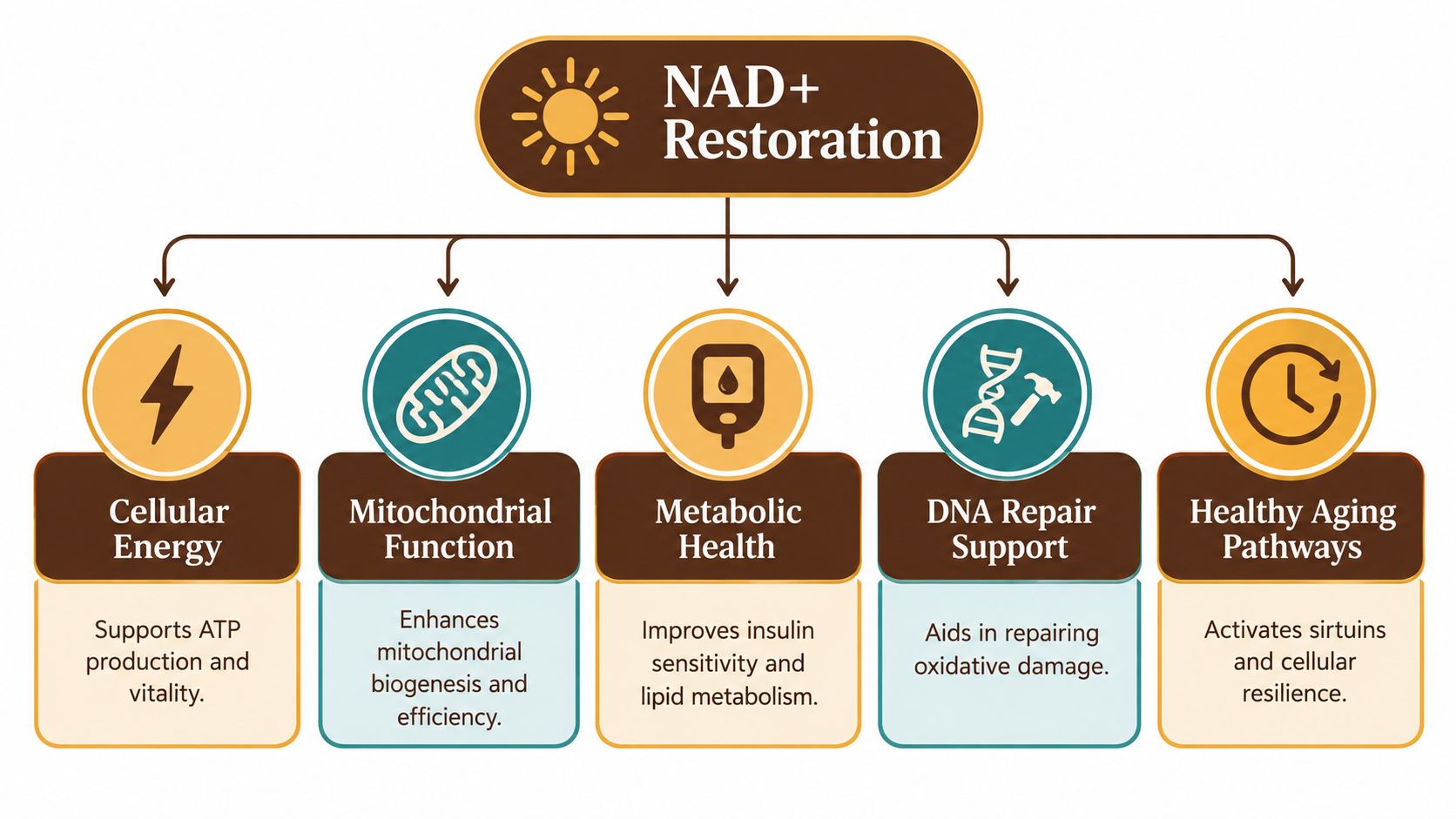
- Energy metabolism in everyday cellular function
- DNA repair support as part of normal maintenance
- Sirtuin activity, which is one reason NAD+ shows up so often in healthy aging discussions
As NAD+ availability declines with age, those systems may lose some efficiency. That's why people become interested in precursors like NMN. The strategy isn't to swallow NAD+ function directly. The strategy is to provide a building block the body can use upstream.
Why precursor language matters
Readers often get tripped up. They'll see NMN and NAD+ discussed as if they're interchangeable. They aren't. NMN is the input. NAD+ is the target.
If you want a simple comparison of that difference, this explainer on NMN vs NAD and what's the difference is helpful because it separates the precursor from the end molecule.
A product such as NMN Supplement is positioned around that precursor logic. The product description states that it uses pharmaceutical-grade β-NMN, describes NMN as a direct precursor to NAD+, and notes morning use as the suggested routine. Those details matter because they align the product category with the underlying biology rather than treating NMN as a vague energy ingredient.
Here's a short visual explanation if you prefer hearing the concept first and reading second.
A plain-language summary
You can think of the sequence like this:
- You take NMN orally
- Your body uses NMN within NAD+ biosynthesis
- Higher NAD+ availability can support pathways tied to energy and repair
NMN isn't interesting because it's trendy. It's interesting because it sits close to a molecule cells use every day.
That still doesn't answer how much someone should take. But it explains why dose has more meaning here than it does with many lifestyle supplements.
Understanding NMN 1000 mg in the Context of Clinical Dosing
You pick up two NMN products. Both put “1000 mg” on the front. One means 1000 mg in a single serving. The other means 500 mg taken twice a day. The label looks similar, but the dosing plan is not.
That difference matters because 1000 mg is a dose size that appears in human research, not just in supplement marketing.
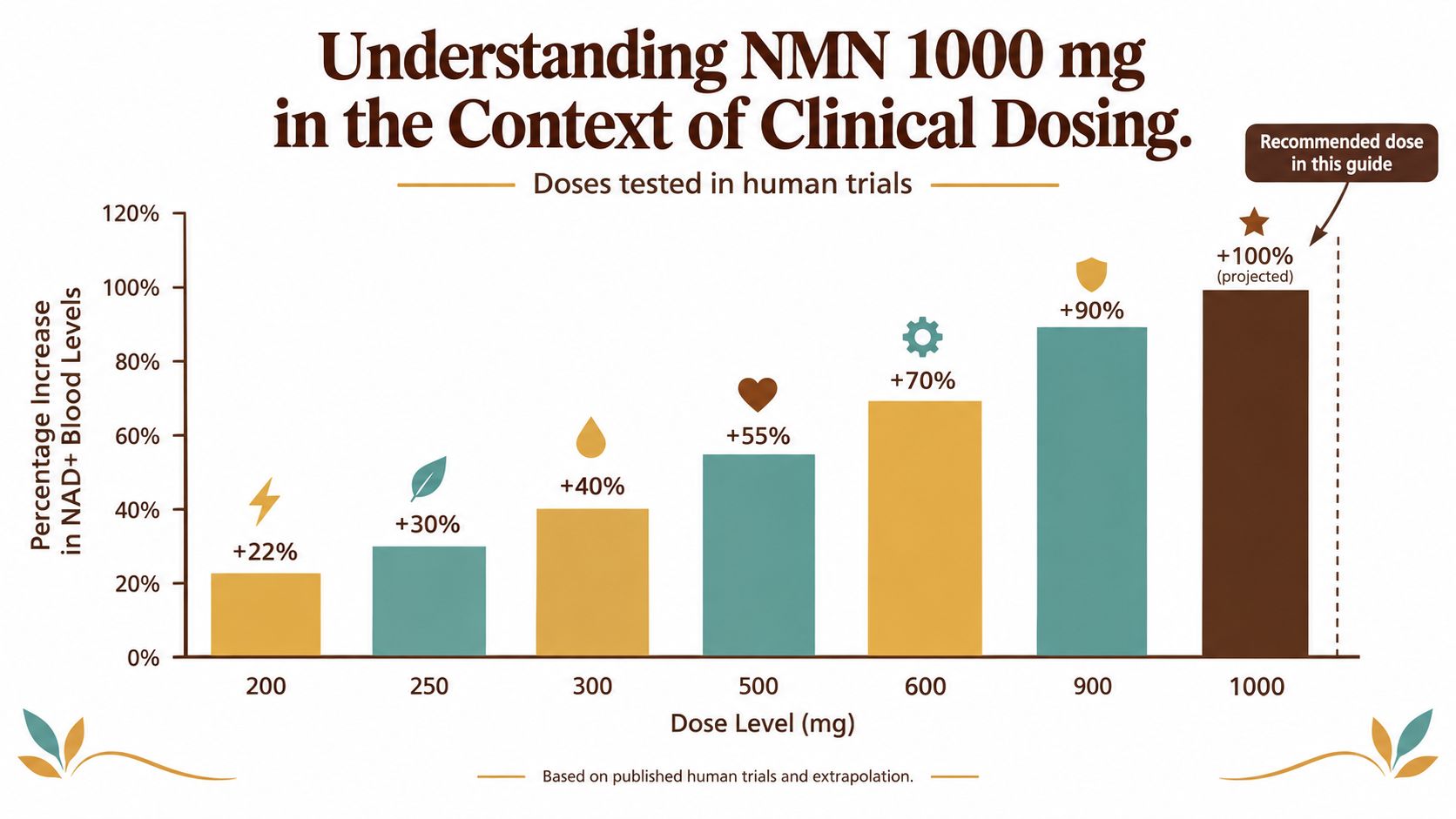
In a 14-day double-blind, placebo-controlled human study in overweight or obese adults aged 55 to 80, oral NMN at 1000 mg once daily or 1000 mg twice daily was reported as safe and produced dose-related increases in blood NAD levels and the broader NAD metabolome, according to the published study in PMC. That gives the number a clinical reference point. It places 1000 mg in the category of “studied in humans,” which is a more useful starting point than treating it as a catchy label.
What a clinician or careful reader should notice
The first point is simple. 1000 mg is a recognizable trial dose.
The second point is where confusion often starts. A studied dose does not automatically answer the practical question of how to take it. In the trial above, researchers looked at both once-daily and twice-daily patterns. That means timing is part of the dosing discussion, not an afterthought.
A helpful comparison is a daily protein goal. “100 grams per day” tells you the total, but it does not tell you whether you eat it in one meal or spread it across three. NMN labels work the same way. The total amount and the schedule are related, but they are not identical.
Why 1000 mg gets so much attention
A lot of NMN products use lower amounts, blended formulas, or front-label numbers that need careful reading. So when 1000 mg shows up, people often assume it must be either excessive or purely promotional.
The research context suggests a narrower, more practical interpretation:
| Question | Better interpretation |
|---|---|
| Is 1000 mg a made-up marketing number? | No. It matches a dose magnitude used in human research. |
| Does 1000 mg guarantee stronger real-world benefits for every person? | No. Trial dosing shows biological activity, but personal response still depends on factors such as timing, consistency, and product formulation. |
That framing helps separate clinical recognition from consumer expectation. The first is about whether the dose has a human-study anchor. The second is about what any one person may notice.
Why split dosing keeps coming up
This is one of the most overlooked parts of the NMN conversation.
The short-term human literature has included both once-daily and twice-daily use at the 1000 mg level. As noted earlier in the article, that study design is one reason people ask whether one larger serving and two smaller servings should be treated as equivalent. They may deliver the same total daily amount while creating a different exposure pattern across the day.
That does not mean everyone needs a divided dose. It means a 1000 mg label is incomplete without the schedule beside it.
Useful question: Does “1000 mg” describe one serving, or the full day's plan?
How to read a 1000 mg label without getting misled
Here are the three common possibilities:
- One serving provides 1000 mg
- Two capsules together provide 1000 mg
- The recommended daily total is 1000 mg, divided across more than one serving
This is also where product category differences matter. A single-ingredient formula makes the NMN amount easier to track. A blended product can make comparison harder if the front of the label highlights the formula name more than the actual NMN content. A listing such as NMN Complex may suit someone who wants a combined formula, but the same dosing question still applies: how much NMN is present per serving, and how is that serving meant to be used?
The practical meaning of “clinically recognizable”
For a reader trying to make sense of the number, the clearest takeaway is this: NMN 1000 mg lines up with a dose range that has been used to test systemic target engagement in humans.
That is a more grounded way to view the number. It connects the label to published dosing benchmarks, while leaving room for the actual-world details competitors often skip over, such as split dosing, daily schedule, and the fact that NMN rules differ across products and markets. A 1000 mg label can be meaningful, but only if you read it as a dosing framework rather than a promise.
Potential Benefits Linked to NAD Restoration
A 1000 mg NMN label matters only if it changes something the body can use. The target is NAD+, a molecule cells rely on the way a busy workshop relies on electricity. If power is limited, repair slows, signaling gets less efficient, and energy handling becomes less flexible.
That helps explain why interest in NMN benefits usually starts with a lab question and ends with an everyday question. First, does the dose raise NAD+ enough to matter biologically? Second, if it does, where might that show up in daily life?
What people are usually hoping to improve
For many adults, the hoped-for payoff falls into a few practical categories:
- Steadier daily energy, especially if they want support that is not centered on stimulants
- Mitochondrial function, because mitochondria need NAD+ to keep metabolic reactions moving
- Metabolic health support, particularly as part of a broader healthy-aging plan
- Cell repair processes, since NAD+ is involved in pathways tied to maintenance
- Sirtuin-related aging biology, which is one reason NAD restoration gets so much attention in longevity discussions
What a rise in NAD+ does, and what it does not prove
Human research has shown that oral NMN can raise NAD+ in measurable ways at clinically recognizable doses, including the 1000 mg range discussed earlier. Some reports describe roughly doubling, and in some protocols tripling, circulating NAD+ markers over short study periods. The useful takeaway is simple. A 1000 mg dose is not just a marketing number. It sits in a range that has shown target engagement in humans.
That said, biomarker movement and lived experience are different layers of evidence. A higher NAD+ reading does not guarantee that every person will feel more energetic, recover faster, or notice any change at all. It means the intended pathway responded.
This is the key translation point. Raising NAD+ is like adding fuel supply to a system. Whether you notice a smoother ride depends on the condition of the whole vehicle, including sleep, diet, training load, age, and baseline health.
How cellular effects map to real-world goals
The table below helps connect the biology to the reasons someone might care about NMN in the first place:
| Cellular role | Everyday reason someone cares |
|---|---|
| NAD+ supports energy metabolism | They want more stable energy across the day |
| NAD+ helps mitochondria run metabolic reactions | They want support for stamina and recovery |
| NAD+ participates in cellular maintenance pathways | They care about resilience with age |
People who want to make this less abstract often do better with tracking than guessing. A simple routine that follows energy, exercise tolerance, sleep quality, and basic lab markers can make a supplement trial more informative. Resources on health tracking for donors can serve as a useful model for structured self-monitoring.
A broader explainer on cell energy support supplements can also help if you want to place NMN inside the larger category of products aimed at cellular energy.
A clinically recognizable dose can raise the intended biomarker. The day-to-day benefit, if any, still depends on the person using it.
Where NMN fits in a broader routine
NMN usually makes the most sense as one part of a bigger plan, not as a stand-alone fix. Some people pair NAD-focused support with sleep improvement, resistance training, protein intake, or other products aimed at energy and recovery. For example, Himalayan Shilajit Gold Gummies are described as combining shilajit, ashwagandha, and minerals for daily energy and balance support. They do not work through the same mechanism as NMN. They reflect a common real-world pattern: people often build routines around complementary goals rather than expecting one ingredient to cover every aspect of healthy aging.
Safety Profile and Regulatory Status for NMN
You find an NMN 1000 mg bottle online. The front label suggests a clear answer. Safe or risky. Legal or questionable. Real life is less tidy than that.
NMN has two separate questions around it. First, what has human research shown about tolerability? Second, how do different regulators classify and allow the ingredient? Keeping those questions separate helps you read a product page more clearly.
What human safety research can reasonably support
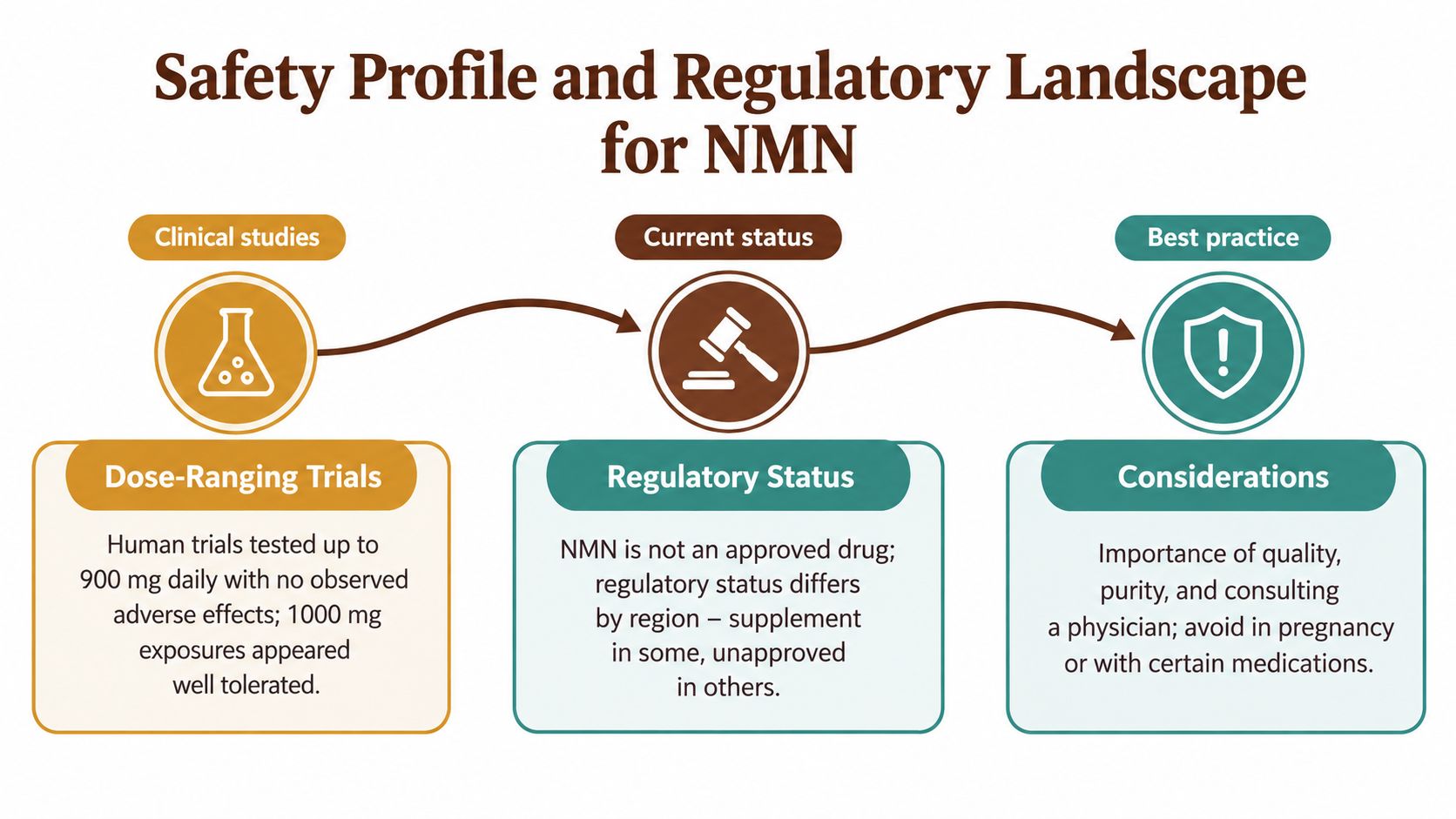
Short-term human research gives useful context, especially because NMN 1000 mg is often discussed as if it were only a marketing number. In controlled trials, oral NMN has been studied at upper-range daily doses close to that benchmark, with reports of good tolerability in the populations studied. That matters because it places NMN near a clinically recognizable dosing range, not just inside brand copy.
That still leaves limits.
Human trials can show that a dose was tolerated under study conditions. They do not prove that every person should use that amount, that long-term use is settled, or that a higher label always adds value. A research dose and a personal best dose are not automatically the same thing.
Who should stop and ask a clinician first
Extra caution makes sense if you are pregnant, nursing, taking prescription medications, managing an ongoing medical condition, or stacking several supplements with overlapping goals.
This is especially important with NMN because it sits at the intersection of metabolism, aging interest, and self-experimentation. People often treat that category as gentle because it sounds nutrient-like. Careful review is still the better move.
The smartest question is often not “Can I add NMN?” It is “How does NMN fit with everything I already take and the reason I take it?”
Why NMN regulation has been confusing
NMN's safety profile and its legal status are related, but they are not the same issue. A product can have human tolerability data behind it and still face regulatory disagreement.
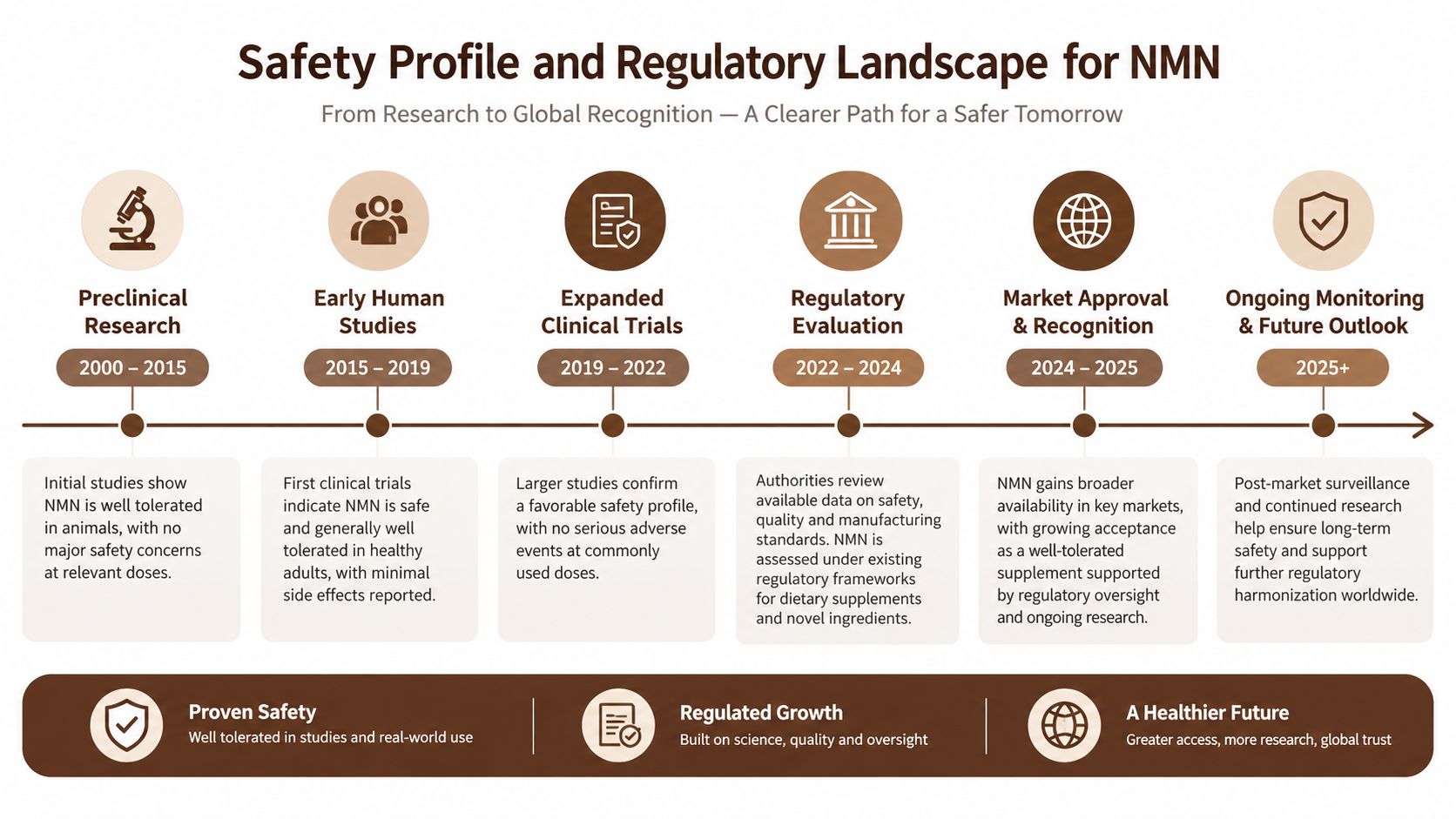
In the United States, a major turning point came when FDA took the position that NMN was excluded from the definition of a dietary supplement because of its prior investigation as a drug. This summary of the 2022 FDA interpretation of NMN explains why that decision affected labeling, product availability, and compliance discussions.
That is why the phrase “NMN 1000 mg” can sound straightforward while the market situation behind it is not. The dose on the bottle tells you how much is in a serving. It does not tell you whether the product's category, sale status, or import status is handled the same way across regions.
What this means for buyers in practice
Regulation for NMN is fragmented across markets. One country may treat it one way, while another applies different rules based on ingredient notices, product positioning, or enforcement priorities.
A practical filter helps:
- Check local rules where you live, not just where the seller operates.
- Read past the headline dose and confirm ingredient identity, manufacturing details, and testing information.
- Be careful with cross-border orders, because availability abroad does not guarantee the same status at home.
For a shopper, that is the key takeaway. NMN 1000 mg is better understood as a dose with some connection to human study ranges, inside a product category that still faces uneven regulatory treatment.
Practical Guidance for Choosing and Using NMN 1000 mg
You are standing in front of two NMN products. One offers 250 mg per serving. The other says 1000 mg in large type across the label. The core question is not which bottle looks stronger. The core question is whether 1000 mg gives you a dose that lines up with how human studies have tested oral NMN, and whether that amount fits your routine well enough to use consistently.
That is the useful way to read NMN 1000 mg. Treat it as a clinically recognizable dose range marker, not a marketing trophy. Human research has tested oral NMN in the high hundreds of milligrams per day, including a randomized trial testing up to 900 mg daily. So a 1000 mg label sits close to a range people can recognize from trial design, even though it is not the same as saying every product or every person will respond the same way.
Who might consider 1000 mg
A 1000 mg daily amount may make sense for adults who want their serving size to map more closely to the upper end of studied oral dosing, rather than using a small symbolic amount. It can also fit people who prefer a simple plan, such as taking one clearly defined daily target instead of guessing whether a lower dose is enough for their goals.
Starting lower can still be reasonable. Some people prefer to assess tolerance first, especially if they are already taking several supplements or want to see how a new routine feels before committing to a higher daily amount.
A simple buying checklist
Labels can make dose selection feel more complicated than it is. A good filter brings it back to a few practical checks:
- Confirm the ingredient identity. The label should clearly state NMN, and some brands specify β-NMN.
- Look for quality controls. Third-party testing and GMP manufacturing give you a better shot at getting what the label claims.
- Check the serving design. A 1000 mg label may mean one scoop, two capsules, four capsules, or a split serving across the day.
- Match the product to your habits. A dose only helps if the format is easy for you to take regularly.
If you want a more detailed buying framework, this guide on how to choose the best NMN supplement helps you compare purity signals, serving design, and formulation details instead of stopping at the milligram number.
Timing and daily use
Timing matters less than consistency, but timing still affects real-world use. Many people choose morning intake because it is easier to remember and fits the reason they are interested in NAD support in the first place. Others split the dose, such as half earlier in the day and half later, because dividing intake can be a practical way to spread a larger serving across waking hours.
A simple comparison helps here. Taking 1000 mg all at once is like filling a water bottle in one pour. Split dosing is like topping it up twice during the day. Neither approach is automatically better for every person, but the format on the label should make your preferred routine easy rather than awkward.
Resources that compare broader Pause Medical wellness aids can also help if you are placing NMN inside a larger supplement plan rather than judging it as a stand-alone product.
One more distinction that prevents confusion
Oral NMN and topical NAD-themed products belong in different buckets. Oral NMN is used with the goal of systemic NAD precursor intake. A topical product such as PDRN Volufiline NAD+ BALM is described for visible skin support. Same broad NAD language, different route, different purpose, different expectations.
Key Takeaways for Your NMN Journey
The most useful shift is this one: stop reading NMN 1000 mg as a flashy label and start reading it as a dose with clinical context.
NMN matters because it's a direct precursor to NAD+. The 1000 mg amount matters because human studies have used that magnitude to test whether oral NMN changes blood NAD-related markers. That gives the number meaning. It doesn't guarantee a personal outcome, but it does move the conversation from marketing toward biology.
The second big takeaway is that legality and product consistency aren't uniform. In the U.S., FDA reversed course in 2025 and said NMN is not excluded from the dietary supplement definition, while other markets have different timelines and ingredient rules, including a 2025 Australian approval cited in industry coverage, according to the NPA update on NMN legality. So if you're comparing products across countries, don't assume the same label means the same regulatory footing.
A simple decision checklist helps:
- Do you want a clinically recognizable dose or a lower starting point?
- Can you verify quality signals like testing and manufacturing standards?
- Does the serving design fit your routine, including possible split dosing?
- Do you need clinician input before adding it?
Approach NMN as one tool in a broader healthy-aging strategy. That mindset usually leads to better decisions than chasing the biggest number on the bottle.
If you want products built around this cellular-energy and longevity conversation, REVETIX offers oral NMN options along with complementary topical and wellness formats. It's a useful place to compare how different NAD+ and NMN-related products are positioned so you can choose a format that fits your routine.