


Some mornings you smooth on your moisturizer, add a little concealer, and head out thinking you've done enough. Maybe you work indoors. Maybe it's cloudy. Maybe your anti-aging serum feels like the “real” treatment and SPF feels optional.
That's the exact moment when an anti aging face cream with SPF matters most.
For facial aging care, it isn't really a hunt for one miracle ingredient. It's a daily protection habit. The cream has to hydrate well enough that you'll use it, sit comfortably under makeup, and give broad-spectrum coverage that still works in real life, not just on the label. The hard part isn't finding a high SPF number. The hard part is getting enough product onto enough skin, every morning, without turning your routine into a chore.
Table of Contents
- Why Daily SPF Moisturizer Matters for Visible Aging
- How SPF and Broad Spectrum Standards Support Anti Aging Claims
- How to Choose the Right Formula for Your Skin and Goals
- How to Apply for Full Protection Without Waste or White Cast
- Daily Habits and Mistakes That Make or Break Results
- Building a Consistent Routine That Keeps Skin Resilient
Why Daily SPF Moisturizer Matters for Visible Aging
At 8 a.m., your skin usually has two jobs. It needs moisture so it feels comfortable and looks smoother. It also needs protection from the daylight you'll collect in small doses, walking the dog, driving, sitting near a window, or running errands at lunch.
That's why an anti aging face cream with SPF makes sense for so many routines. It combines hydration, barrier support, and UV defense into one step people are more likely to repeat. And with visible aging, repetition matters more than occasional effort.
What your morning product is really doing
Dry skin can make fine lines look sharper. A good moisturizer helps soften that look by supporting the skin surface. SPF handles a different part of the problem. It helps reduce the daily exposure that contributes to early visible aging over time.
Those are separate benefits, but they work well together. Moisture can improve how skin looks today. Sun protection helps limit the damage that shows up later.
If you already use antioxidants in the morning, a formula that layers well matters too. Pairing a stable vitamin C step with daily sun protection is one reason many people look for lightweight textures that don't pill. If you want a practical companion read, this guide to buffered vitamin C helps explain why gentler antioxidant formats can fit more easily into a consistent routine.
Consistency beats the perfect bottle
Many readers get stuck on the wrong question. They ask, “What's the strongest anti-aging cream?” A better question is, “What will I apply every single morning?”
Daily facial SPF is a behavior problem before it's a product problem.
If a formula stings your eyes, leaves a cast, or feels greasy by noon, you'll start skipping it. A pleasant hybrid moisturizer often wins because it lowers resistance. That doesn't make it flawless. It just makes it usable, and usable products are the ones that become habits.
By the end of this guide, you should be able to tell whether your current SPF moisturizer is enough for your skin, your schedule, and your aging goals, and when a separate sunscreen makes more sense.
How SPF and Broad Spectrum Standards Support Anti Aging Claims
A jar can say SPF 30 on the front and still underdeliver in real life if the product only goes on in a thin layer or misses high-exposure areas. That is why anti-aging claims around SPF make more sense when you treat sunscreen as a daily dosing and coverage issue, not just a label number.
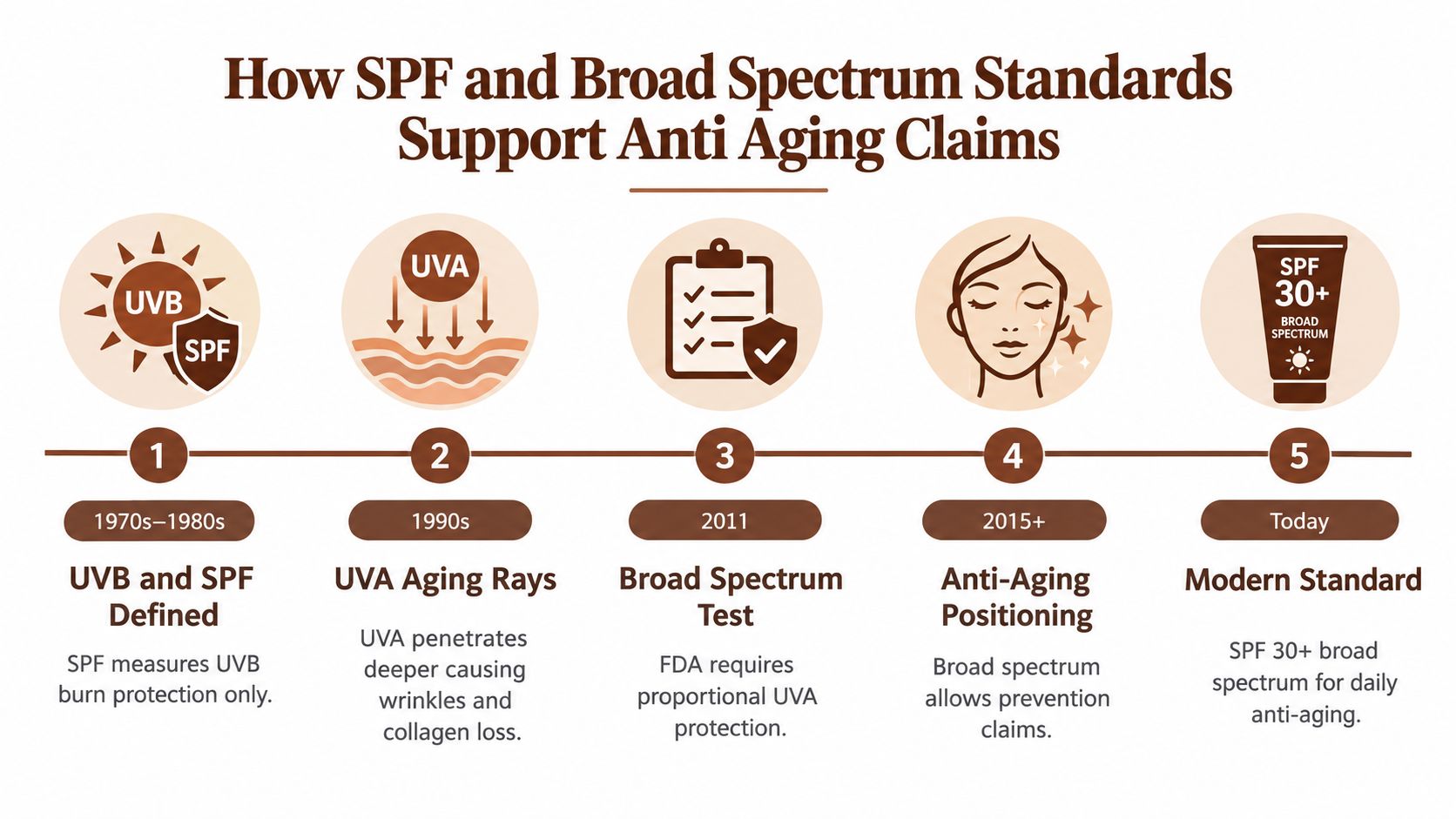
SPF started as a way to make protection measurable. Franz Greiter is widely credited with introducing the SPF framework in 1962, which helped turn sun protection into something shoppers and formulators could compare across products, as described in the SPF history overview.
What SPF measures and what it misses
SPF measures how well a product protects against the kind of UV exposure linked more closely with sunburn, mainly UVB. In testing, sunscreen is applied at 2 mg/cm², then compared against unprotected skin to see how much more UV exposure protected skin can handle before visible reddening. That test gives a useful reference point, but it does not describe the whole aging picture.
Visible aging is heavily tied to UVA, which penetrates and contributes to changes such as uneven tone, laxity, and fine lines over time. That is the gap broad-spectrum standards are meant to address. A practical way to read the label is this: SPF tells you part of the protection story, while broad spectrum tells you the formula also met a standard for UVA coverage.
Lab numbers also assume a full dose. Daily use often falls short.
The rule that changed facial SPF products
The FDA's 2011 sunscreen final rule gave this category clearer boundaries. It allowed sunscreen products labeled Broad Spectrum SPF 15 or higher to claim they reduce the risk of skin cancer and early skin aging when used as directed with other sun protection measures, according to the FDA final rule document.
That same rule separated lower-SPF products from those broader claims. Products in the SPF 2 to 14 range could claim sunburn prevention, while Broad Spectrum SPF 15+ products could support regulated wording tied to early skin aging and skin cancer risk reduction when used correctly.
That phrase matters: when used correctly. A moisturizer with sunscreen can have a strong filter system on paper, but if the finish feels heavy, pills over other steps, or leaves a cast that leads to half-application, the day-to-day protection drops. For anti-aging goals, the formula has to earn full-face use, including the often-missed edges of the face.
How to read that as a shopper
Read the front label in layers, the way you would read a prescription dose and instructions together.
- SPF number tells you the tested level of UVB protection.
- Broad spectrum tells you the product also covers UVA to a required standard.
- The base formula tells you whether you are likely to apply enough, spread it evenly, and keep it on.
That last point is where hydration and added actives fit in. Humectants, barrier-supporting ingredients, and even longevity-positioned ingredients such as NAD+ may support smoother-looking, more resilient-feeling skin, but they do not make up for weak UVA coverage or too little product on the skin. They help the routine stick. The sunscreen filters still do the protective work.
A targeted product can support other aging concerns too. For example, PDRN Volufiline NAD+ BALM is described as a multi-balm for areas such as under-eyes, smile lines, forehead, lips, and neck, with ingredients including PDRN, Volufiline, Collagen, NAD+, Peptides, and Retinol. That kind of product addresses localized appearance concerns, but it does not replace a properly applied broad-spectrum daytime SPF layer.
How to Choose the Right Formula for Your Skin and Goals
Choosing an anti aging face cream with SPF gets easier when you stop treating it like one category. It's really a mix of three things: a moisturizer, a protective filter system, and sometimes a treatment product with added actives such as antioxidants, peptides, or longevity-positioned ingredients like NAD+.
A broad-spectrum SPF 30 or higher works best for daily wear, especially in a moisturizer format where people often apply less than they think. From there, the right formula depends on what usually makes you skip the step.
Start with comfort, then add actives
If your skin feels tight by midday, hydration should lead the decision. If your main frustration is dullness or uneven tone, you may care more about how well the formula layers over antioxidant steps. If you're focused on fine lines, the moisturizer base and any added actives may improve skin feel and appearance, while the SPF side helps prevent more UV-related change from piling on.
People also get curious about topical longevity ingredients. NAD+ and related themes are showing up more often in skin care, usually as part of a broader support story around resilience, radiance, or smoother-looking skin. It's reasonable to explore those formulas, but don't let that distract from the core label checks: broad spectrum, daily usability, and enough protection for your lifestyle.
For a non-product-list perspective on natural cream selection, this overview of a ProMD Health Ashburn Med Spa natural cream is useful because it frames anti-aging cream choice around skin behavior, not hype.
Choosing Your Anti Aging SPF Cream by Priority
| Skin Priority | Look For in Formula | SPF Guidance |
|---|---|---|
| Dryness and tightness | Richer moisturizing base, comfortable finish, good barrier feel | Broad-spectrum SPF 30 or higher for daily use |
| Dull or tired-looking skin | Hydrating formula that layers well with antioxidants or brightening steps | Broad-spectrum SPF 30 or higher |
| Fine lines and texture concerns | Moisturizer with supportive actives plus reliable daytime wear | Broad-spectrum SPF 30 or higher |
| Sensitive or reactive skin | Simpler formula, low-irritation feel, texture you'll actually keep using | Broad-spectrum SPF 30 or higher |
| Mostly indoor days | Lightweight finish that makes daily wear easy | SPF moisturizer may be enough if applied well |
| Long outdoor time | Comfortable base under a dedicated sunscreen | Separate sunscreen is usually smarter |
A simple shortlist test
Use this filter before you buy:
- Check the label language: It should say broad spectrum clearly.
- Check your routine reality: If you spend long stretches outdoors, don't rely on a hybrid alone.
- Check the finish: If you hate how it looks or feels, you won't be consistent.
- Check layering behavior: It should sit well over serums and under makeup.
- Check whether it solves your actual need: If your concern is wrinkles around a specific area, your all-over SPF cream may need a separate targeted product alongside it.
If you're comparing ingredients and support products, this look at anti-wrinkle cream Q10 can help you think more clearly about where treatment creams fit versus where SPF has to do the preventive heavy lifting.
How to Apply for Full Protection Without Waste or White Cast
You get ready in the morning, smooth on a nice anti aging face cream with SPF, and your skin looks comfortable. By noon, the finish still looks fine. The weak point is often invisible. Protection depends on how much product reaches the skin and how evenly it sits there.
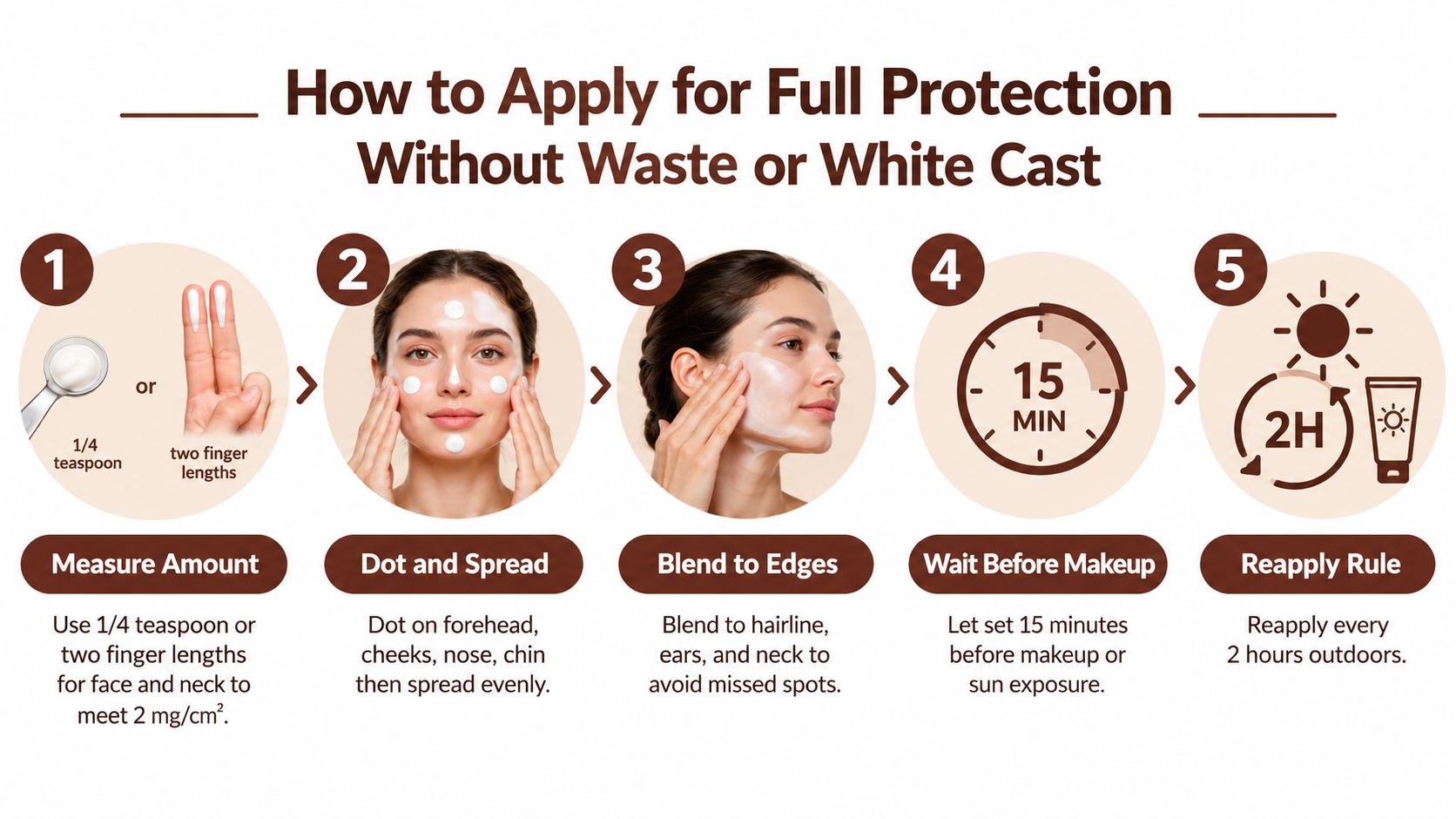
SPF testing is done with a thick, even film. Real life usually looks different. People often apply SPF moisturizer the way they apply face cream, which means too little product and patchy coverage. The application summary in this SPF moisturizer versus sunscreen testing review explains why that gap matters. It also helps explain why anti-aging results are partly a daily dosing problem. A formula can include hydration support and longevity-focused ingredients such as NAD+ related actives, but those benefits do not replace full UV coverage.
The coverage problem is usually bigger than the SPF number
A labeled SPF value only reflects tested performance if the product forms an even film. That film works like paint on a wall. One thin streak leaves more of the surface exposed, even if the paint itself is high quality.
That is why a broad-spectrum SPF 30 or 50 product can still underperform in day-to-day use. The common failure point is not the label. It is underdosing, rushed spreading, and skipped zones around the hairline, nose, jaw, ears, and neck.
The same review also noted a practical fix. Apply the measured amount in two thin layers instead of one heavy pass. That usually improves coverage, helps the product sit more evenly, and can reduce the chalky look that happens when too much is dragged around at once.
A practical morning method
Use this routine if you want full protection with less pilling and less white cast:
- Finish your leave-on skin care first. Let hydrating or treatment layers settle so your SPF is not competing with wet product underneath.
- Use your SPF product as the final morning layer. Filters protect best when they can form a continuous top layer.
- Split your amount into two applications. First pass for overall spread. Second pass to fill gaps and build a more even film.
- Press extra attention into common miss zones. Around the nostrils, under the eyes, temples, hairline, jawline, ears, and neck often need a second check.
- Give it a minute before makeup. That helps the film set and lowers the chance of streaking.
A quick visual can help if you learn better by watching a routine in motion:
Practical rule: If your anti-aging SPF cream vanishes instantly because you used a tiny dab, coverage is probably too light to match the label.
White cast often comes from technique as much as formula choice. Two thinner layers usually look better than one rushed layer. Letting each pass settle for a moment can also help, especially with mineral-leaning formulas.
When a hybrid is enough and when it isn't
Dermatology guidance summarized by Healthline's moisturizer with sunscreen guide says a moisturizer with sunscreen can work well for daily wear if it is broad-spectrum SPF 30 or higher. Longer outdoor exposure is a different situation, where a dedicated sunscreen is often the better tool.
A simple way to remember it is to match your product to your day. Short commute, office, errands, mostly indoor light exposure? A carefully applied hybrid can be a reasonable fit. Hiking, sports, beach time, patio lunches, or long hours near windows while driving? Use a dedicated sunscreen plan and reapply as needed.
Daily Habits and Mistakes That Make or Break Results
People often think anti-aging SPF fails because they chose the wrong product. More often, the routine fails because the habit is inconsistent or the product's job gets misunderstood.
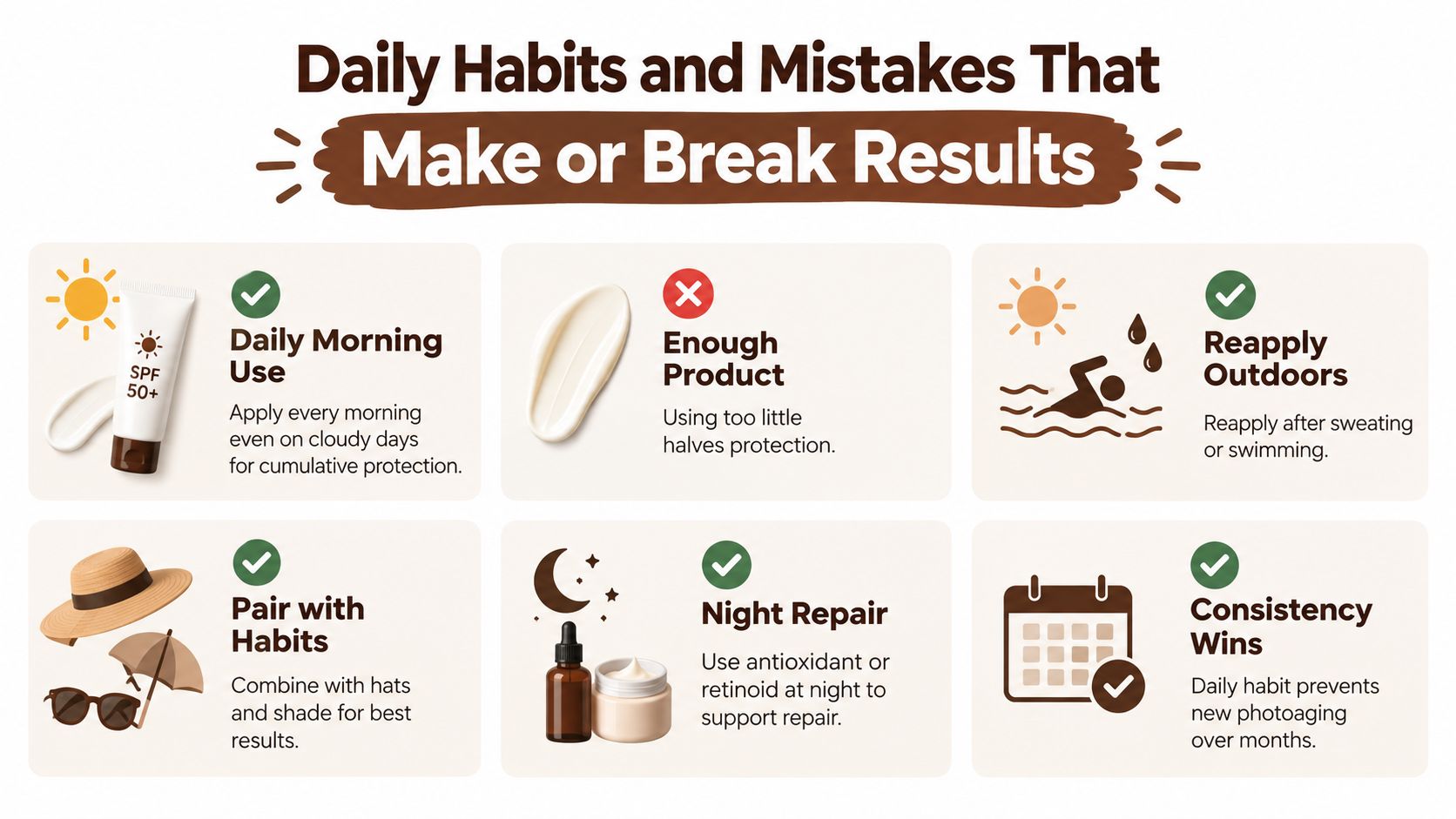
An SPF moisturizer can improve comfort and hydration through its cream base. The filter system handles UV protection. Those aren't interchangeable benefits. If your skin looks plumper after application, that's usually the moisturizing side doing its work. If your skin develops fewer new UV-related changes over time, that's the protection side earning its keep.
What steady use can actually do
A one-year facial broad-spectrum sunscreen study found photoaging markers improved significantly by week 12 and continued through week 52, with skin texture, clarity, and mottled pigmentation improving by about 40% to 52% from baseline, and 100% of subjects showing improvement in clarity and texture, according to the study PDF hosted by Dawson Dermatology.
That's useful because it reframes the goal. You're not applying SPF only to prevent a burn today. You're supporting a long game in which daily use can improve how skin looks over time while helping prevent further visible photoaging.
Three mistakes that quietly reduce results
- Relying on a bigger SPF number alone: Recent commentary on facial SPF emphasizes that SPF mainly measures UVB protection, while broad-spectrum coverage is what matters for photoaging. It also notes that the UVB protection gain from SPF 30 to SPF 50 is small, so a higher number doesn't fix UVA gaps or poor application habits, as explained in this anti-aging sunscreen discussion.
- Skipping reapplication on outdoor days: Even a good morning layer has limits when you're outside for long periods.
- Blaming the SPF for pilling caused by too many layers: Sometimes the fix is reducing the number of heavy products underneath and allowing each layer to settle.
For a broader reminder that skin aging is shaped by more than one daily choice, this piece on factors that age your skin is a helpful companion.
The best anti-aging SPF product is often the one you'll use correctly for months, not the one with the flashiest front label.
Building a Consistent Routine That Keeps Skin Resilient
A resilient routine is usually a simple one. Cleanse if you need to. Apply any light treatment step you use in the morning. Finish with your anti aging face cream with SPF, and give it enough space in the routine to sit evenly on the skin.
If you want visible aging support beyond all-over SPF, keep the roles clear. Your daytime SPF product protects exposed skin. A targeted support product can address zones that tend to look drier, flatter, or more lined, but it shouldn't replace broad-spectrum coverage. The same goes for barrier repair. If your skin is irritated, flaky, or overworked from too many actives, it helps to review practical approaches to aesthetic recovery with Omega Lasers so your barrier isn't fighting your sunscreen every morning.
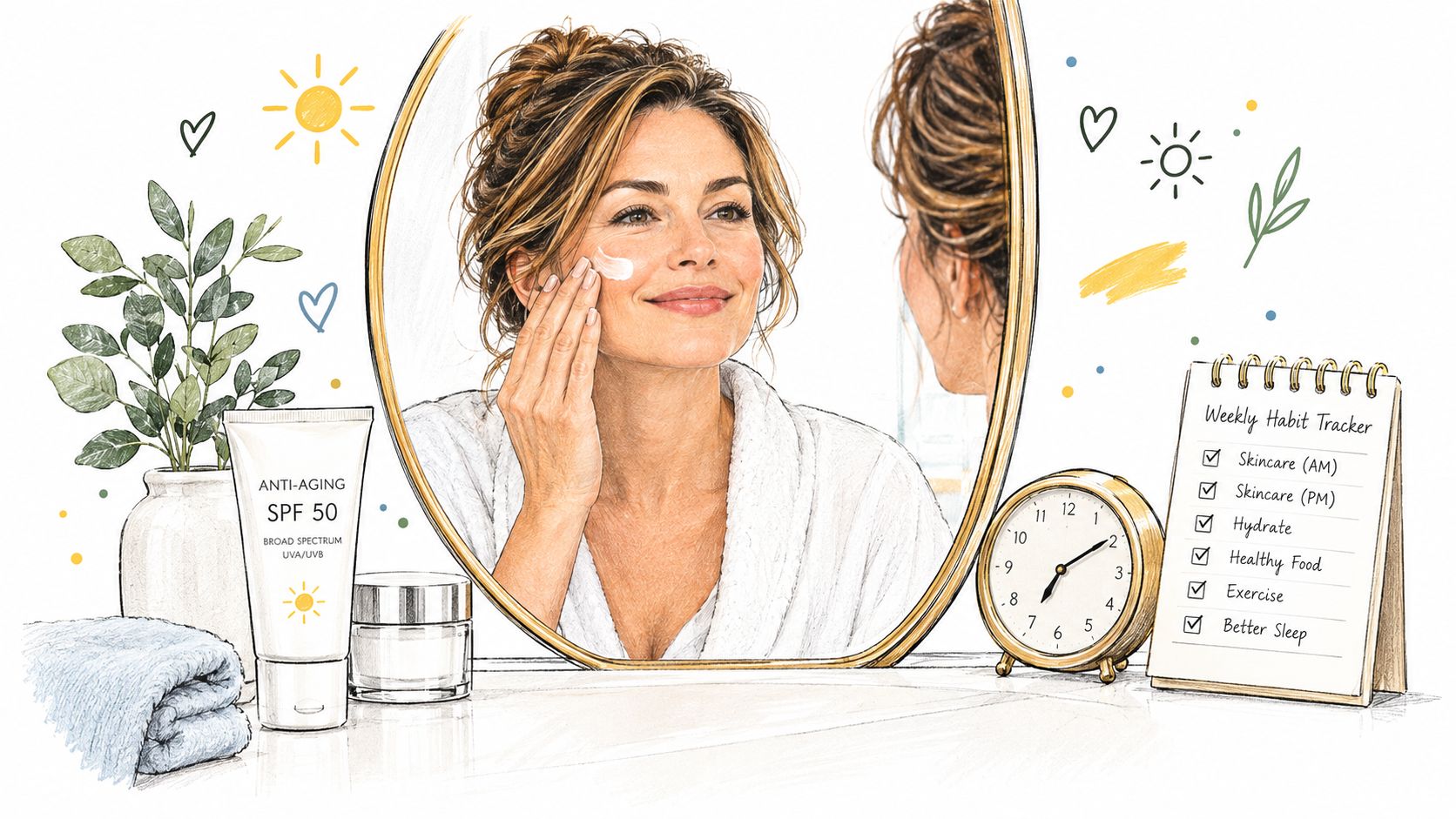
A routine works when it's repeatable on busy weekdays, not just on ideal mornings. That's why many people do better with one dependable SPF moisturizer and one optional targeted product than with a crowded shelf they can't maintain. If you're looking for a supportive non-SPF moisturizer to pair with your daytime sun protection, the anti-aging moisturizing cream category can fit into the hydration side of that routine.
Keep your expectations steady. Hydration can change how skin looks quickly. Protection shows its value through repetition. If you stay consistent, your mirror usually tells the story more clearly than any trend cycle will.
REVETIX offers longevity-focused skincare and wellness products that fit well with a practical anti-aging routine, including topical options aimed at hydration, targeted support, and daily skin resilience. If you want to build a routine that treats SPF as the foundation and other actives as support, visit REVETIX and explore the formulas that match your skin's day-to-day needs.