


You're standing in the supplement aisle after another demanding week. One bottle promises sharper energy and resilience, the other promises calm, better sleep, and a lower-stress baseline. You're not really asking which adaptogen is “better.” You're asking whether your problem is too much activation or too little usable energy.
That distinction makes rhodiola rosea vs ashwagandha a timing and symptom-matching decision, not a popularity contest. Both herbs are marketed for stress, both have human clinical data, and both are commonly grouped under the adaptogen label. Yet their practical profiles differ: rhodiola is generally the more activating choice for fatigue and performance under pressure, while ashwagandha is better suited to persistent stress, anxiety, sleep disruption, and recovery.
The evidence isn't equally mature across every outcome. Ashwagandha has the stronger modern human evidence for generalized stress, while rhodiola has a narrower, less consistent record focused more on fatigue and stress-related performance. The guide below compares their origins, mechanisms, trial evidence, timing, safety, and combination protocols without treating marketing language as clinical proof. For broader context on how adaptogens are discussed in consumer wellness, this natural adaptogenic supplements review offers another perspective.
Table of Contents
- Why These Two Adaptogens Get Compared So Often
- What Each Herb Is and Where They Come From
- How They Work Inside the Body
- Evidence, Onset, and Dosing Compared
- Matching Each Herb to Your Real-World Goal
- Can You Take Rhodiola and Ashwagandha Together
- Safety, Side Effects, and How to Choose
- Practical Questions and Smart Next Steps
Why These Two Adaptogens Get Compared So Often
A mid-30s professional has just closed a laptop after a day of meetings, unfinished work, and too much caffeine. They want enough focus to finish a deadline tomorrow, but they also lie awake replaying conversations and checking the clock. A bottle of rhodiola looks like the obvious choice for energy. A bottle of ashwagandha looks better for the nervous system that won't switch off.
That conflict explains why these herbs appear together so often. Buyers see “stress support” on both labels and assume they can substitute one for the other. In practice, the relevant question is more specific: Does stress leave you wired, anxious, and unable to recover, or flat, fatigued, and unable to perform?
Rhodiola rosea is usually the better first consideration for daytime mental fatigue, demanding work, and short-term performance under pressure. Ashwagandha is the stronger first consideration for ongoing stress, anxious arousal, poor sleep, and a prolonged recovery deficit. Those are not absolute rules, but they are much more useful than asking which herb is universally superior.
Practical rule: Choose by the symptom that limits your day most. Choose rhodiola when output is the bottleneck. Choose ashwagandha when recovery and calm are the bottleneck.
The timing matters, too. An activating herb taken late can work against sleep. A calming herb taken before a demanding task may not deliver the alertness you wanted. That doesn't make either herb good or bad. It means the same supplement can be sensible in one daily window and poorly matched in another.
This comparison also needs a clear evidence boundary. Ashwagandha has substantially more human trial evidence in stress-focused research, while rhodiola's clinical history is smaller and more concentrated around fatigue and stress-related performance. The combination sounds logical because the profiles appear complementary, but no published randomized controlled trial has tested rhodiola and ashwagandha together as a co-prescribed protocol. A plausible mechanism isn't the same as a demonstrated outcome.
What Each Herb Is and Where They Come From
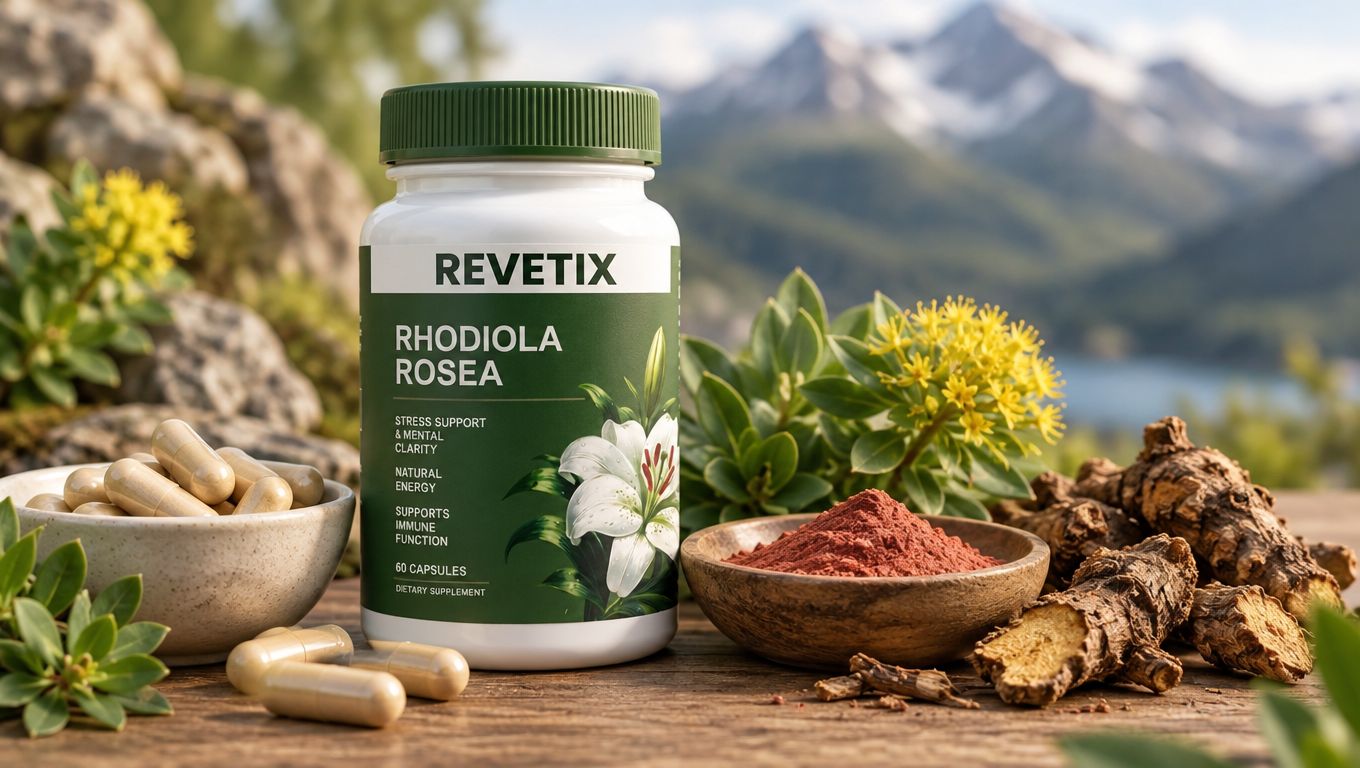
Rhodiola rosea is a cold-climate perennial associated with Arctic and mountainous regions of Europe and Asia. Traditional use connected the root with stamina, fatigue, cold exposure, and recovery from illness. Modern products often highlight rosavins and salidroside, the marker compounds used to describe standardized rhodiola extracts.
Ashwagandha, or Withania somnifera, comes from Ayurvedic medicine, where it has traditionally been classified as a rasayana, a restorative herb associated with vitality, sleep, and reproductive health. Contemporary trial products commonly identify standardized withanolide content, including branded extracts such as KSM-66 and Sensoril.
The word adaptogen describes plants theorized to help the body handle physical and mental stressors. The concept has deeper roots in Russian, Scandinavian, and integrative medicine than in mainstream U.S. clinical guidelines. It can still be a useful consumer framework, but it shouldn't replace the more precise questions used in clinical nutrition: What outcome was measured? Which extract was tested? How long did the intervention last? Was the study controlled?
Read the label before you compare the plants
For rhodiola, look for the plant name, the plant part, and declared amounts of rosavins and salidroside. For ashwagandha, look for the extract identity and withanolide standardization rather than only a large number describing total root powder.
Traditional plant comparisons can also become muddled when shoppers group every “energy” botanical together. A separate overview of about maca powder is useful precisely because maca has its own traditional background and shouldn't be treated as interchangeable with either rhodiola or ashwagandha.
For readers who want a botanical-specific overview, Rhodiola rosea provides additional background on the plant itself. A product example using this ingredient is Rhodiola Rosea, whose catalog description focuses on rosavins, salidroside, calm, clarity, and daily energy support. Those descriptions are product positioning, not proof that every user will experience the stated benefits.
The useful framework is simple:
- Activating: Rhodiola is the more natural fit when fatigue, alertness, and performance dominate.
- Calming: Ashwagandha is the more natural fit when anxious arousal, poor sleep, and persistent stress dominate.
- Restorative: Ashwagandha often makes more sense when the goal is sustained recovery rather than an immediate push.
How They Work Inside the Body
The cleanest physiological contrast is not “one is natural and one is stronger.” It is how each herb may influence the stress-response system and how that influence feels in daily life.
Rhodiola contains rosavins and salidroside. Researchers have investigated their relationship with the hypothalamic-pituitary-adrenal, or HPA, axis, along with effects on monoamine signaling involving serotonin, dopamine, and norepinephrine. That combination helps explain rhodiola's reputation as a stimulating or activating adaptogen. People usually consider it when stress produces mental fatigue, reduced drive, or difficulty sustaining output.
Ashwagandha contains withanolides and has been investigated for effects involving HPA-axis regulation, GABAergic signaling, thyroid activity, and cortisol. In chronically stressed adults, clinical studies have reported reductions in perceived stress and measured cortisol compared with placebo. Its practical profile is therefore more calming and restorative, particularly when stress interferes with sleep or creates a persistent sense of being switched on.
The HPA-axis distinction matters
Think of the HPA axis as a coordination system, not a single “stress hormone switch.” Rhodiola is generally positioned around stress tolerance and output during demanding periods. Ashwagandha is generally positioned around dampening an overactive stress response and supporting recovery.
That distinction shouldn't be overstated. Mechanistic research is still partly based on animal and laboratory work, and the precise human pathways remain incompletely mapped. A mechanism can explain why an effect is plausible, but it doesn't establish that a specific capsule will improve your concentration, sleep, or cortisol profile.
This is why a product containing both ingredients, such as Himalayan Shilajit Gold Gummies, should be evaluated by its full ingredient and extract details rather than by assuming that “energy plus balance” guarantees a particular result. The same standard applies to standalone products.
The felt difference is more practical than biochemical. Rhodiola may suit someone who needs to stay mentally engaged through a demanding morning. Ashwagandha may suit someone who finishes the workday but can't transition into rest. Neither herb repairs a sleep deficit, inadequate food intake, untreated anxiety, or an underlying medical condition.
Evidence, Onset, and Dosing Compared
Ashwagandha has the stronger human evidence for stress-focused outcomes. The NIH Office of Dietary Supplements summarizes a 2021 systematic review of 7 studies involving 491 adults. All studies took place in India and lasted 6 to 8 weeks. Doses ranged from 240 to 1,250 mg daily of extract or 12,000 mg daily of whole-root granules. Compared with placebo, ashwagandha improved stress and anxiety scores, sleeplessness, fatigue, and serum cortisol. Several studies found larger effects at 500 to 600 mg daily than at lower doses. The NIH ashwagandha evidence summary provides the review details.
Rhodiola has clinical research behind it, but the evidence base is smaller and more targeted. One randomized, double-blind, placebo-controlled study enrolled 101 subjects, gave 200 mg twice daily for 4 weeks, and concluded that the extract was safe and improved life-stress symptoms to a clinically relevant degree. A separate phase III placebo-controlled study used 576 mg daily and assessed symptom questionnaires alongside morning salivary cortisol on days 1 and 28. The study details appear in the rhodiola clinical report.
| Attribute | Rhodiola rosea | Ashwagandha |
|---|---|---|
| Best-supported emphasis | Stress-related fatigue, mental energy, and performance under pressure | Generalized stress, anxiety, sleep, fatigue, and cortisol |
| Evidence strength | Meaningful but smaller and less consistent, with mixed fatigue findings | Stronger for short-term stress-focused outcomes |
| Typical extract discussion | Standardized rosavins and salidroside | Standardized withanolides, often in named extracts |
| Common clinical range | Few-hundred-milligram range, depending on extract and study | Often discussed around 300 to 600 mg daily for standardized extracts |
| Onset profile | Better suited to acute or short-term use patterns | Usually evaluated as a gradual, consistent intervention |
| Best daily window | Morning or early afternoon | Evening when calm and sleep are the priority |
| Main evidence gap | Smaller cohorts, shorter studies, and mixed fatigue results | Dependence on particular branded extracts and relatively short trial periods |
Rhodiola needs a careful reading. A 2012 systematic review found mixed but suggestive effects for physical fatigue, with 2 of 6 trials positive, and mental fatigue, with 3 of 5 trials positive. It also identified high or unclear risk of bias and called for better trials. Rhodiola is a reasonable fatigue-focused experiment, not a guaranteed cognitive enhancer. See this evidence analysis of rhodiola fatigue research.
Use the trial dose as context, not as an instruction to copy a label. Extract identity, standardization, and intervention length can change the comparison. The REVETIX guide to taking rhodiola rosea offers product-use context, but check the actual label and your medication list before choosing a dose. No published trial has tested rhodiola and ashwagandha together, so combination recommendations remain mechanistic rather than evidence-based.
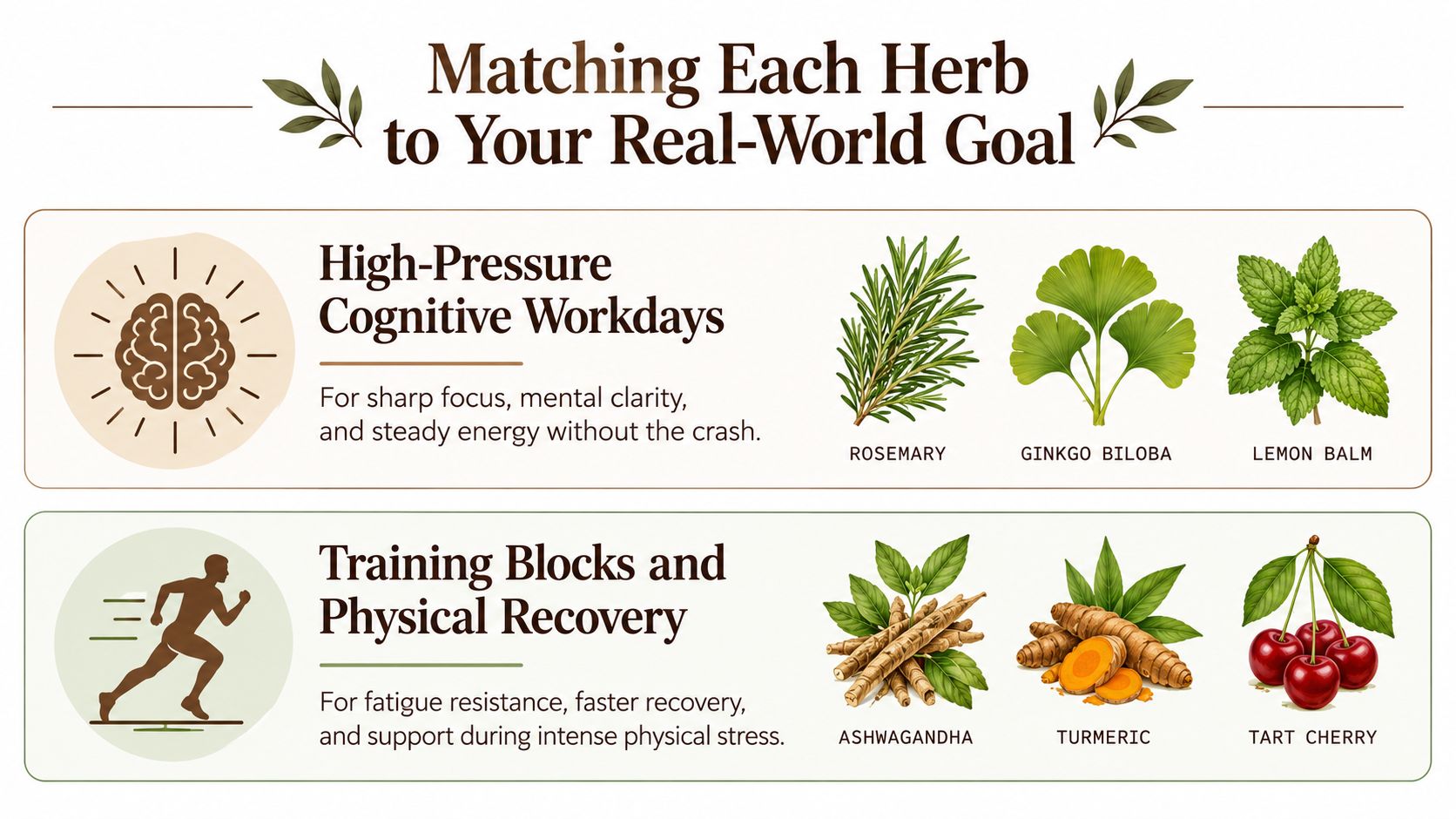
Matching Each Herb to Your Real-World Goal
The fastest way to choose is to name the problem in plain language. “Stress” is too broad. Racing thoughts at bedtime, mental flatness at 10 a.m., and fatigue during training are different targets.
For a high-pressure cognitive workday
Choose rhodiola first if your sleep is reasonably stable but your attention and mental stamina collapse under deadlines. Its profile better matches daytime output and stress-related fatigue. Use it earlier rather than later, particularly if you notice stimulation.
If the workday problem is poor sleep and persistent anxious arousal, choose ashwagandha instead. Better recovery can improve daytime performance without adding another activating signal.
For training blocks and physical recovery
Rhodiola is the more logical first experiment when fatigue resistance and performance under physical pressure are the main concerns. The evidence is not uniformly positive, so judge it by a defined outcome such as perceived fatigue or ability to complete planned work, not by a vague expectation of feeling “more powerful.”
Ashwagandha is the better fallback when training stress combines with poor sleep, prolonged tension, or slow recovery. Its evidence is more aligned with sustained stress control than with an immediate pre-workout effect.
For evening wind-down and sleep
Choose ashwagandha. Rhodiola's activating profile makes it a poor first pick when the problem is difficulty switching off. If sleep is disrupted, fix the evening routine and investigate persistent insomnia rather than trying to overpower it with supplements.
For generalized ongoing stress
Ashwagandha gets the stronger recommendation. The human evidence is more substantial for stress, anxiety, sleeplessness, fatigue, and cortisol than rhodiola's evidence is for broad anxiety outcomes.
Use-case shortcut: Energy and focus under pressure point toward rhodiola. Anxiety, sleep disruption, and sustained stress point toward ashwagandha.
For readers comparing supplement options for cognitive symptoms, this guide to supplements from GutRx can broaden the discussion beyond adaptogens. Another product category, NMN Supplement, is positioned around NAD+ precursor support and cellular energy, but it isn't a substitute for choosing the adaptogen that matches your actual stress pattern.
Can You Take Rhodiola and Ashwagandha Together
You can find a plausible reason to combine them. Rhodiola may suit the active part of the day, while ashwagandha may suit evening recovery. That creates an appealing morning-energy, evening-calm narrative.
But the direct evidence stops there. No published randomized controlled trial has tested rhodiola and ashwagandha together as a co-prescribed protocol, so claims that the combination is superior to either herb alone remain mechanistic and extrapolated. The absence of a trial doesn't prove the combination is harmful. It does mean that “stacking” shouldn't be presented as a clinically established upgrade.
The other problem is diagnostic clarity. Start two herbs simultaneously and you won't know which one caused a benefit, insomnia, stomach upset, sedation, or an unexpected change in how you feel. Mixing two HPA-active botanicals also makes subjective responses less predictable.
A sensible combination protocol
For an experienced supplement user, a cautious approach is:
- Start with one herb alone. Choose it from your dominant symptom pattern and assess tolerance before adding anything else.
- Keep the timing separate. If both are appropriate, rhodiola belongs in the morning or early afternoon, while ashwagandha can be reserved for the evening.
- Change one variable at a time. Don't add caffeine, a new sleep formula, and a second adaptogen in the same week.
- Stop if the response is clearly negative. Persistent insomnia, marked sedation, troubling gastrointestinal symptoms, or other concerning changes deserve medical advice.
The combination is most defensible when someone has two distinct problems, daytime fatigue and evening stress, rather than a general belief that more adaptogens must work better.
Safety, Side Effects, and How to Choose
Both herbs deserve the same respect you'd give any biologically active supplement. “Natural” doesn't mean pharmacologically neutral, and a favorable trial does not make an extract appropriate for every person.
Rhodiola may cause jitteriness, restlessness, or insomnia, particularly when taken late or when the product feels too activating for the user. Ashwagandha may cause gastrointestinal upset or drowsiness, and thyroid-related concerns matter because the herb may influence thyroid activity. Rare or serious reactions should not be self-managed.
Pregnancy and breastfeeding are poorly studied for both herbs and are common reasons to avoid them unless a qualified clinician specifically advises otherwise. People with autoimmune conditions, thyroid disease, or complex medication regimens should speak with a clinician before experimenting. Particular caution is appropriate with sedatives, thyroid hormones, antihypertensives, immunosuppressants, and medicines that affect mood or serotonin.
What a quality label should show
| Factor | Rhodiola rosea | Ashwagandha |
|---|---|---|
| Identity | Clearly named Rhodiola rosea, ideally identifying the root extract | Clearly named Withania somnifera, with root or root-and-leaf details |
| Standardization | Declared rosavins and salidroside | Declared withanolide content |
| Extract transparency | Avoid a proprietary blend that hides the delivered extract amount | Prefer a named, characterized extract over an unlabeled generic powder |
| Timing cue | Usually earlier in the day if it feels activating | Often evening if calm or sleep is the intended goal |
| Decision signal | Best fit for fatigue, alertness, and performance under pressure | Best fit for anxiety-dominant stress, sleep problems, and recovery |
Third-party testing should provide meaningful information about identity, purity, and contaminants. A logo alone isn't enough if the manufacturer doesn't explain what was tested. Also check whether the product's declared active compounds match the extract used in the supporting human research.
For a focused overview of the benefits, stress applications, energy profile, and safety considerations, see this rhodiola rosea safety guide. The decision itself is straightforward: pick rhodiola when activation is useful, and ashwagandha when activation is the problem. If anxiety dominates your stress pattern, ashwagandha is the more sensible first trial.
Practical Questions and Smart Next Steps
Use the timing that matches the effect you want. Rhodiola belongs in the morning or early afternoon when daytime activation, alertness, or performance under pressure is the goal. Ashwagandha fits the evening when you want wind-down, sleep support, or relief from persistent tension. If you try both, separate their timing and add the second only after you know how the first affects you.
Set a review point instead of taking either herb indefinitely. Reassess after 8 to 12 weeks to judge benefit, side effects, adherence, and whether the original problem has changed. The short intervention windows in the ashwagandha trials summarized earlier in this guide reinforce why long-term assumptions should be avoided.
If the first choice disappoints, do not immediately increase the dose or build a stack. Review sleep duration, caffeine timing, food intake, hydration, and training load. Then adjust only within the product's labeled directions, or trial the alternative for 2 to 4 weeks while tracking the outcome that mattered at the start.
Write one clear target: “I want less evening anxiety,” or “I want better daytime fatigue resistance.” Match the herb to that target and evaluate observations, not expectations. Both supplements complement sleep, sufficient protein, regular movement, medical assessment, and treatment for persistent anxiety or insomnia.
REVETIX offers rhodiola rosea products for stress resilience, sustained energy, and mental focus, plus ashwagandha-containing options such as Himalayan Shilajit Gold Gummies. Visit REVETIX to review the available formulas and choose a format that suits your timing, goal, and routine.