


You're standing in the skin-care aisle or scrolling late at night, trying to choose one cream that'll do something. Half the jars promise youth, the other half promise “radiance,” and the prices jump from sensible to absurd with no obvious reason. The smart move is to ignore the marketing language and judge the formula by your barrier status, your skin type, and whether it fits the rest of your routine.
That's the core job of the best anti aging moisturizing cream. It isn't the fanciest jar on the shelf, and it isn't the one with the most dramatic claims. It's the cream you can use consistently, that supports the skin you've got right now, and that plays nicely with sunscreen, makeup, and any treatment actives you already trust.
Table of Contents
- What Best Actually Means in Anti Aging Skincare
- Key Ingredients That Deliver Results
- Matching the Formula to Your Skin Type and Age
- Moisturizer, Retinoid, or Both
- How to Build a Routine Around Your Cream
- Safety, Sensitivities, and Smart Layering
- Your Quick Decision Checklist Before You Buy
What Best Actually Means in Anti Aging Skincare
The most expensive cream is not automatically the best. In anti-aging skincare, performance comes from formulation, not price, and a well-built drugstore cream can beat a luxury jar that leans on perfume, vague “youth complex” language, and a pretty bottle. The right question is simpler, does the cream support your barrier, tolerate your skin, and fit the rest of your routine without creating new problems?
Judge the formula, not the packaging
A cream earns its keep when it solves a real skin problem. For dry or mature skin, that usually means ceramides, humectants, and enough occlusion to keep water from escaping. For skin that's already irritated, the best choice is the one that calms, hydrates, and doesn't light up your face the second you apply it.
A lot of luxury creams fail that test. They're built to feel indulgent, not necessarily to perform better than a plain, well-made moisturizer. If the texture pills under SPF, stings on contact, or leaves a greasy finish that ruins makeup, it's not “premium.” It's inconvenient.
Practical rule: if a cream makes it harder to wear sunscreen every morning, it's working against the only anti-aging step you absolutely need daily.
The red flags I'd skip fast
There are three tells that usually mean you're paying for marketing:
- Proprietary blends without percentages. If the label hides the active dose, you can't tell whether the cream is meaningful or just decorated with good ingredients.
- Ingredient lists led by fragrance. That's a bad sign for sensitive skin and a waste of space in a product that's supposed to support long-term use.
- Miracle claims with no human testing. If a jar promises visible reversal without any peer-reviewed support, assume the claim is doing the heavy lifting, not the formula.
For mature skin, the buying logic is straightforward but effective. Look for evidence-backed actives, stable packaging, fragrance discipline, and a finish you can wear under SPF. The next step is learning which ingredients deserve your money, and which ones are just familiar names on a glossy label.
Key Ingredients That Deliver Results
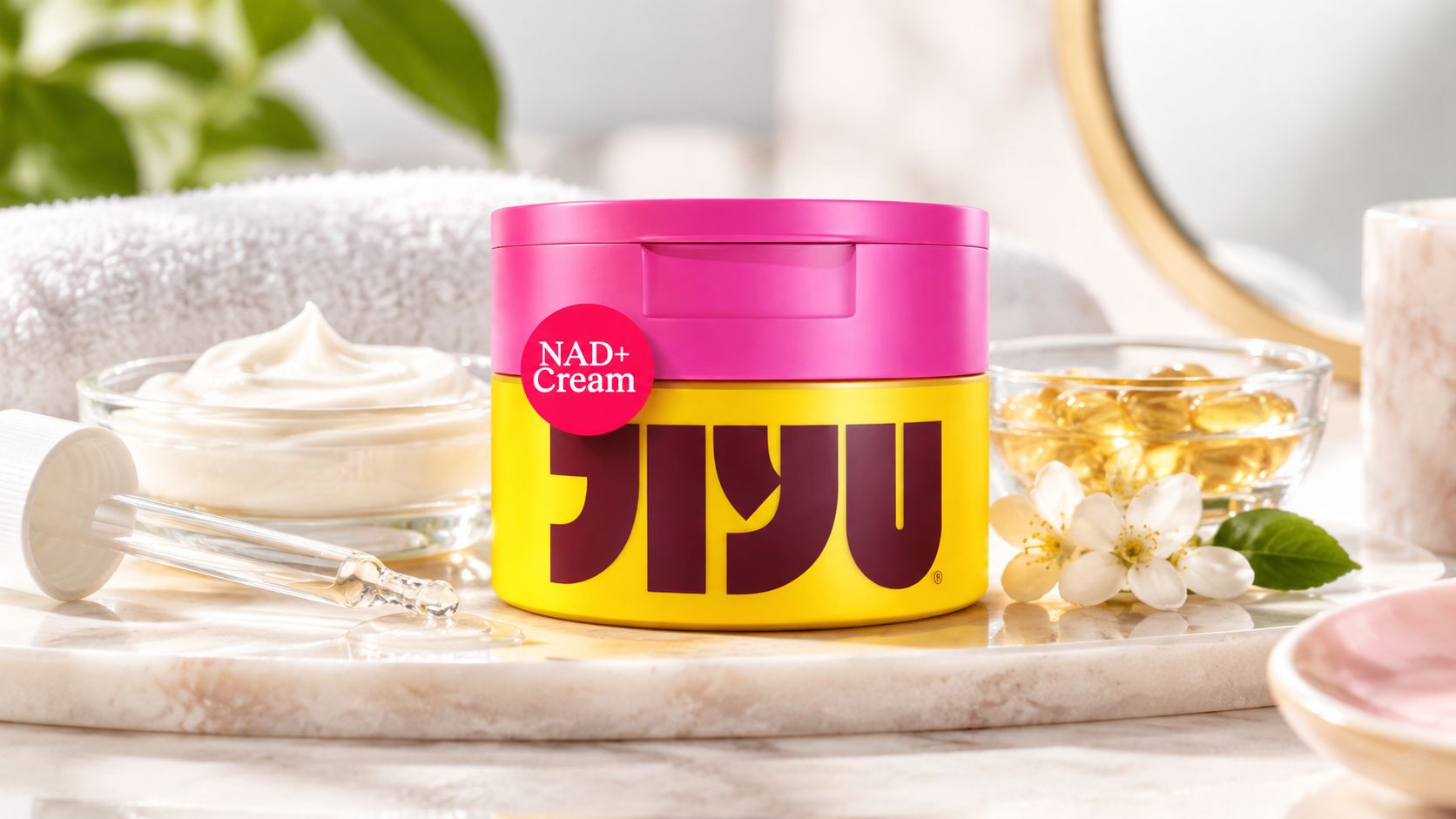
Skip the marketing noise and look at the formula. Ceramides repair the barrier, hyaluronic acid pulls water into the skin, niacinamide helps skin stay tolerant, and retinoids do the heavy lifting for visible aging. If those pieces are missing, the jar is mostly decoration.
What the main actives really do
Retinoids such as retinol, retinal, and tretinoin are the strongest choice for photoaging, rough texture, and fine lines. They are also the easiest way to trigger dryness and irritation, so the rest of the cream has to support them. Opaque or airless packaging matters because these actives break down when the formula is poorly protected.
Hyaluronic acid and polyglutamic acid hydrate the surface and make dryness look less obvious. They are not repair ingredients. They work best in a cream that also slows water loss, which is why a well-built moisturizer usually beats a basic serum on dry or mature skin.
Ceramides deserve a front-row spot in any barrier-first anti-aging cream. The ceramide study summary points to moisturizers that improve TEWL and hydration, and barrier-focused formulas do better on mature or xerotic skin ceramide study summary. If a product claims to be anti-aging but ignores ceramides, it is missing the part that helps skin stay resilient.
Niacinamide is the ingredient I trust for steady, low-drama support. It helps with tone, supports ceramide production, and is usually easier to tolerate than stronger resurfacing actives. That makes it a smart pick for routine use, especially if your skin reacts easily.
Ingredients that earn their place, and the ones that don't
Peptides can help in maintenance formulas, but do not expect them to do what a retinoid does. They support the routine, they do not replace it. Vitamin C, ferulic acid, and resveratrol are better suited to daytime formulas that sit under SPF and help defend against oxidative stress.
Topical NAD+ precursors such as NMN and NR are still early-stage ingredients in skincare. They are interesting in longevity-focused formulas, but they belong in the support category, not the core anti-wrinkle category. If you see them on a label, judge the whole cream first. A product like NAD+ Cream fits that kind of positioning, with a focus on hydration and skin support rather than replacing proven corrective actives.
Gentle exfoliants like PHA and lactic acid can smooth texture, but they need a balanced base. They make the most sense after your skin already tolerates actives without stinging.
The same label-reading mindset works for supplements too, as outlined in healthy aging supplements, a science-based guide to key ingredients.
| Ingredient | Primary Role | Label Check |
|---|---|---|
| Retinoids | Texture, lines, visible photoaging | Opaque or airless packaging, stability matters |
| Hyaluronic Acid | Hydration, plumping | Pairs best with barrier support |
| Ceramides | Barrier repair, reduced water loss | Look for a barrier-focused base, not just “moisturizing” |
| Niacinamide | Barrier support, tone, tolerance | Best in calm, fragrance-light formulas |
| Peptides | Supportive anti-aging care | Do not treat as a retinoid substitute |
| Vitamin C | Antioxidant support | Needs stable packaging and a sensible base |
| PHA, Lactic Acid | Texture and mild resurfacing | Avoid stacking with too many other actives |
Skip growth factors that come without clear dosing details, and be skeptical of “stem cell” extracts unless there is real human data behind the claim. Pretty names do not mean better performance.
Matching the Formula to Your Skin Type and Age
The wrong anti-aging cream usually isn't “bad.” It's just wrong for the skin using it. A rich barrier cream can be excellent on dry, aging skin and miserable on skin that gets shiny by noon. A light gel can feel elegant and still be a terrible buy if your barrier is cracked.
Match the base to your skin, not the trend
Dry or dehydrated skin does best with ceramide-dominant creams, richer emulsions, and enough occlusive support to stop transepidermal water loss from climbing. If your face feels tight after washing, you need lipids and humectants, not another airy gel. In dry climates, a heavier cream makes more sense than a light lotion.
Oily or acne-prone skin does not automatically need a stripped-down gel. The myth that all rich creams clog is lazy. Some non-comedogenic ceramide formulas help reduce congestion because they calm barrier stress and stop the rebound irritation that pushes skin into overproduction.
Sensitive or reactive skin should avoid fragrance-heavy formulas, essential oil blends, and frequent texture gimmicks. The goal is tolerance first. If a cream stings on contact, treat that as a warning, not a sign that it's “working.”
Mature skin with thinning barrier usually needs the richest formula in this list. Ceramides, cholesterol, fatty acids, and layered humectants matter more here than trendy botanicals. That's the point where hydration and barrier repair stop being nice extras and become the main event.
If your skin stings, your barrier is talking. Listen before you add another active.
Age-based priorities, without the fluff
In your 30s, prevention should lead. That means antioxidants, low-strength retinoids if you tolerate them, and consistent SPF. In your 40s, collagen support becomes more relevant, so peptides and a stronger retinoid step in. In your 50s and beyond, barrier-first formulas usually win because mature skin often loses resilience before it loses interest in anti-aging.
The broader market reflects this shift toward moisturizers and layered routines, with cream-based formats holding the biggest share in the anti-aging category Grand View Research. That fits what a routine they can stick to, not a miracle in a jar.
If you want a useful comparison point from the topical side, REVETIX's NAD+ Pink Collagen Volume Balm sits in the same broad conversation about hydration, comfort, and longevity-themed skin support, but the same rule applies, the formula has to suit the skin using it.
Moisturizer, Retinoid, or Both
A lot of shoppers buy the wrong product because they ask the wrong question. They want one cream to do everything. That's usually how you end up with irritation, inconsistent use, and a half-finished jar sitting on the shelf.
| Product Type | Primary Benefit | Main Drawback | Best For | Key Question to Ask |
|---|---|---|---|---|
| Moisturizer only | Barrier support, hydration, comfort | Limited correction for wrinkles | Sensitive, dry, early-prevention skin | Can I use this every day without irritation? |
| Retinoid only | Texture, wrinkles, pigmentation | Dryness and adjustment period | Visible photoaging and stubborn texture | Is my skin ready for a correction-focused active? |
| Combination product | Convenience, all-in-one routine | Often weaker on one side or the other | Simple routines, maintenance users | Are both the moisturizer and active properly formulated? |
Choose by problem, not by hype
If your barrier is compromised, start with a moisturizer-first product. That's not playing it safe, that's being smart. A barrier-first cream lets your skin settle down so it can eventually tolerate stronger actives.
If wrinkles, rough texture, or pigmentation are your main concerns, a retinoid deserves priority. Consumer guidance is blunt on this point, retinoids remain the gold-standard ingredient for wrinkles and dark spots, while niacinamide, ceramides, and hyaluronic acid mainly support tolerance and hydration rather than replacing that level of correction Consumer Reports.
Combination products make sense only when the formula is stable and the active dose is meaningful. A weak retinol tucked into a pretty cream is still a weak retinol. If you want a separate guide to retinol-centered shopping, best over-the-counter retinol 2026 is the sort of resource worth checking before you assume every “retinol cream” is equal.
The cleanest rule is simple. Start with moisturizer if your skin feels fragile, add a retinoid when correction matters more, and only choose a combo when the label survives real scrutiny. A treatment patch like REVETIX Anti-Aging Patch belongs in the same convenience-driven conversation, but it still needs to earn its place in a routine.
How to Build a Routine Around Your Cream
A good anti-aging cream fails if you use it in the wrong order. The biggest mistake is stacking too many actives, then blaming the moisturizer when your face gets flaky, shiny, or angry. Keep the routine stable and let each product do one job.
Morning and night order that actually works
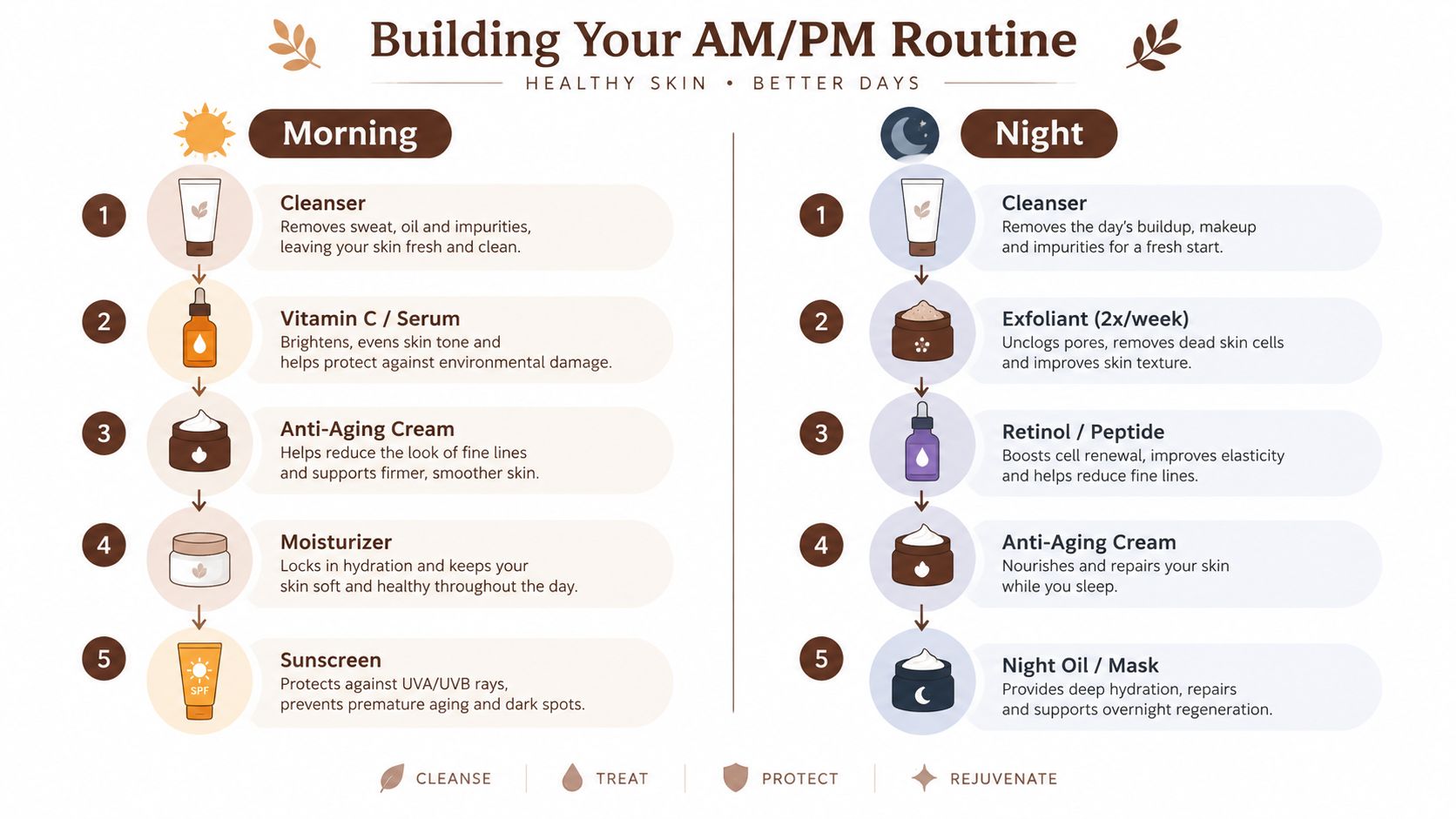
Morning: cleanse gently, apply vitamin C or niacinamide if you use them, then your anti-aging moisturizer, then a separate broad-spectrum SPF 30+ sunscreen. Don't depend on SPF claims in a moisturizer jar. If sun protection matters, use a sunscreen made for that job.
Night: cleanse, use retinoid or peptide treatment if it's part of your routine, then layer your moisturizer over it to reduce irritation. If your skin is dry, add a facial oil or occlusive only on the driest zones. Thick balms go over water-based serums, never under them.
For readers who like a simple routine map, ALODERMA has a practical skincare routine guide in ALODERMA's fresh aloe routine, which fits well with the idea of building from cleanser to treatment to moisturizer without overcomplicating things.
Cadence matters more than enthusiasm
Start a new cream every third night for the first two weeks if your skin is reactive. If peeling shows up, pause the stronger active and keep the barrier cream in place until things calm down. Don't expect overnight transformation.
The useful checkpoints are week 4, week 8, and week 12. At those points, look for better comfort, less tightness, smoother texture, and fewer signs of irritation. If you only notice a nice feel for ten minutes after application, that's not the same thing as real improvement.
Simple rule: if the routine gets so complicated that you skip it, the formulation is too ambitious for your actual life.
The routine should support consistency, not impress your bathroom shelf. That's also why a better-formulated cream in a simple regimen often beats an expensive jar used inconsistently.
Here's a concise visual reminder for the AM/PM order.
Safety, Sensitivities, and Smart Layering
The fastest way to wreck an otherwise solid anti-aging routine is to pile on actives like you're collecting badges. Skin doesn't reward bravado. It rewards restraint, especially when you're using retinoids, acids, and barrier support in the same week.
Use the barrier as the first safety check
Patch test on the jawline for 48 hours before first use. That's not overcautious, that's basic quality control for your own face. If redness, itching, or burning shows up and keeps going, treat it as a real reaction, not “adjustment.”
Purging and irritation are not the same thing. Purging usually shows up where you normally break out and tends to track with exfoliating or cell-turnover products. A true reaction is broader, angrier, and more likely to sting, swell, or keep worsening after you stop the product.
Certain combinations deserve a hard no. Strong retinoids paired with high-strength at-home chemical peels is a bad idea. Unbuffered benzoyl peroxide in the same routine can also push skin past its limit.
Keep the formula boring if your skin is touchy
Fragrance, essential oils, and denatured alcohol are the first ingredients I'd cut for sensitive types. You don't need a scented experience to get a better face. You need a formula that stays calm on contact and doesn't make your barrier work overtime.
Transdermal systems, including patches, are interesting as a complement to topical care, not a substitute for it. Skin still needs hydration, UV defense, and surface repair from the outside. A patch can fit into a broader routine, but it doesn't replace moisturizer, sunscreen, or a well-built treatment plan.
For a practical reference on transdermal support, REVETIX's NAD+ Patch sits in that complementary lane. The important part is the category logic, not the packaging.
Sensitive-skin default: fragrance-free, ceramide-backed, low-actives, and one new product at a time.
That approach sounds cautious because it is. It also works far better than cycling through aggressive formulas and wondering why your skin never settles.
Your Quick Decision Checklist Before You Buy
Before you check out, run this list:
- Confirm an active is listed. Retinoid, peptide, vitamin C, or a clear support ingredient.
- Check for barrier support. Ceramides or hyaluronic acid should be present if the skin is dry or mature.
- Match the texture to your skin type. Rich cream for dry skin, lighter base for oily skin.
- Make sure it layers with SPF. Day creams still need a separate sunscreen.
- Read the ingredient order. Don't let price distract you from what's in the formula.
- Rule out known irritants. Fragrance and essential oils are a bad bet for reactive skin.
- Decide if you need one product or two. Sometimes the best routine is a moisturizer plus a separate treatment.
For shoppers who want more ingredient-filtered guidance, the natural anti aging cream buying tips page from Skin Perfection is a useful second opinion, especially if you're comparing cleaner formulas and simpler routines.
The best anti aging moisturizing cream is the one you'll use twice a day without dreading it. If it supports your barrier, fits your skin type, and doesn't sabotage the rest of your routine, it's the right buy, no matter what the jar costs.
If you want a moisturizer that's built around hydration, barrier support, and longevity-minded ingredients without the fluff, take a look at REVETIX. Its topical lineup fits the same practical approach covered here, choose the formula that matches your skin, then use it consistently enough to matter.