


The most useful answer is situational: most focus concentration supplements don't reliably enhance cognition for everyone, but caffeine plus L-theanine has shown measurable attention benefits at specific doses, while nutrient correction can help when a deficiency is present. The right choice depends less on finding a universal “brain booster” and more on identifying whether stress, sleep loss, or inadequate nutrition is disrupting your attention.
That distinction challenges the most popular advice about this category. One guide says supplements are broadly ineffective, another promises sharper thinking from a proprietary blend, and consumers are left comparing labels without asking what problem they're trying to solve.
Focus is not one single ability. You might need to stay alert after poor sleep, switch between tasks without losing accuracy, or remain mentally steady during a stressful workday. A product that helps one of those situations may do little for another.
The evidence becomes clearer when the question changes from “What's the best focus supplement?” to “What is interfering with my focus, and does this ingredient address it?”
Table of Contents
- Why Most Focus Supplements Get a Bad Rap
- How Focus and Concentration Actually Work in Your Brain
- Comparing the Main Ingredient Categories
- The Caffeine and L-Theanine Stack Explained
- Adaptogens for Sustained Focus Under Stress
- Choosing the Right Approach for Your Situation
- Market Trends and Why Focus Supplements Are Growing
- Next Steps for Smarter Supplement Choices
Why Most Focus Supplements Get a Bad Rap
The criticism is understandable. Many products market themselves as universal cognitive enhancers, yet the evidence for popular ingredients such as ginkgo, ginseng, and B vitamins is often limited, low quality, or dependent on whether the user has an underlying deficiency. Medical News Today's review of supplements for focus describes the broader evidence as weak, inconsistent, or inconclusive for many products beyond caffeine.
That doesn't mean every focus supplement is useless. It means the category contains different tools aimed at different problems. Caffeine may address low alertness. L-theanine may complement caffeine during attention-heavy work. Rhodiola rosea is better understood as a stress and fatigue support ingredient than as a direct stimulant. Vitamin D, B12, or zinc may matter when a person's levels are low, but taking more of a nutrient that's already adequate doesn't automatically create sharper thinking.
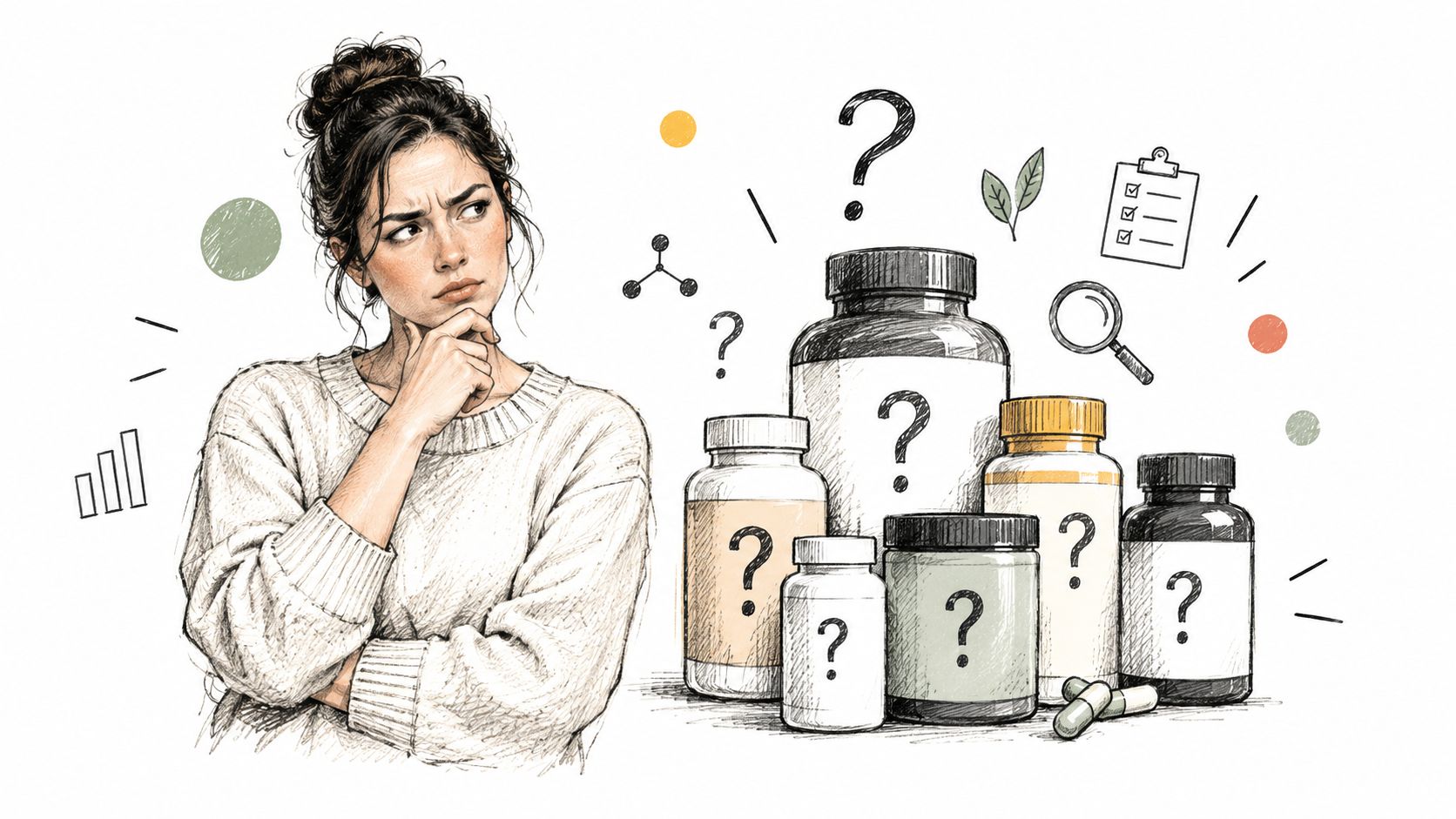
Why broad claims fail
Attention depends on sleep, stress, nutrition, health, expectations, and the demands of the task. A tired person may feel a noticeable change from a stimulant, while a well-rested person may experience little benefit or only unwanted nervousness. Someone with a nutrient deficiency may improve after correction, whereas a person with normal levels may see no comparable effect.
The strongest interpretation of the research is therefore conditional:
- Sleep deprivation: A stimulant combination may temporarily support alertness and selective attention, but it doesn't replace recovery.
- Stress-related fatigue: An adaptogen may be more relevant when mental performance suffers under pressure or prolonged tiredness.
- Deficiency-related symptoms: Correcting low vitamin or mineral status can address a biological limitation, but testing and medical guidance matter.
- General enhancement: Evidence is much less convincing when a healthy, rested person expects a supplement to improve every aspect of cognition.
Practical rule: Judge a supplement by the problem it is designed to address, not by the size of its “brain boost” promise.
This framing also explains why two people can report opposite experiences without either person being dishonest. Their baseline alertness, sleep, stress load, diet, medications, and task demands may differ. A useful product decision begins with that context rather than with a ranking of ingredients.
For a visual overview of how products are often positioned, this explainer can provide useful background:
How Focus and Concentration Actually Work in Your Brain
Focus is the brain's ability to select useful information, keep it active, and ignore competing signals. Think of attention as an office with a limited number of desks. Neurotransmitters help decide which messages reach those desks, while cellular energy keeps the staff working.
Dopamine and norepinephrine act like important messengers. Dopamine helps the brain assign relevance and motivation, while norepinephrine supports alertness and the ability to respond to changing demands. Too little signaling can feel like mental sluggishness. Too much can feel like agitation, scattered attention, or anxiety. The aim isn't maximum stimulation. It's an appropriate signal for the task.
The brain also needs a steady energy supply. Neurons depend on cellular metabolism to maintain communication, restore chemical gradients, and transmit signals. This is why fatigue can impair focus even when you want to concentrate. A supplement that supports cellular processes may be conceptually different from one that merely makes you feel more awake.
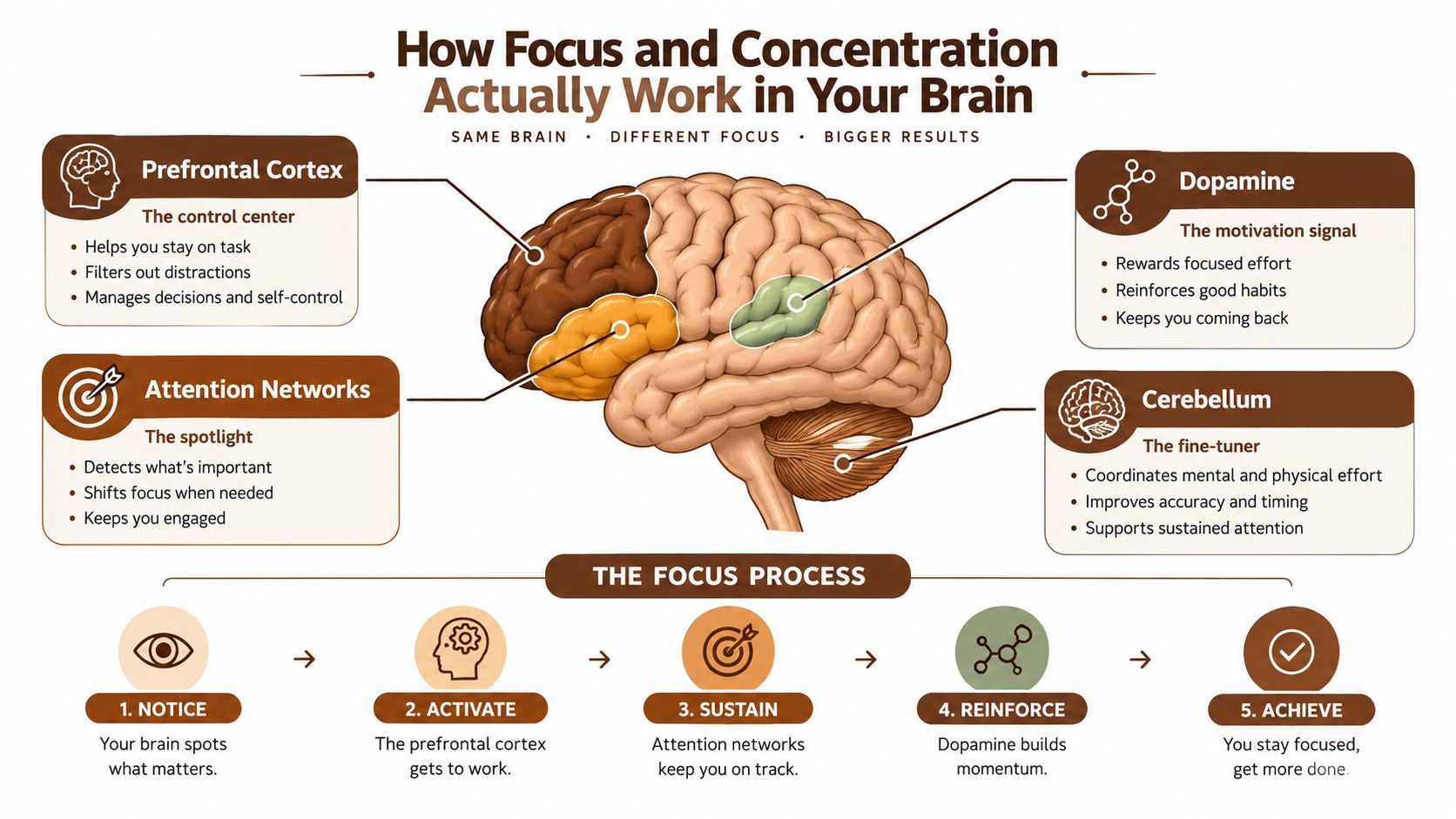
What stress and fatigue change
Stress redirects attention toward perceived threats. That response can be useful briefly, but persistent pressure can make it harder to hold information in mind, switch tasks smoothly, or ignore distractions. Sleep loss creates a different problem: the brain may still perform, but alertness and accuracy become harder to sustain.
This distinction helps explain why a stimulant can feel effective without being a complete cognitive solution. It may raise the volume of an alertness signal, while leaving the underlying sleep debt or stress burden untouched.
Readers trying to distinguish ordinary tiredness from broader “brain fog” may also find River of Life's brain fog guide useful as a general orientation. Persistent or worsening cognitive symptoms deserve medical assessment rather than indefinite self-experimentation.
Cellular-energy supplements are sometimes discussed in this context. For example, an NMN Supplement is described by its manufacturer as an NMN product intended to support NAD+ biosynthesis and cellular energy metabolism. Those are biological support claims, not proof that the product will improve focus in every user.
Comparing the Main Ingredient Categories
A label becomes easier to interpret when ingredients are grouped by what they're trying to do. Stimulants increase alertness, amino acids may shape the quality of that alertness, adaptogens target stress resilience, and nutrients address biological requirements.
| Ingredient Category | Evidence Strength | Primary Mechanism | Best Use Case |
|---|---|---|---|
| Caffeine | Relatively strong for short-term alertness | Reduces the perception of fatigue through stimulant activity | Acute low alertness, especially after insufficient sleep |
| L-theanine with caffeine | Stronger for selective attention than for broad cognition | Combines alertness with a calmer attentional state | Task switching and focused work |
| Rhodiola rosea | Promising, with important limits because key evidence is preclinical | Supports stress and fatigue resilience | Mental performance under pressure or tiredness |
| B vitamins and minerals | Strongest when a deficiency exists | Supports energy metabolism and nervous-system function | Deficiency-linked fatigue or cognitive symptoms |
| Broad nootropic blends | Variable and often difficult to judge | Depends on the formula and disclosed doses | Only when each ingredient has a clear rationale |
Caffeine and L-theanine shouldn't be treated as interchangeable with Rhodiola. The first pairing has human trial evidence for particular attention tasks, while Rhodiola's cited evidence is more relevant to learning, memory, stress, and fatigue models. Nutrients occupy a separate lane because they correct a possible shortfall rather than acting as universal stimulants.
The natural focus supplements guide can be a useful secondary reading point for comparing natural ingredients, but readers should still inspect the quality of human evidence behind each claim.
A closer look at delivery and formulation
Capsules and tablets remain common because they make ingredient amounts easier to identify. Tea and food-based formats can combine naturally occurring compounds, but the exact dose may be less obvious. A proprietary blend creates another problem: without individual quantities, you can't easily compare the formula with the research.
Rhodiola deserves particular label scrutiny. Standardization, plant identity, and the amount of active compounds affect how meaningfully a product can be compared with published research. A detailed discussion of the plant appears in this Rhodiola rosea background guide.
The Caffeine and L-Theanine Stack Explained
The caffeine and L-theanine combination is one of the clearest examples of a supplement strategy that works best when the task and timing are specific. Caffeine increases alertness. L-theanine, an amino acid found naturally in tea, is often paired with it to support a calmer attentional state.
In a randomized study, 50 mg of caffeine combined with 100 mg of L-theanine improved speed and accuracy on an attention-switching task at 60 minutes, and reduced susceptibility to distracting information at 60 and 90 minutes. Those findings come from the classic randomized trial indexed by PubMed.
A separate randomized, placebo-controlled crossover trial tested 97 mg of L-theanine with 40 mg of caffeine. The combination improved task-switching accuracy and self-reported alertness while reducing tiredness, but it didn't improve unrelated tasks such as visual search or mental rotation. That limitation matters. The stack appears more suited to selective attention than to every form of mental performance.
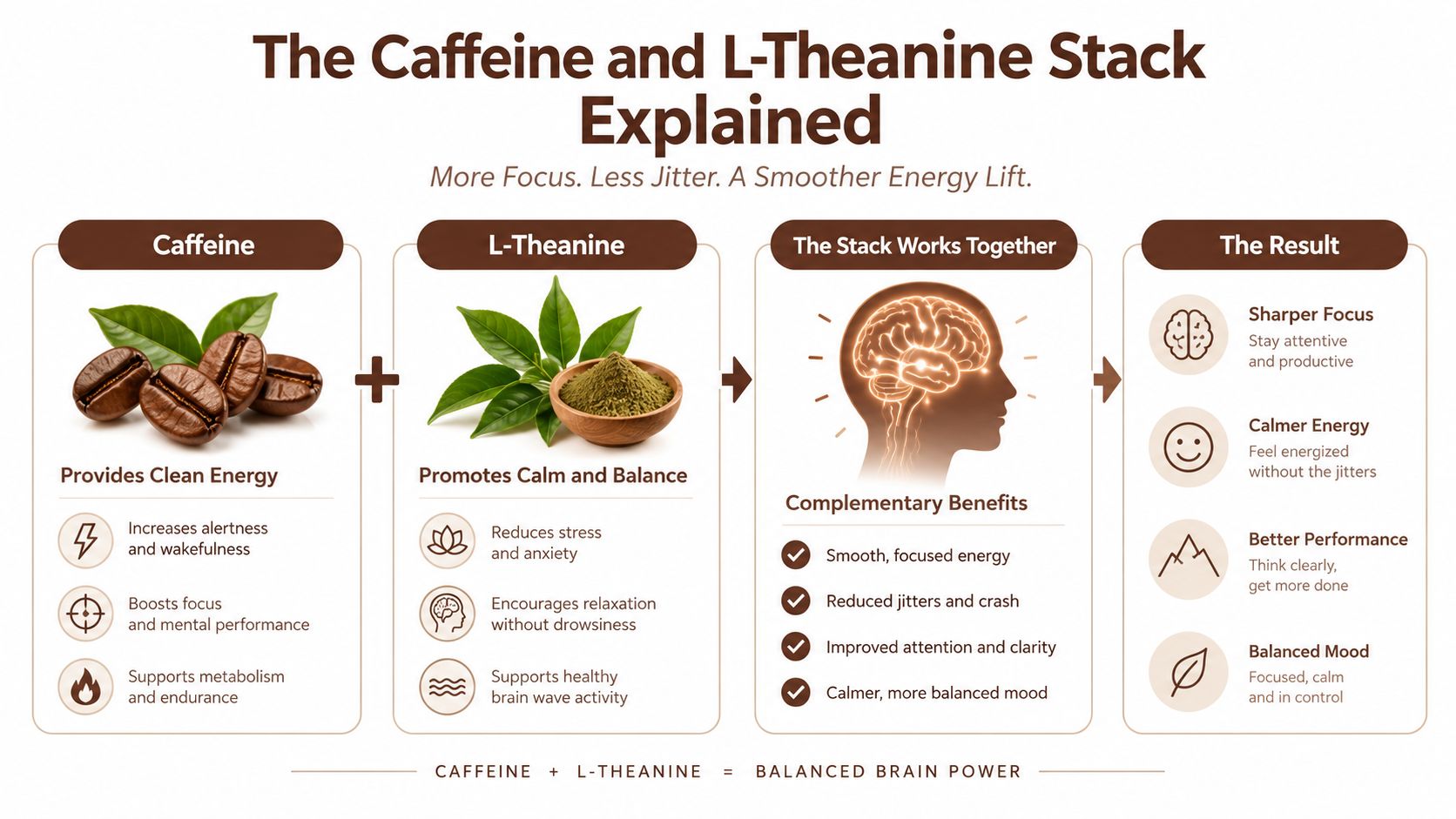
What the research does and doesn't show
A review found that healthy adults taking 100 to 400 mg of L-theanine can experience small but statistically significant cognitive benefits, particularly on visual attention tasks and when L-theanine is combined with caffeine. A meta-analysis of tea constituents also reported moderate early post-dose benefits for alertness and attentional switching, with small-to-moderate effects on reaction time during the first one to two hours after dosing. These findings are summarized in the PubMed review of L-theanine and caffeine.
That doesn't make the stack a universal productivity formula. Someone sensitive to caffeine may experience jitteriness, anxiety, or sleep disruption. Someone who is already alert may notice little improvement. The practical lesson is to match expectations to the evidence: sharper selective attention for a limited window, not a permanent increase in intelligence or concentration.
Tea can be a gentler way to encounter this pairing, although the precise amounts depend on the product and preparation. For readers exploring that format, Pukka Gingseng Matcha Green tea is an example of a tea product that combines matcha with ginseng. Its presence on a shelf isn't evidence that every advertised cognitive benefit has been established.
Adaptogens for Sustained Focus Under Stress
Stimulants are like turning up the lights in a dim room. Adaptogens are closer to shock absorbers, helping the body handle pressure without relying on a sharp surge in stimulation. Rhodiola rosea is therefore more plausibly positioned for stress resilience and fatigue management than for an immediate caffeine-like kick.
The evidence needs careful wording. A preclinical systematic review pooled 36 animal studies and found significant improvements in learning and memory measures. It reported a standardized effect size of SMD 1.79, with a 95% confidence interval of 1.60 to 1.98, for target-quadrant time or frequency in the Morris water maze. Those figures come from the systematic review of Rhodiola rosea research, and they shouldn't be presented as proof of the same effect in humans.
When the category makes sense
Rhodiola may be a more logical consideration when attention deteriorates alongside prolonged stress, mental fatigue, or irregular sleep. It doesn't repair sleep deprivation, and it isn't a substitute for investigating depression, anxiety, thyroid problems, anemia, medication effects, or other medical causes of fatigue.
A product such as Rhodiola Rosea is described by its manufacturer as a capsule containing Rhodiola rosea and naturally occurring compounds such as rosavins and salidroside, with intended support for stress response, focus, clarity, and steady energy. Those descriptions should be assessed alongside the limitations of the evidence, not treated as clinical guarantees.
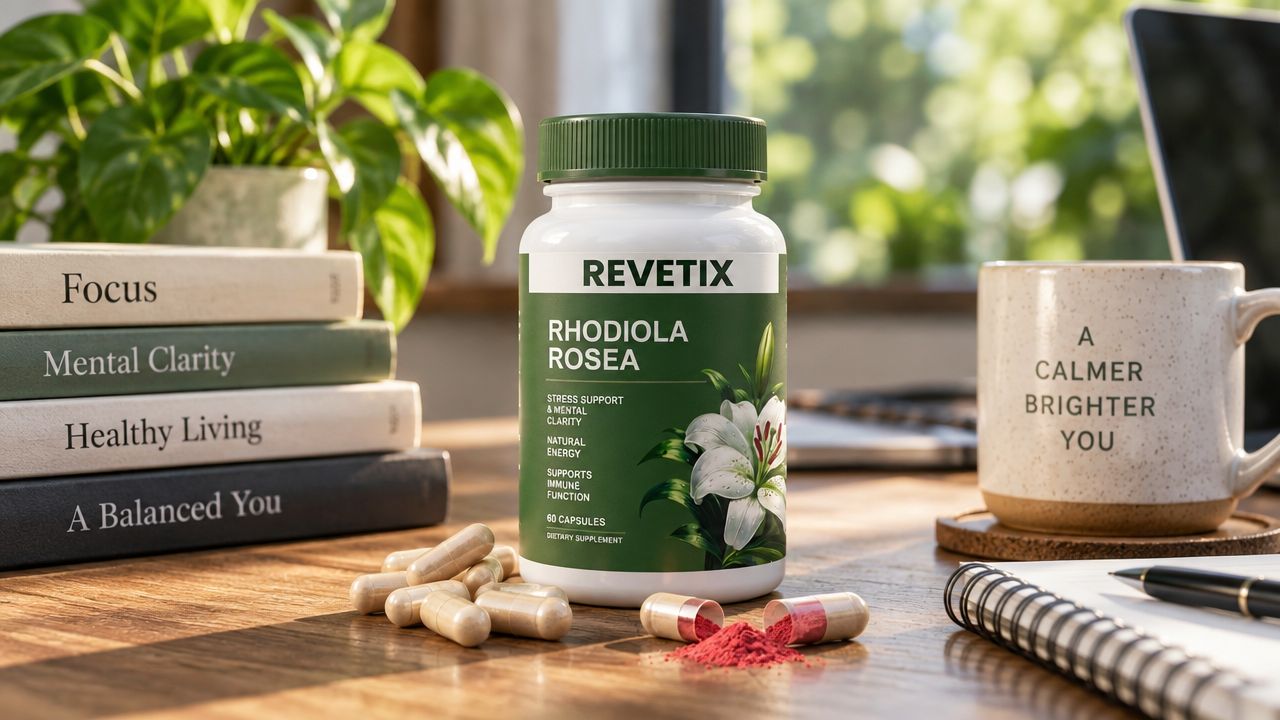
Stress-related focus problems often feel different from simple sleepiness. You may reread the same paragraph because your mind keeps returning to an unresolved concern. In that situation, calming the stress response may be more relevant than adding another stimulant. More background on the proposed relationship between Rhodiola, stress, energy, and focus is available in this Rhodiola safety and benefits resource.
Choosing the Right Approach for Your Situation
Start with the symptom, not the product category. If you're temporarily under-slept and need a defined period of alertness, caffeine with L-theanine has a clearer situational rationale than a large multi-ingredient blend. If stress and fatigue are the main obstacles, an adaptogen may fit the question better, although the evidence and safety profile still require scrutiny.
Deficiency correction is a different decision entirely. Low vitamin D, B12, or zinc may affect thinking or energy, but supplementation is most rational when a clinician identifies low status or a credible risk of deficiency. Taking iron without guidance is especially unwise because excess iron can cause harm.
A simple decision path
- Name the pattern. Is the problem sleep loss, stress, persistent fatigue, distraction, or a diagnosed deficiency?
- Check for causes. Review sleep, diet, medications, alcohol use, mood, and health conditions before adding products.
- Choose one clear intervention. A single ingredient or simple combination makes it easier to notice benefits and side effects.
- Keep the trial bounded. Track alertness, concentration, anxiety, sleep quality, and unwanted effects rather than relying on a vague impression.
- Ask a professional first. A pharmacist or clinician can identify interactions and decide whether testing is appropriate.
Magnesium is often marketed in several forms, but the choice should depend on the intended use, tolerance, and medical context. This comparison of magnesium glycinate, citrate, and malate can help readers understand why “magnesium” isn't a complete description of a product.
A product such as Himalayan Shilajit Gold Gummies is described by its manufacturer as a blend of shilajit, ashwagandha, and minerals for energy, stress balance, and mineral support. That positioning may appeal to people seeking a broader wellness formula, but it doesn't establish that the blend will solve a specific concentration problem.
Market Trends and Why Focus Supplements Are Growing
Consumer interest has expanded because attention is now treated as part of everyday performance. Students, professionals, older adults, and people managing demanding schedules all look for ways to stay mentally present. The market response includes stimulant combinations, herbal products, nutrient formulas, cellular-energy ingredients, and convenient online purchasing.
Industry data places the global nootropics market, which includes many focus and concentration supplements, at USD 5.22 billion in 2025, with a projection of USD 13.29 billion by 2033 and a 12.7% CAGR from 2026 to 2033. Grand View Research's nootropics market analysis also reports that North America held 40.9% of revenue in 2025, capsules and tablets represented over 44.0% of revenue, and online retail is projected to grow at a 13.2% CAGR over the same period.
Those figures describe commercial demand, not proof that the products work. A growing market can reflect genuine consumer needs, better distribution, persuasive marketing, or all three. It also explains why shoppers encounter so many delivery formats, from familiar capsules and tablets to teas, gummies, patches, and topical products.
What the growth signals
The category is moving toward more specific positioning. Consumers increasingly want products associated with focus during stress, energy support, healthy aging, or deficiency correction rather than an undefined promise of enhanced intelligence.
Online access makes label literacy more important. A shopper can compare formulations quickly, but convenience also makes exaggerated claims easy to encounter. Look for disclosed amounts, identifiable ingredients, clear warnings, and claims that match the actual evidence.
The most useful trend isn't the arrival of another format. It's the shift toward asking whether a product addresses alertness, stress resilience, nutrient status, or cellular support. Those are different goals, and a responsible formulation should say which one it targets.
Next Steps for Smarter Supplement Choices
Begin with a short written description of your focus problem. Note when it appears, what makes it worse, how sleep affects it, and whether stress or changes in diet coincide with it. This record is more useful than choosing a supplement because its label uses words such as “advanced,” “powerful,” or “brain.”
Then inspect the label:
- Identify every active ingredient. Avoid formulas that hide meaningful amounts inside an unnamed proprietary blend.
- Compare the stated dose with research. A study using a particular ingredient pairing doesn't automatically validate a product containing a different amount.
- Check cautions and interactions. Caffeine, herbs, minerals, and nutrient products can affect sleep, anxiety, blood pressure, digestion, or prescription medicines.
- Set a specific outcome. Decide whether you're tracking alertness, task accuracy, stress-related fatigue, or sleep quality.
- Stop when the experiment creates problems. New palpitations, severe anxiety, allergic symptoms, or persistent worsening fatigue require medical attention.
Lifestyle isn't a footnote. Sleep, regular meals, movement, hydration, and stress management can determine whether a supplement has any noticeable room to help. Persistent brain fog or fatigue also deserves a clinical review, because a supplement can mask a problem without correcting its cause.
The central lesson is simple: focus concentration supplements work best as targeted tools, not universal cognitive upgrades. Caffeine plus L-theanine has the clearest situational case for selective attention, Rhodiola is better framed around stress and fatigue resilience, and vitamins or minerals make the most sense when a deficiency is present.
REVETIX offers products positioned around cellular energy, Rhodiola-based stress and focus support, and mineral or adaptogenic formulas, giving adults several formats to consider alongside professional guidance. Visit REVETIX to review the available options and match any supplement decision to the specific focus problem you're trying to solve.