


You're halfway through the afternoon, the second coffee has stopped helping, and a meeting that should feel routine suddenly takes effort. It's tempting to call that a motivation problem. But the energy you notice in your muscles and brain depends on a quieter process inside your cells: making and recycling the molecules that power cellular work.
A cellular energy supplement may target parts of that process, such as NAD-related metabolism, mitochondrial electron transport, or the removal of damaged mitochondria. Those are real biological pathways. But a plausible mechanism doesn't guarantee a noticeable change in how you feel. To judge these products fairly, it helps to separate what cells do, what trials have measured, and what marketing merely suggests.
Table of Contents
- Why Energy Crashes Often Start Inside the Cell
- How Cells Actually Make and Use Energy
- The Science Behind Cellular Energy Supplements
- Key Ingredients and What They Actually Do
- What the Human Trials Are Actually Showing
- Safety, Interactions and Who Should Be Careful
- Choosing Between a Single Ingredient and a Multi-Pathway Formula
- Setting Realistic Expectations and Tracking What Matters
Why Energy Crashes Often Start Inside the Cell
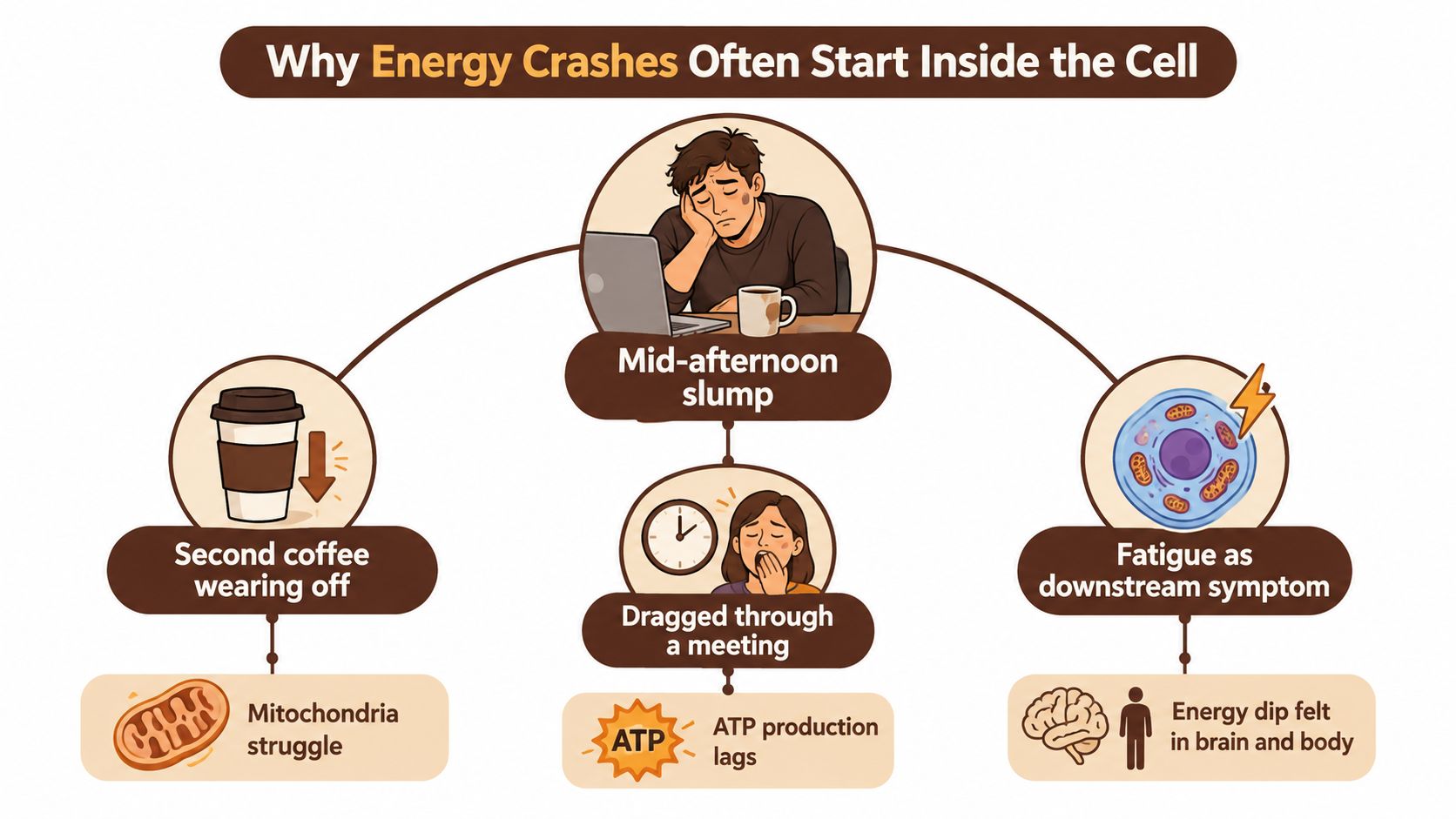
A mid-afternoon slump has many possible explanations, including sleep, food, stress, illness, medication, or a demanding day. Still, fatigue is more than a feeling of low motivation. Your brain and muscles need a steady supply of usable energy, and cells provide it through ongoing biochemical work.
The molecule most closely tied to that work is adenosine triphosphate, or ATP. Cells use ATP to power essential tasks, from muscle contraction and nerve signaling to building proteins. Mitochondria make most of the ATP in animal cells, so it's reasonable for researchers to study mitochondrial function when they investigate how cells produce energy. That doesn't mean every afternoon dip signals a mitochondrial problem, or that a supplement can identify and fix its cause.
Products marketed for cellular energy often include NAD+ precursors, mitochondrial cofactors such as CoQ10, or ingredients intended to support mitochondrial maintenance. These categories don't all do the same thing. Some are meant to support the reactions that transfer electrons, while others are proposed to help cells recycle damaged mitochondria.
A useful distinction: A biological explanation for how an ingredient might work is not the same as evidence that it relieves fatigue in everyday life.
So the useful question isn't, "Will this give me energy?" It's, "Which cellular process is it meant to support, and have human trials shown a meaningful effect on an outcome I care about?" That distinction helps keep the afternoon slump in perspective: cell biology matters, but it's only one possible part of the picture.
How Cells Actually Make and Use Energy
Think of a cell as a rechargeable battery, except the cell doesn't store its usable energy in one large, lasting charge. It continually makes and spends ATP, then rebuilds it so the cycle can continue. The molecule that remains after ATP releases energy is called ADP. Cells can combine ADP with phosphate to regenerate ATP.
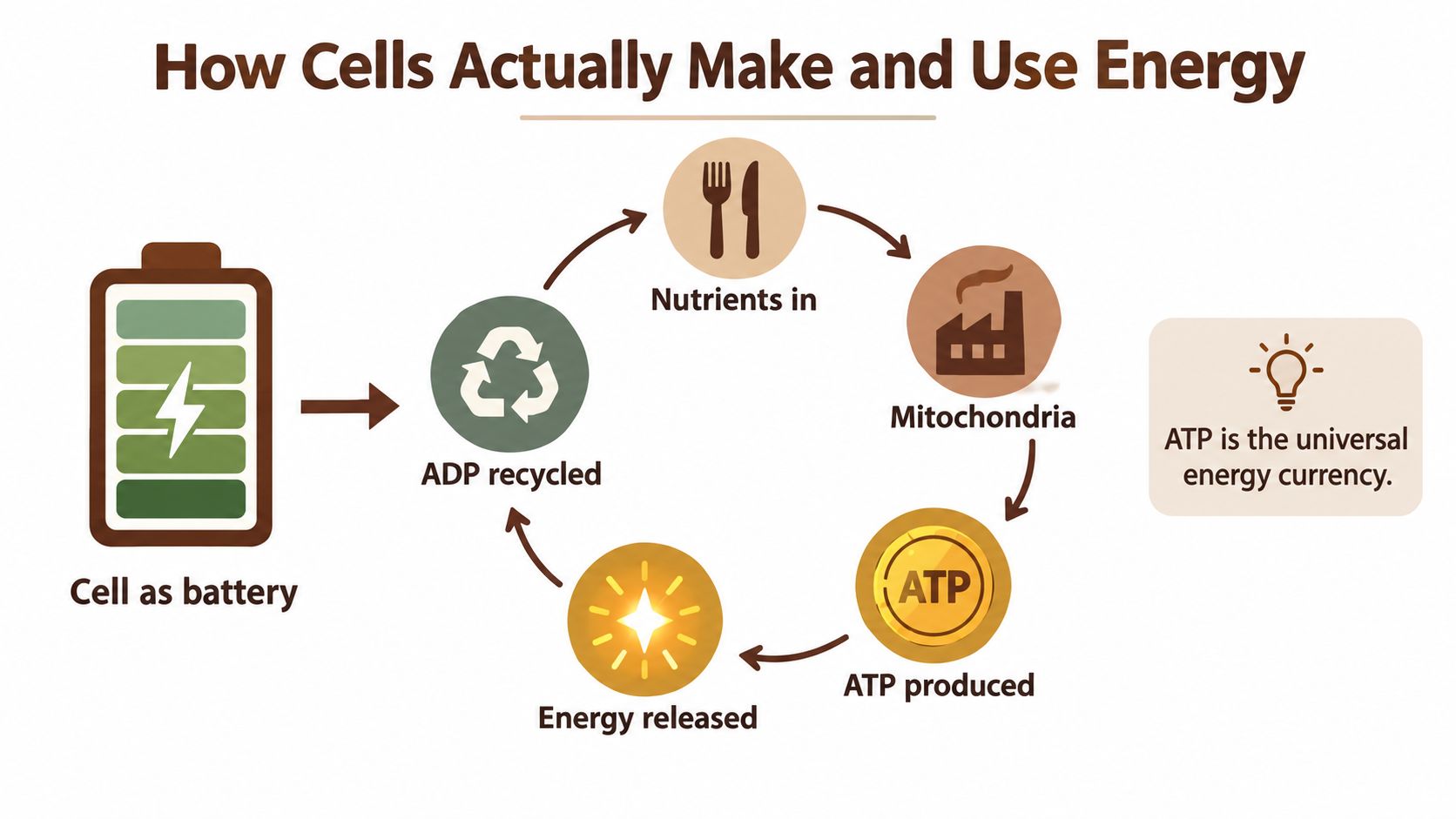
Mitochondria are central to this process. As nutrients are broken down, electrons pass along the electron-transport chain, a series of protein complexes in the inner mitochondrial membrane. The transfer of electrons helps create a proton gradient. ATP synthase uses the energy stored in that gradient to make ATP. Oxygen is involved in this mitochondrial process, and the availability of fuel also matters.
A familiar textbook comparison helps explain why this system gets attention: complete oxidation of one glucose molecule produces approximately 30 ATP, while glycolysis alone produces 2 ATP. Those figures describe typical textbook accounting, not a personal energy guarantee or a prediction of how you'll feel after eating a particular food. Cellular energy production depends on interacting processes, not a single molecule or switch. For more on the underlying process, see this guide to cellular energy production.
Where supplement ingredients fit
When you encounter a cellular energy formula, try placing each ingredient into a broad category:
- Fuel processing: Supports steps that help cells make use of nutrients.
- Electron transport: Takes part in moving electrons through mitochondrial pathways.
- ATP production or recycling: Relates to making or reusing the cell's immediate energy currency.
- Mitochondrial quality control: Aims to maintain the population of mitochondria, including by clearing damaged ones.
NAD+ is a coenzyme involved in metabolic reactions that transfer electrons. It's useful to understand its role, but calling it an “energy molecule” can blur the picture: ATP is the direct energy currency, while NAD+ participates in the chemistry that helps cells process fuel and move electrons. That difference is a good starting point for assessing the claims on a supplement label.
The Science Behind Cellular Energy Supplements
The story begins with scientists learning to recognize the parts of the system. In the nineteenth century, Albert von Kölliker described membrane-bound granules in insect muscle. Richard Altmann studied these structures, and Carl Benda introduced the term “mitochondria” in 1898. These observations didn't yet explain how mitochondria made energy, but they gave researchers a cellular structure to investigate.
In 1929, Karl Lohmann and, independently, Cyrus Fiske and Yellapragada Subbarow identified ATP. That finding gave biologists a way to describe the molecule cells use to power essential work. Later, improved techniques for separating cell components helped researchers study intact mitochondria. Work by Albert Lehninger, Eugene Kennedy, and colleagues established mitochondria as a major site of fuel oxidation coupled to ATP production.
Peter Mitchell proposed his chemiosmotic theory in 1961. In plain language, the theory explained how electron transfer helps build a proton gradient across the inner mitochondrial membrane, and how that gradient can drive ATP synthesis. It became a cornerstone of bioenergetics, giving researchers a framework for understanding how mitochondria turn the energy from nutrients into a form cells can use.
What “mitochondrial support” can mean
The history matters because it separates specific biology from fuzzy promises. “Mitochondrial support” can refer to fuel oxidation, electron transport, ATP synthesis, or quality control. It doesn't mean there's one universal energy switch that a supplement can flip.
A consumer-friendly Sunridge Medical mitochondrial guide can provide another perspective on how mitochondrial pathways are discussed in relation to fatigue. Whatever the source, the same critical question applies: does the proposed mechanism have human evidence for the outcome you want, or is the claim mostly a pathway diagram dressed up as a promise?
Key Ingredients and What They Actually Do
Ingredients make more sense when grouped by their proposed job, not arranged as a list of “energy boosters.” A formula may combine several categories, but each one needs its own evidence. A shared label doesn't mean the ingredients have been tested together or shown to deliver the same result.
NAD+ precursors, including NMN, NMNH, and NR, are intended to provide material for NAD+ production. That gives them a plausible connection to metabolism, but a change in an NAD-related biomarker doesn't automatically show that a person feels more energetic. The evidence for real-world outcomes needs its own assessment.
CoQ10, including its reduced form ubiquinol, carries electrons between respiratory complexes in the mitochondrial chain. That role gives it a clear biochemical link to ATP production. It doesn't make CoQ10 an instant stimulant or establish that everyone with fatigue will benefit. For a deeper look at the ingredient's role, see this overview of coenzyme Q10 and liposomal delivery.
Mitochondrial maintenance and cellular defenses
Urolithin A is a gut-derived postbiotic that activates mitophagy, the selective removal of damaged mitochondria. Human trial results for this ingredient are discussed below, where the measured outcomes matter as much as the proposed mechanism.
PQQ is often marketed in relation to mitochondrial function. But a mechanism or marketing category by itself doesn't establish a noticeable human benefit. The same caution applies to compounds linked with broader cellular processes, such as spermidine and fisetin, which are associated with autophagy or senolytic mechanisms.
Antioxidants are another broad category. Sulforaphane, astaxanthin, hydroxytyrosol, lutein, and ergothioneine are included in some formulas for antioxidant-defense rationales. That's different from proving that a particular blend will improve fatigue, cognition, or exercise performance. Other ingredients may be aimed at more specific goals, such as mood, inflammatory response, or joint support, rather than ATP production itself.
A product label can therefore describe several plausible pathways without establishing that the overall formula has been tested as a whole. For example, REVETIX SUPER™ Capsule is described as a 21-active formula intended to support antioxidant defenses, cellular function, sustained energy and mental focus, with no caffeine or stimulants. Those are product-positioning statements, not proof of a clinical outcome for every user.
For any ingredient, ask what it's supposed to do, whether that mechanism has been studied in people, and whether the trial measured an outcome you'd notice. A long ingredient list isn't the same thing as strong evidence.
What the Human Trials Are Actually Showing
One common leap in cellular-energy marketing goes like this: a supplement changes a biomarker, therefore it boosts energy or improves healthspan. The evidence doesn't support that shortcut. A systematic review identified 33 human NAD-related intervention studies, including 28 randomized trials. Oral NMN and NR generally changed NAD-related biomarkers and were tolerated over weeks to months, but functional, metabolic, vascular, and other healthspan outcomes were varied and often null or limited to particular endpoints (systematic review of human NAD-related interventions).
That difference is important. A biomarker can show that a supplement affected a biological target. It doesn't, on its own, tell you whether someone has more stamina, better sleep, less fatigue, or improved day-to-day function. If you're weighing a product such as REVETIX NMN Supplement, assess its product claims separately from the broader question of what human trials have demonstrated for NMN.
A clearer signal, with limits
Urolithin A offers a useful example of why outcomes should be read precisely. In a double-blind randomized trial of 66 adults aged 65–90, participants taking 1,000 mg per day for four months showed significantly improved hand- and leg-muscle endurance compared with placebo. The trial also found reductions in several biomarkers associated with mitochondrial and inflammatory status. However, it didn't find statistically significant improvements in six-minute walking distance or maximal ATP production (urolithin A clinical trial).
That's a positive but specific result. It supports a claim about measured muscle endurance in that trial, not a promise of broad daily energy or improved performance for everyone. The same source's review of human trials reports that benefits generally weren't observed at doses below 500 mg per day, making dose relevant when comparing products.
CoQ10 has a well-established role in electron transport, but that biochemical role doesn't guarantee noticeable fatigue relief. People differ in age, baseline nutrient status, sleep, diet, training, and health. If you want context about another route people use when addressing fatigue, this guide to B12 injections from ProMD Health Tysons Corner may help distinguish a medical discussion of B12 from supplement marketing. You can also read more about the evidence question in this overview of whether NMN supplements work.
Safety, Interactions and Who Should Be Careful
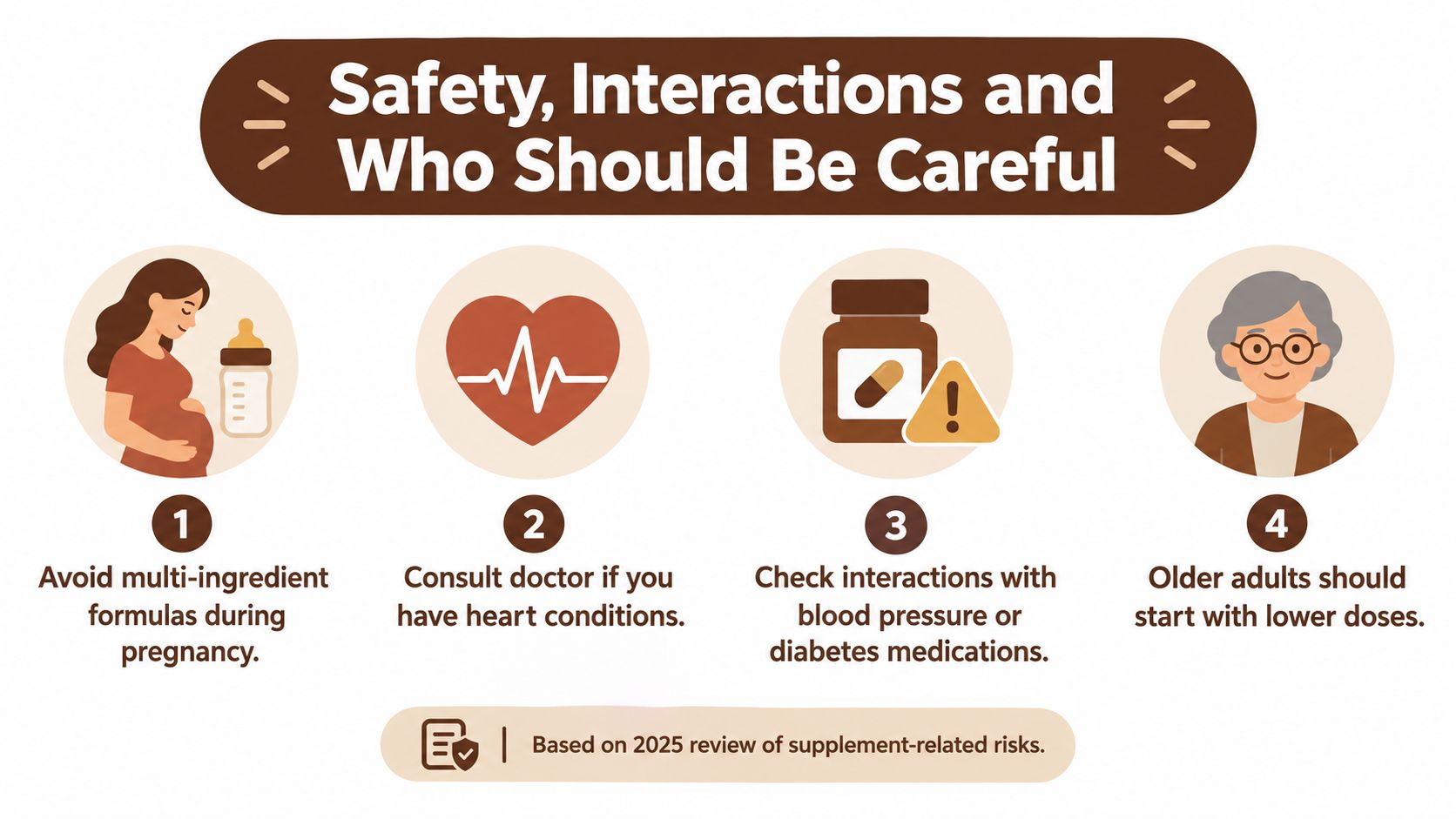
A multi-ingredient formula can create a practical problem: you may be combining several active ingredients with prescriptions or with other supplements, without realizing that products overlap or interact. A 2025 review of supplement-related adverse-event case reports in older adults described recurring issues such as prescription interactions, excessive dosing, duplicate supplementation, and contamination. Reported events included vitamin-D-related hypercalcemia, thyroid-test interference, neuropathy, kidney injury, and interactions involving warfarin and vitamins E or K (review of supplement-related adverse-event case reports).
The same review material notes that concurrent supplement use among older adults ranges from 23% to 82.5%, while clinicians often don't ask about supplements. That makes it worthwhile to bring up every product you take, including powders, gummies, vitamins, and formulas bought online.
A practical safety check
Before starting a cellular energy supplement, use this checklist:
- List everything you take. Include prescriptions, over-the-counter medicine, vitamins, minerals, and other longevity products.
- Check overlapping ingredients. Look for duplicate vitamin D, vitamin K, zinc, selenium, and botanicals across your products.
- Ask about medication interactions. Get individualized advice if you take anticoagulants, thyroid medication, diabetes drugs, or blood-pressure medication.
- Discuss surgery plans. Ask your clinician whether any ingredients should be paused before a procedure.
- Follow age and pregnancy guidance. REVETIX states its products are for healthy adults and aren't intended for people under 18, or those who are pregnant or nursing. Its SUPER formula contains vitamin K2, so the publisher advises consulting a physician if you take medication, especially blood thinners.
“Natural” doesn't mean risk-free, and a long ingredient list isn't a substitute for a medication review. Keep an updated list you can share with your clinician, and don't change prescribed treatment based on a supplement label.
Choosing Between a Single Ingredient and a Multi-Pathway Formula
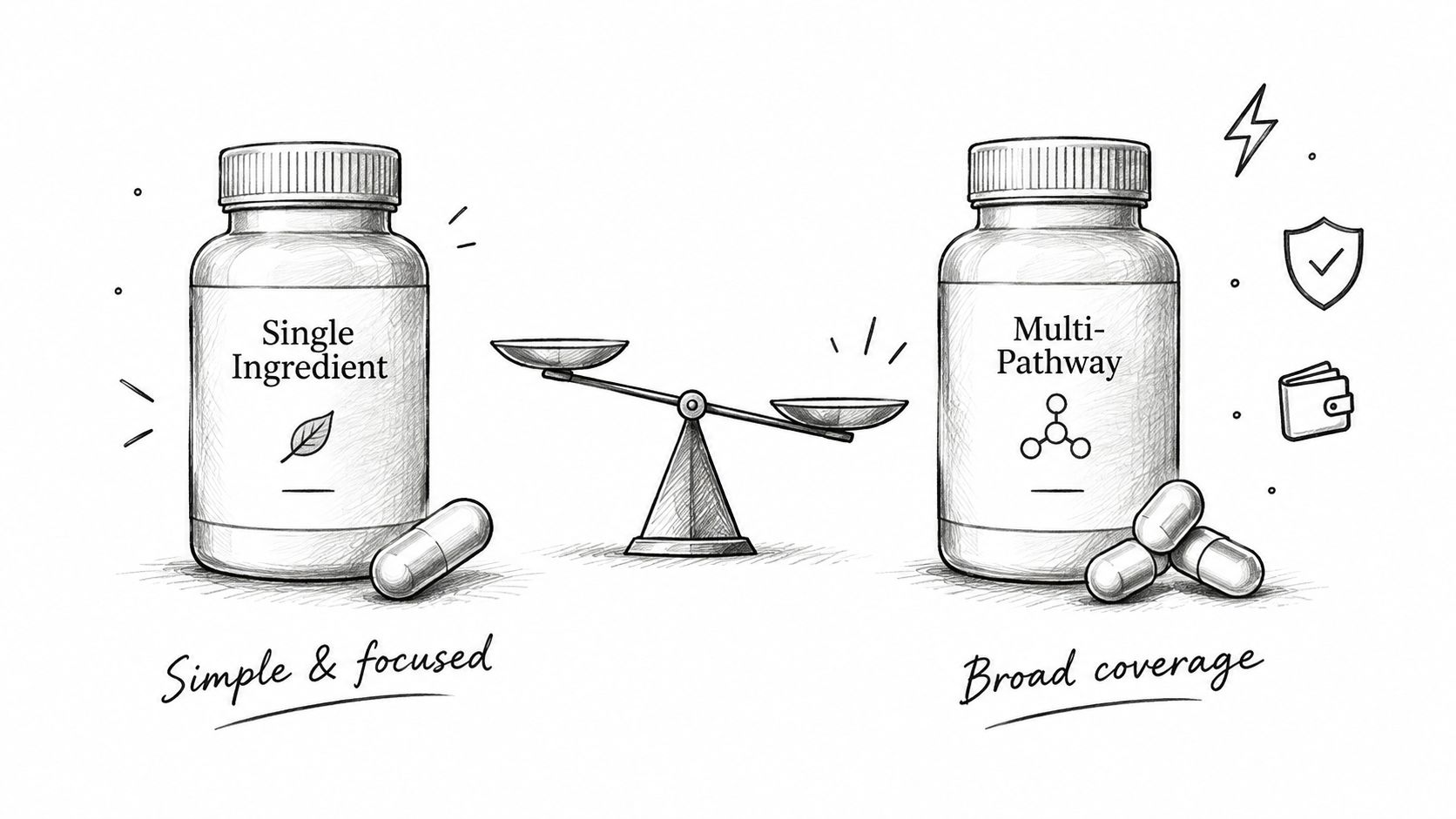
A focused product and a broad formula solve different practical problems. A single-ingredient supplement is easier to evaluate: you can check its dose, look at evidence for that compound, and more easily judge whether it seems to fit your goal. The trade-off is that it targets a narrower pathway.
A multi-pathway formula combines ingredients intended to support several processes. That may simplify a routine, but it can make it harder to tell which ingredient is responsible for an effect or an unwanted reaction. It also means you should look closely at the amount of each active ingredient and whether the formula's claims match human evidence.
| Your priority | A focused ingredient may fit when… | A broader formula may fit when… |
|---|---|---|
| Test one idea | You want to evaluate one compound, such as CoQ10 or a NAD+ precursor. | You're comfortable evaluating a combination rather than isolating one ingredient. |
| Keep the routine simple | You prefer to add one product at a time. | You want several ingredients in one daily habit and have checked for duplicates. |
| Match a specific goal | You want the clearest link between a particular ingredient and your intended outcome. | You're interested in several areas and understand that each has its own evidence limits. |
A runner focused on muscle endurance might begin by looking closely at the human urolithin A evidence. Someone already taking several separate products may prefer to compare a combination formula's disclosed ingredients against their existing routine. Neither approach is automatically better. Choose based on the question you want to answer, the evidence available, and whether the product is safe alongside your current medicines and supplements.
Setting Realistic Expectations and Tracking What Matters
A useful result doesn't have to be dramatic. You might care about whether your afternoon energy feels steadier, whether routine exercise feels more manageable, or whether recovery changes. Those are practical things to observe, but they're not guaranteed outcomes. Choose a small number of signals before you start so a good day or a bad night doesn't become your entire verdict.
Keep the comparison simple. Record how your energy feels at consistent times, note sleep quality, and choose one functional activity you can repeat, such as climbing the same stairs or completing a familiar workout. If you use a wearable, you can include its sleep or recovery measures, but treat them as supporting information rather than proof that a supplement is working.
Keep it honest: Track what matters to you, but don't confuse a personal impression with clinical evidence.
Before beginning, ask a clinician whether the ingredients fit your health history and medication list, whether any products you already take overlap, and what signs would warrant stopping. If fatigue is persistent, new, or interfering with daily life, seek medical guidance rather than assuming a supplement is the answer. For additional perspectives on energy and vitality supplements, focus on the ingredients and evidence rather than broad promises.
Cellular energy is a real biological process, but a supplement's mechanism, biomarker effects, and day-to-day benefits are separate questions. Start with a clear goal, choose a product whose ingredients and doses you can assess, and give safety and measurement as much attention as marketing.
REVETIX offers formulas that combine ingredients intended to support cellular function and antioxidant defenses, alongside focused options for individual ingredients. If you're comparing approaches, visit REVETIX to review the product information and decide what's appropriate to discuss with your clinician.